

Exercise during pregnancy: myth vs fact
Check out our Health and Fitness supplement in this week's paper!
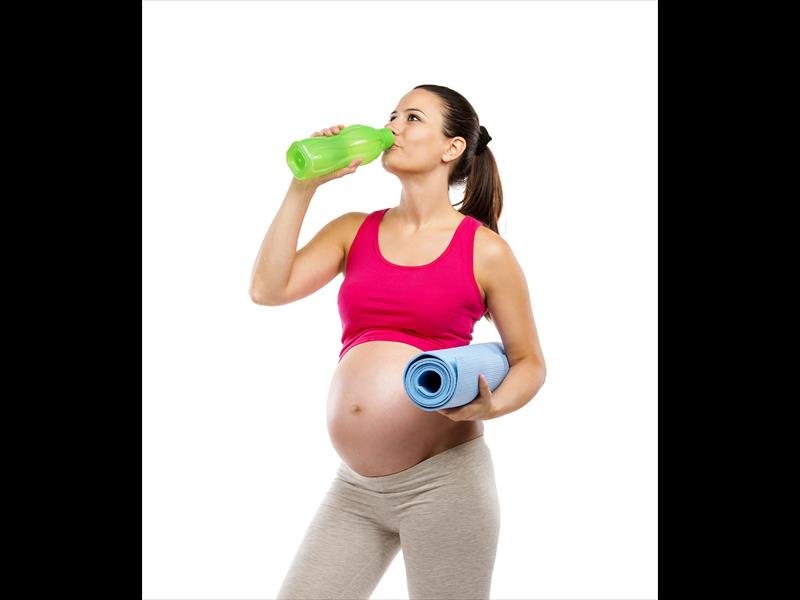
While some people frown at the idea of pregnant women exercising, today health practitioners encourage mothers-to-be to work up a sweat for the benefit of both mom and baby.
Salt Rock based Woman’s health physiotherapist Tarryn Graham agrees.
“Exercise during pregnancy is not only essential to mom’s well-being and health, it can also help to prepare your body for labour (there is a reason they call it labour) and later for the exertion of looking after a child,” said Graham.
Yet myths surrounding fitness and pregnancy just will not go away, leaving many women confused and ill-advised. We asked Graham to set the record straight on four of the most common exercise related questions women have during pregnancy:
1. Myth or Fact: It’s not safe to do abdominal work during pregnancy.
Myth – “In the early stages of pregnancy you can continue with abdominal exercises such as sit-ups, roll ups, oblique crunches, abdominal crunches. However should you notice a “tenting” of the rectus abdominus, also known as the “abdominals or abs,” you must discontinue. I would suggest that as soon as a preggy belly is “showing” you should be wary of these exercises. I would also not recommend loads of active rectus abdominus exercises. Too much of this type of work can cause it to split and hamper one’s recovery postnatally. However working the transverse abdominus (TA-stabilising abdominal muscle) is very important. This type of abdominal work is much more static use of the abdominals than activity with the limbs.”
2. Myth or Fact: Pregnancy can make you more prone to certain fitness injuries.
Fact – “Pregnancy causes the release of hormones such as relaxin and this causes ligament laxity (the wonderful reason we can expand and accommodate a massive uterus), which places you at risk for injuries to the joints. This is why the lifting of excessively heavy weights and high impact activities is not recommended. The weakening of the abdominal muscles, as a result of stretching to accommodate the expanding uterus, combined with hormonal changes also increases the risk for injury and strain to the pelvis and lower back. Altered posture and reduced balance in pregnancy can also increase the risk of falling in certain sporting activities. This is why jogging, heavy weight training and high impact activities are not recommended in the second or third trimester. Relaxin can remain in the mother’s body up to six months post birth and this is important to note when looking at returning to exercise after baby.”
3. Myth or Fact: If I never exercised before pregnancy, now is not the time to start.
Myth – “It is definitely not the time to take up a new sport or activity, however, light non-impact activities such as swimming, cycling on a stationary bicycle and walking is safe even for beginners. I would however, suggest in the case of someone who has never exercised before to get clear guidelines and the go ahead from her gynae. And also to increase exercise gradually. Exercise is not to be used for weight loss.”
4. Myth or Fact: Any sign of trouble – like spotting or pain – means I should stop exercising for the remainder of my pregnancy.
Myth – “These are warning signs and you must discontinue the activity, but it may not mean that you cannot exercise through the remainder of the pregnancy. Spotting, pain, heart palpitations, shortness of breath, dizziness and feeling faint are signs that you need to stop the activity, change position and alert an instructor should the symptoms not disappear. I would suggest contact your gynae if you have severe lower abdominal pain and spotting. Check with the gynae if you can continue with exercise at a later stage.”
Over and above normal exercise, Graham said one of the most important things to do during pregnancy is pelvic floor exercises and learning how to relax these muscles.
“Just ask a pregnant mom in her third trimester what happens when she laughs coughs or sneezes on a full bladder! Being able to contract these muscles helps with improving support as well as bladder and bowel control, but to be able to release them is also very important especially if one wants to deliver the baby naturally.”
To learn more about pelvic floor exercises speak to a physiotherapist with a special interest and further training in Women’s Health.

Stay in the loop with The North Coast Courier on Facebook, X, Instagram & YouTube for the latest news.
Mobile users can join our WhatsApp Broadcast Service here, or if you’re on desktop, scan the QR code below.