

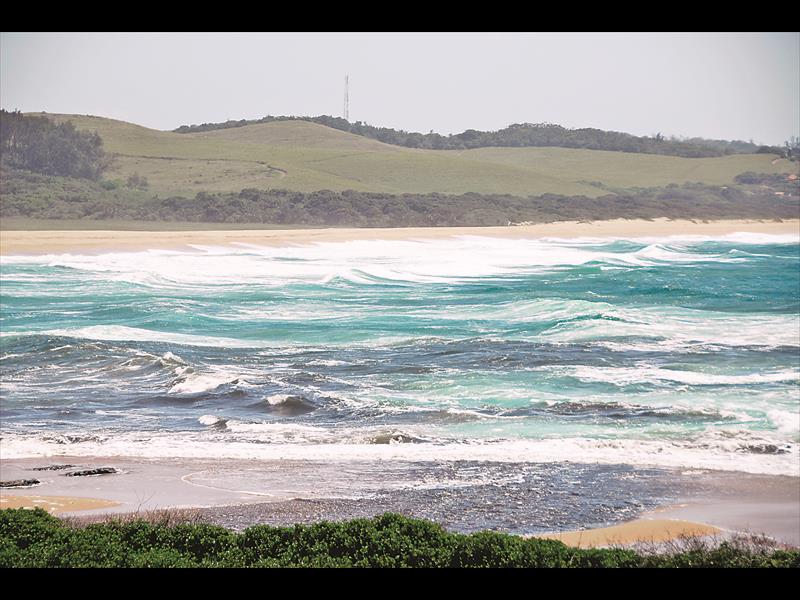
Black water that smelled like rotten eggs and ammonia flowed from the Umvoti River into the ocean last Friday.
That was the second such complaint since November last year.
Further upstream at Stanger, just below the Sappi paper mill, the river water was clear but slightly upstream between the paper mill and the Gledhow sugar mill, the water was again black.
The source of the pollution is still to be confirmed, however environmentalists have previously determined that the river eco system is in a very poor state.
Environmentalist Alexandra Virginia Carminati referred to the Umvoti River in her 2008 M.Sc. dissertation at the University of Johannesburg as a “working river that is highly developed and utilized and as such in a severely degraded state.”
The University of KwaZulu-Natal’s Dr Gordon O’Brien said on Monday that the river’s polluted state was caused by a combination of multiple factors, including effluent from industries (paper and sugar mills), waste from Stanger, the Umvoti water treatment works that was not able to clean the water properly and the sugar cane industry that not only contributed to the pollution but also physically changed the environment by removing the riparian zone (tree line and bush) along the river banks, freeing up too much sand to flow into the river bed.
O’Brien said the current drought has made the pollution more visible because there was far less water in the river to dilute the pollutants.
“This does not mean that there was not an increase in pollution on Friday; the people will definitely notice change.
There are laws to manage our eco systems and it is a tragedy that nothing is being done to protect the environment,” said O’Brien.
He recommended that a water sample be tested to pin point the chemical contents of the water.
Sappi’s regional communications manager, Zelda Schwalbach in a media statement on Monday said that Sappi was in no way responsible for the increased pollution reported on Friday.
“There have not been any untoward excursions or exceedances by the Sappi Stanger mill which may have impacted on the state of the Umvoti River in the past week,” said Schwalbach.
She said all effluent leaving the mill and discharged into the Ntshaweni River has been well within specification.
“As previously indicated, the mill installed and commissioned additional effluent treatment capacity during early January,” she said.
Schwalbach said it was important to note that the water was severely discoloured upstream from the mill and that Sappi has reported that discolouration to the relevant authorities.
At the time of going to print the Gledhow mill had not yet responded to our questions although it is believed that the mill’s effluent is used to irrigate sugar cane in the area and therefore may not be the source of the pollution.
Stay in the loop with The North Coast Courier on Facebook, X, Instagram & YouTube for the latest news.
Mobile users can join our WhatsApp Broadcast Service here, or if you’re on desktop, scan the QR code below.