

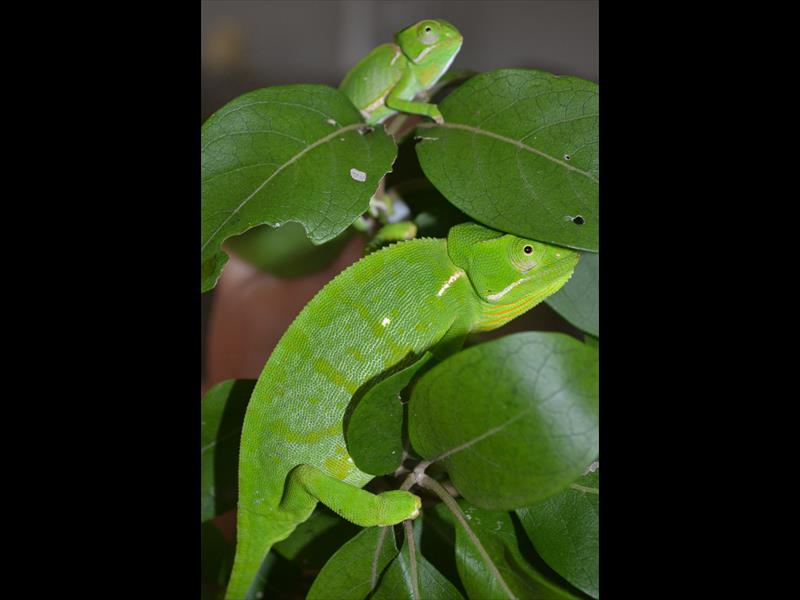
Little camouflaged ground lions are a lovely addition to your garden, as they keep the insect populations in check and are fascinating to see in action.
According to local environmentalist, Simon Bundy, the most common chameleon on the North Coast is the Flap Necked chameleon, but one also sees the KwaZulu-Natal dwarf chameleon, a.k.a black headed dwarf chameleon, which is a smaller species and is primarily brown in colour.
Attracting them to your garden is not as easy as digging a hole and planting a specific tree, it can be difficult.
“Chameleons employ stalking and ambush predation strategies, therefore they require a variety of habitat that allows them to employ these strategies,” he said.
Key elements to making the ideal chameleon habitat is to create reasonable cover of natural vegetation and for this Bundy advises forest canopy, shrubs and taller grasses.
“This plant diversity also encourages different insects into these thickets, upon which the chameleons prey,” he said.
“Establishing a variety of indigenous plants is the best way to attract insects to the garden. These would include ground cover herbs, such as Natal foxglove, as well as various types of grasses.”
He adds that a good design tactic is to encourage connectivity of habitat, which can be done by keeping grass, shrubs and tree canopy in close proximity to each other.
Bundy warns that over extensive use of pesticides has a negative effect on the animal life in the garden, which in turn obviously affects the prey population for chameleons.
Furthermore he said that highly manicured lawns and well tended gardens are not conducive to chameleon habitation.
“Remember that chameleons deposit their eggs in the soil and therefore digging over the beds to keep them trim and neat and address weeds, is not a great idea.
So, skip your chameleon corner next time you mow the lawn and let nature take over, inviting the chameleons to their new home.

Stay in the loop with The North Coast Courier on Facebook, X, Instagram & YouTube for the latest news.
Mobile users can join our WhatsApp Broadcast Service here, or if you’re on desktop, scan the QR code below.