

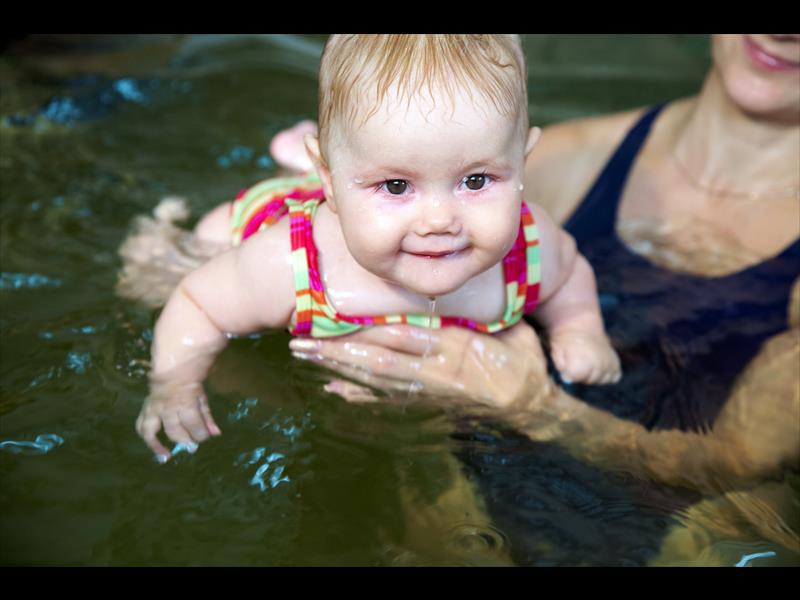
Children of all ages are generally attracted to water, but the seemingly harmless fun liquid can quickly turn into a danger zone.
Making sure your child is safe around water is crucial and there are a few ways of doing this, with the most important one being swimming lessons.
Ballito swimming instructor, Zelma Schotter has been teaching children of all ages how to feel confident in the water.
“Although babies can start swimming as soon as the umbilical cord is healed, I teach babies from the age of six months and believe that children should be introduced to water as early as possible,” said Schotter.
She said that some children develop a fear of the water as they get older, generally around the toddler stage, therefore it is better to introduce them to swimming before this stage.
“To prevent this fear from developing further, it is important for the child to learn that water is fun and by adding mum and dad to the water, it becomes more interactive,” she said.
Schotter is always amazed how quickly the little folk learn to love and be confident in water.
“Most of the babies who started swimming lessons with us from around age six to 18 months, are generally floating independently and can swim independently for up to seven metres. They are also able to pop up for air when needed and then carry on swimming until they reach a point of safety such as the end of the pool.”
Schotter warned however, that no matter how strong or confident your child is in the water, it is best to make sure they are always supervised.
Knowing how to swim is not enough though, which is why extra safety precautions need to be taken.
“Ensure that access to your swimming pool is restricted via properly installed fences at the correct height, including gates with self-locking mechanisms,” said Schotter.
According to Schotter there are also safety alarms on the market that will go off if it detects anyone entering the direct pool area.
Another option is the good old safety net, which is practical when the pool is not in use.
“Ensure everyone in the home, including the child’s nanny, knows how to respond to aquatic emergencies by having appropriate safety equipment and taking water safety, first aid and CPR courses,” said Schotter.
So, get your swimming costumes on and get ready for safe fun in the water.
Stay in the loop with The North Coast Courier on Facebook, X, Instagram & YouTube for the latest news.
Mobile users can join our WhatsApp Broadcast Service here, or if you’re on desktop, scan the QR code below.