

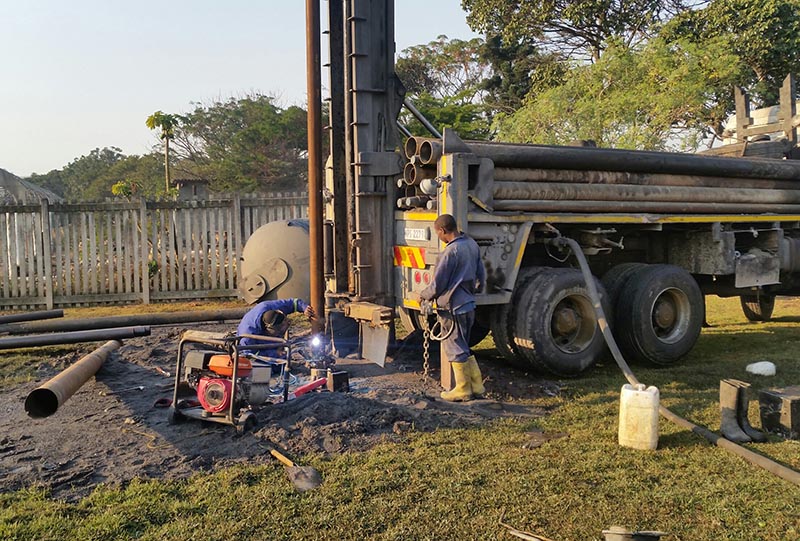
Uncontrolled borehole drilling in the lower parts of Ballito, because of the drought, could cause the death of the iconic waterberry swamp forest areas.
“Private boreholes may deplete Ballito’s ground water and kill what is left of the two protected swamp forests, if not carefully managed,” said Dolphin Coast Conservancy chairman, Di Jones.
The ongoing drought and uncertainty of Ballito’s water supply have seen an increase in residents turning to private boreholes to secure their own water supply.
Jones became concerned when she found out that boreholes where being drilled in Marion Road, extracting water from the Pigeon Wood swamp forest, directly behind Coco De Mer Boutique Hotel.
Swamp forests (also known as flooded forests) are forests that are submerged in fresh water, either permanently or seasonally.
Swamp forests occur when an aquifer (underground river) reaches the surface.
Essentially swamp forests and wetlands are nature’s water filters as the plants that grow in the water hold back impurities.
Durban-based independent environmental consultant, Johan Bodenstein said a healthy swamp forest has the ability to purify sewerage water and destroying them would have a destructive effect on an area’s water quality.
Ballito has two swamp forests, Waterberry and Pigeon Wood – and both are regarded by Ezemvelo as conservation sites of significance that require protection.
“Swamp forests are very valuable little eco systems and they are fast disappearing due to urban development,” said Jones.
La Ballito was built in the waterberry swamp forest and in its early days, water constantly had to be pumped from the basement of the skyscraper until that part of the swamp forest eventually dried up.
Jones is concerned that the aquifer that feeds Ballito’s swamp forests will be overused, leading to the death of the forests.
Bodenstein said drawing water from any aquifer reduces the water that reaches the swamp forest, affecting the plants and animals that live there and intensive hydrological research has to be done for each proposed borehole area.
“Swamp forests in South Africa are a threatened habitat and as such are protected by the law,” said Bodenstein.
Certain frogs and birds live only in these specialised ecosystems and will become extinct if not protected.
Biodiversity is critical to nature’s ability to adapt and survive natural disasters and climate change, said Bodenstein.
“The current drought is a natural disaster and by drawing water from this aquifer, we are weakening the swamp forest and its inhabitants’ chances of surviving the drought.
Swamp forests secure the surrounding area’s water quality and have to be protected,” he said.
It is possible to manage the amount of water extracted by private boreholes but rogue boreholes may be difficult to detect.
The drilling of private boreholes in an environmentally sensitive area was selfish, he said.
People had to think carefully before doing things that may cause irreparable damage.
It was time for the people of Ballito to work together to deal with the drought and find alternative ways of coping, rather than taking the easy way out.
“We should now focus on water for survival and not be impatient and selfish.”
Sembcorp Siza Water (SSW) technical manager, Kobus Fourie said the company’s aim was to ensure compliance with the environmental and national water acts and the Ilembe district municipality bylaws.
They do not support the irresponsible and illegal drilling of boreholes.
He said SSW was in the process of entering all water usages into a geographic information system (GIS), making it easier for them to accurately monitor and regulate water use.
However, this system depends on the consumer following the proper and legal channels before they drill and SSW advises all existing unregistered borehole users to register with them.
As far as hydrological studies go, Fourie said it was the responsibility of the person who wished to drill a borehole to undertake the respective studies at their own cost before drilling and then attach the results of the studies to their application before any drilling took place.
SSW does not allow drilling of boreholes in the swamp forests, or anywhere else, if the studies indicate that a borehole would deplete the underground water system.
“It must be noted that not all borehole water is safe for drinking and could lead to serious illness and even death in some instances if the water quality is poor,” he said.
Although the legislation allows for penalties for non-compliance, SSW’s approach is first to assist, monitor and ensure easy compliance before enforcing penalties.
Application forms for boreholes are on SSW’s website.
Stay in the loop with The North Coast Courier on Facebook, X, Instagram & YouTube for the latest news.
Mobile users can join our WhatsApp Broadcast Service here, or if you’re on desktop, scan the QR code below.