

She lives a rich life, despite the medical odds
Lesa BradshawI was awarded the Walter Simeone bursary to complete an MBA through Mancosa. Her thesis focused on Disability Integration models for South African companies.
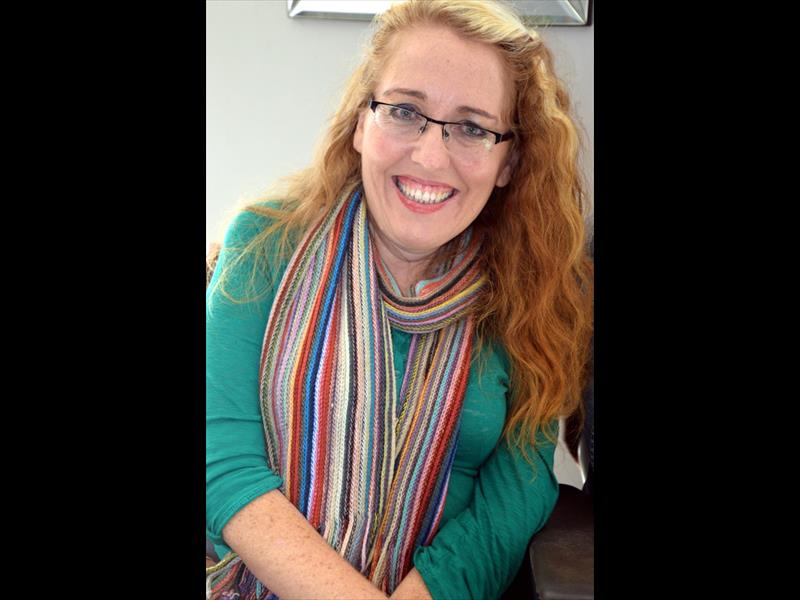
Lesa Bradshaw won the July Ilembe Chamber and Margaret Hirsch Woman Achiever of the Month Award. She is a partner of Bradshaw Le Roux Consulting, recruitment and assessment specialists and disability integration consultants.
Lesa was born with a genetic condition called Spinal Muscular Atrophy (SMA) a condition that causes muscular weakness in all the voluntary muscles in the body. Technically, she should not be able to lead an independent life, but technicalities have never bothered Lesa.
She has also become a sought after motivational speaker, using her unique blend of humour, personal experience, subject expertise, confident approach and a genuine passion for empowering people with a disability – which has a profound effect on her audience.
We asked this vivacious and dynamic woman about her life, experiences and how she has overcome her disability to live a fulfilled life.
Tell us about the diagnosis and prognosis of SMA
I was diagnosed at around two and a half years old when my mom noticed I would pull myself up on things and lean, but never “toddle” or support myself to stand or walk. It was the days before Google, so the diagnosis was made and there was very limited information that my parents had to go on. The doctors basically recommended they make me comfortable as I would never get stronger or improve, however my mother couldn’t accept that, and she learned how to do physiotherapy with me, which she did daily up until I left home at 17 years. She decided telling me about the ‘doom and gloom’ prognosis was not going to benefit me in any way, and so she simply explained my muscles were not strong and I had to exercise every day to make sure they didn’t get any weaker. I only really researched my condition when I was 31 years and my husband (at the time) and I wanted to explore the risks of me having a child. I remember phoning my mom and saying, “Are you sure I have SMA mom? It doesn’t sound like what I’ve got?” She casually said
“yes but you aren’t exactly text book dear so I wouldn’t worry about it.”
What school did you attend?
I attended Umhlali Primary where the principal and a few select stakeholders agreed to sneak me through into mainstream school, as back in the day children with “diabilities” were only allowed to go to a special needs school. I was discovered in Std 5 by some awful old duck who worked for the department of education, and was told I could not go to Stanger High School with my friends the following year. Their argument was that I would be unable to manage in a school with stairs – however, this was unjustified as I then went to Our Lady of Fatima for a year and had no problem being hauled up and down stairs by the young ladies in my class. I then had the opportunity to go to Uthongathi, which was much closer to home, and was very progressive in its design, being built without stairs and having a philosophy of inclusion. Behind the scenes, the fight to allow me to go to Stanger High School was raging, and with a new principal who heard about me, I was invited to attend. Fortunately, my friends stepped in and helped me get around, and very soon everyone was chipping in to get me on and off the bus, but and down stairs to classes, and wherever I needed to be.
How did you cope at university?
I went to the Grahamstown Festival in matric, and fell in love with the university, so I begged my parents to let me register to study Psychology at Rhodes the following year. It is only now, as a mother myself, that I realise how brave my parents were to let me go, knowing my physical vulnerability and not being on hand to protect me. Fortunately, they had equipped me with a feisty attitude, a good problem solving brain, and a great sense of humour – all tools I needed to organise my life to get around campus and enjoy varsity life. Being the only one who had a back door key to the res also helped my case dramatically, and proved to be a good way to make new friends as I smuggled them back into the res after curfew!
What are the daily challenges you face and have you adapted your home in any way?
I’ve always said that living with a physical disability is more about logistics management than anything else. The best way to try to understand my condition is to imagine that you are wearing a heavy lead suit – I’m still convinced that gravity is noticeably stronger around me, lol!! I always laugh at my fitness obsessed sister and mother (who don’t have a disability), saying that they are wasting their energy by exercising – and that I have made it my personal mission to conserve energy as part of my “going green” initiative!
But on a more serious note, when daily functions are difficult to manage, the solution is to surround yourself with the assistive devices that you need to help you. After my divorce, I moved from Waterfall to Ballito, and my magnificent brother in law, Sean Kirkham, made it his personal mission to help me build a home that facilitated my independence as much as possible. So, with substantial support from both Sean and my sister Renee, my home was built with wider doors, open spaces, and built in assistive devices all designed to look good yet make my life easier. This home, together with my adapted vehicle, gave me the logistical support to live independently as a single mom.
How did you cope with pregnancy, a baby and raising a daughter?
Having Savannah is one of the greatest achievements of my life – she makes me burst with love and pride every day. When my ex and I first decided that we wanted a baby, I did a bit of research on other women with SMA who had had children in an effort to understand what I was in for. I really struggled to find anyone, however and those that I did find, struggled with breathing problems which compromised their pregnancy. I have never had any breathing problems, however and so I decided that the next step was to explore the genetic implications. SMA is a recessive genetic condition, and so we had to map my husband’s genetic structure to ensure he did not have the recessive SMA gene lurking. The results gave us the all clear, and the next minute I was pregnant. I had a relatively easy pregnancy, although given the size of my belly that was sitting on my lap, I did tend to faint occasionally because of the impact on my blood pressure. It was quite funny though, as I could feel when I was about to faint, and I had a few minutes to warn everyone, then I’d put my head down all elegantly, pass out for a few minutes, then pop back up and carry on. I remember a few occasions when I terrorised delegates who were in my training sessions by saying, “Ok I’m going to just pass out for a few minutes, so if you could turn to page 32 in your workbooks and work in teams to answer the questions in the meantime, I’ll be back shortly” … then I’d put my head on a pillow on the desk and pass out – you should have seen their faces!
When Sav was born, it was again about logistics, as I did not have the strength to pick her up myself. So we had a beautiful sleigh cot designed that was eye level which I could open to get to her. I had a crib on wheels, and a pouch that I used to carry her. We also hired an au pair called Stacy who was fantastic with helping me with Sav, and my husband was a very hands-on dad. So somehow we managed. Savannah learned to be physically independent from a young age, and was terribly clever in her own little techniques she developed to work with my disability. I remember her using a footstool to climb up on when she wanted to sit on my lap. I used to tell her that I was a mermaid, which is why I couldn’t walk – I had swapped my tail for legs that weren’t strong so I could live on land and marry her dad! At 11 years Savannah has developed into an independent and empathetic young lady who helps me when I need it, but who does so without the slightest awareness that I am anything other than just her mom. We often laugh with my fiance, Bruce, as both he and Sav say that they’d prefer me not to be mobile as I am hard enough to contain as it is!
Explain your business and tell us about your further studies.
In 1998 I opened Bradshaw LeRoux Consulting, with my best friend and partner, Nicky LeRoux. We both had psychology honours degrees and were registered psychometrists in Independent Practice, and started offering competency based and psychometric assessment services. In 2004 we opened a recruitment division that focused on placing people with a disability (driven by a demand from our existing clients) and in 2008 we opened our Disability Integration Consulting Services which helps companies create ‘disability inclusive’ environments. We are now recognised as leading specialists in this field on a national level. During that time, I completed a Diploma in HR Management, and gained accreditation to use a range of various personality and cognitive assessment tools. In 2011, I was awarded the Walter Simeone bursary to complete an MBA through Mancosa – which I completed last year. My thesis focused on Disability Integration models for South African companies.
What do you need people to know about your situation so that they are not patronising but wise?
I can honestly say that a person with a disability’s self-perception and sense of confidence impacts hugely on how others treat them. In my case, I cling firmly to my Hollywood star self-image, and am occasionally surprised when I see a person in a wheelchair approaching me, only to discover it is a mirror in the shopping mall that I am approaching! So I find it somewhat amusing when someone speaks to me slowly as if I have a cognitive challenge, or when someone gives me that look of pity. The reality is that I am one lucky lady – I have had an amazing life, I am passionate about my business, I have the most supportive and quirky family you could ask for, I am loved by a fiance who loves my soul above all else, and three children (two step children to be, and my daughter) who make me sparkle with pride. Given all of that, why would one feel sorry for me? Yes, it is likely that I shall expire at some point, and perhaps it won’t a pretty journey towards the end, but I have a cunning plan, when I can no longer move around and be physically active, I shall write a book on the many “Lesa-isms” that I have developed to put some style and pizzazz into disability… watch this space.

Do you want to receive news alerts via WhatsApp? Send us a WhatsApp message with your name and surname to 061 718 4438.
Please read our WhatsApp broadcast list disclaimer.
Join us on BBM at 59015786
Join the conversation on Facebook, Twitter and Instagram.
Stay in the loop with The North Coast Courier on Facebook, X, Instagram & YouTube for the latest news.
Mobile users can join our WhatsApp Broadcast Service here, or if you’re on desktop, scan the QR code below.