

Reflecting on the heritage of Tongaat’s greatest archaeological gem
"Seventy thousand years ago is a long time."
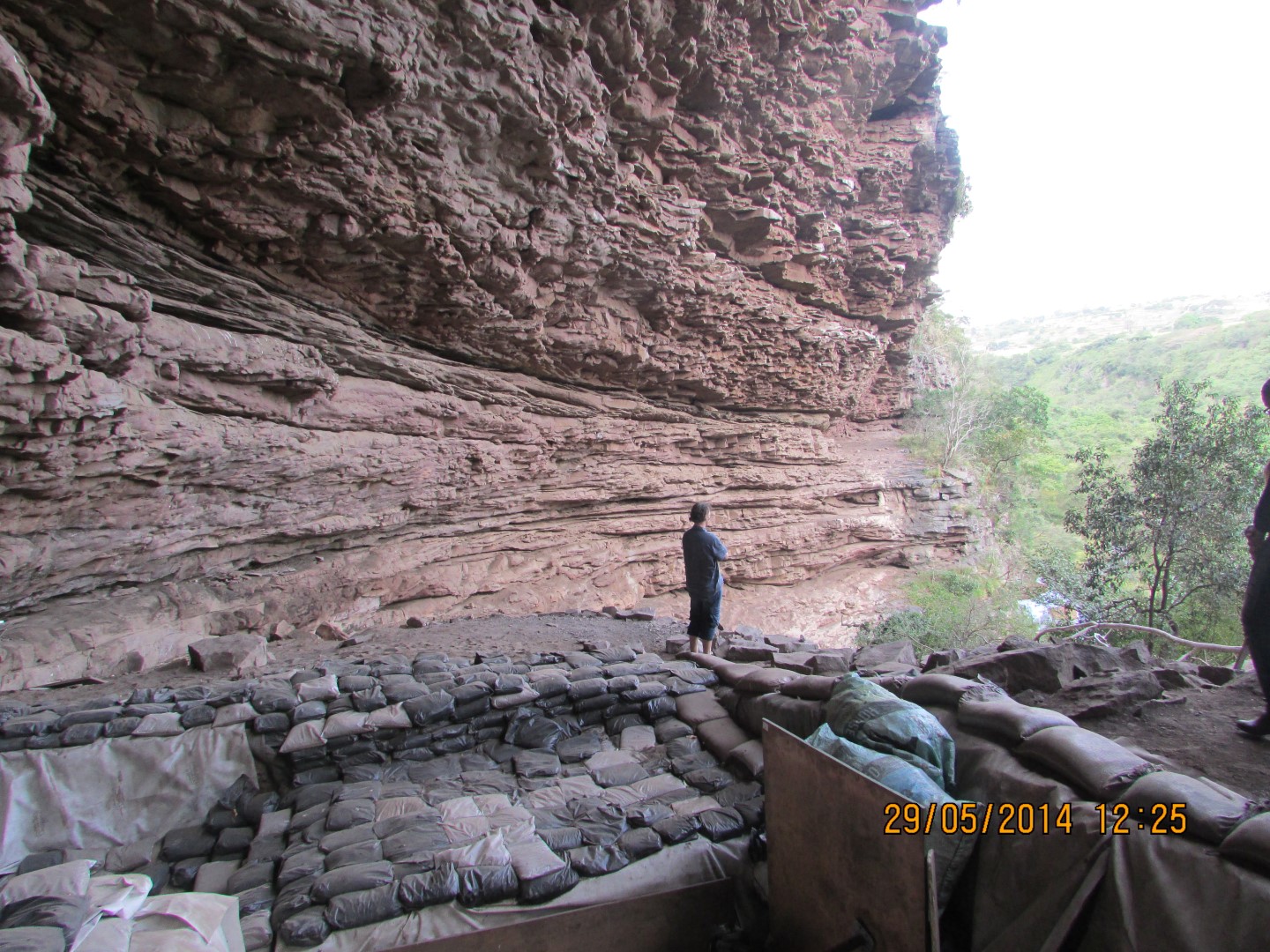
Friend of Sibudu Derek Nicholson reflects on the significance of Heritage Day and what is should mean to people living on the North Coast.
The week before last we had Heritage Day and I didn’t buy anything for a braai. Oh well, next year I will make a better effort. It was Spring Equinox too.
What did we do last year? Can’t remember.
What did our ancestors do on Heritage Day?
Well perhaps it is not a proper question, since our ancestors are our heritage, sort of.
If you go back in time, say 1 000 years, you could probably have joined a group of modern humans around a fire cooking meat. You would be hard put though to find a common talking point, except the weather perhaps.
But go back 70 000 years, what then? If you were near Ballito, next to the Tongaat River a little inland from Maidstone, you perhaps could have gatecrashed a celebration in the shelter of a cliff overhang on a wide ledge above the river.

Since this group of humans would be on the ledge because it offered them some means of protection from human-eating animals and strangers, like you, you would need to do some quick talking or friendly sign language to become more of a curiosity and less of a threat.
They let you live, and ignore you.
The ledge and cliff overhang has been carved out by the river over a long period of time. It is an ideal place for a smallish group of humans to use as a base for their hunter-gatherer lifestyle. On the wide ledge below the immense cliff overhang they are relatively safe from animals and hidden from other groups of humans if they should pass close by.
Seventy thousand years ago is a long time; what is the weather like?
Twenty-four hours in the day, sun rising and setting just like it does today, and the moon too; thunder storms, rain, wind, all very much like today.
It isn’t Spring Equinox though, even if you went back exactly (according to our calendar) 70 000 years. That is because of the Precession of the Equinoxes – but you will have to look that up somewhere else.
Sea levels haven’t always been where they are today so you can’t guess how far it is to the beach, but it does seem that some of these people have been there because you see some strings of small shells.
Perhaps they are surfers too.
Were these real people?
Yes.
Did they really live near to Ballito and Tongaat?
Yes.
We know this because archaeologists realized that a sheltered cliff ledge such as this would have attracted any humans in the area. They investigated and have unearthed artifacts (stone and bone tools) that they date to almost continuous occupation from 80 000 to about 30 000 years ago.
So, the site was like a mansion in Parktown or La Lucia – but with fewer neighbours.
Population was sparse in those days and small hunter-gatherer groups probably avoided each other. The shelter was prime real estate then and today is one of the few examples of very early human occupation sites that show evidence of the beginnings of technology.
The site is known in English as Sibudu, but has other similar local traditional names. The significance of Sibudu is so great that efforts are underway to have it declared a provincial and national heritage site. What would an archaeologist give to be in your shoes!
Wanting to be an accepted part of the group you have hidden your shoes and you feel a little out of place in your Woolworths kit; they – men, women, and children are not wearing much, skins and grass covering.
You see a few large, flat piles of sedge brought up from the river. Some members of the group are lounging on these piles. Others are plaiting long blades of grass to make grass cords for the nooses you see around the necks of small, dead animals that have been caught in snares along the river. There are embers smouldering and a small group of older children trying to start a fire by rubbing sticks together.
You are fascinated to hear their communications.
Sometimes it sounds as though they are singing and then someone seems to reply, also in song.
At other times their communication sounds very much like talking and they often laugh.
Do we know what their language sounded like?
If some future technology can extract ancient sound from the rocks of the cliffs there may be a way of knowing something their language but for now linguists must rely on other disciplines, other evidence in speculation.
Possibly advanced study of living human brains will give the best clues to the relationship between modern human brains and language.
Further away is a group tap, tap, tapping with hard round stones on other stones making sharp flakes, or stone scrapers, or arrow heads. These chips, flakes, and other stone tools are what archaeologists are carefully digging up at the site.
Are these people our ancestors?
Well perhaps not them exactly, but certainly another group just like them living close to the Red Sea about the same time, or 20 or 30 000 years earlier.
At a time when the climate and sea level created a corridor a few small groups were able to wander across the narrowest part of the Red Sea, and then along the coast, and eventually to the rest of the world.
The corridor wasn’t open for long.
Everyone in the world is related to the small number who crossed the narrow, shallow sea into Asia.
Next Heritage Day don’t forget to toast Sibudu and your ancestors.
Do you want to receive news alerts via WhatsApp? Send us a WhatsApp message with your name and surname to 061 718 4438.
Please read our WhatsApp broadcast list disclaimer.
Join us on BBM at 59015786
Join the conversation on Facebook, Twitter and Instagram.
Stay in the loop with The North Coast Courier on Facebook, X, Instagram & YouTube for the latest news.
Mobile users can join our WhatsApp Broadcast Service here, or if you’re on desktop, scan the QR code below.