

Positive response to state vet’s free vaccinations
Many locals took advantage of the free vaccinations, with one pet owner in Salt Rock telling the Courier they were more than impressed that the state vet still managed to offer this service to the community.
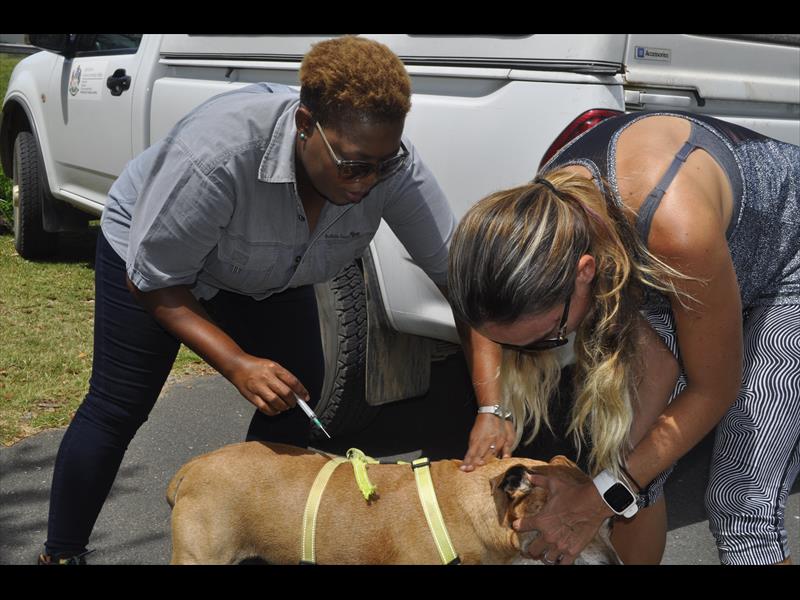
Representatives from the iLembe branch of the state vet were in Ballito, Salt Rock and Shakashead last week to carry out free rabies vaccinations.
This follows an attack on two girls bitten by a rabid dog at Shortens Country Estate recently.
According to Quintin Doidge from the state vet clinic in Stanger, the dog attacked two girls aged five and ten after trying to bite another man.
“The two girls are receiving the full treatment required to prevent them getting rabies. They are doing well and the dog was euthanised.”
This scare prompted many locals to take advantage of the free vaccinations, with one pet owner in Salt Rock telling the Courier they were more than impressed that the state vet still managed to offer this service to the community.
They are also planning to go to other areas around KwaDukuza for rabies vaccinations at a later stage.
Doidge urged residents not to touch any stray dogs but contact the SPCA or the state vet clinic, especially if they appear to be rabid.
In August last year a two-year-old boy died after being bitten by a rabid dog in upper Tongaat. This led to an intensified campaign against rabies by the KZN agriculture and rural development department (KZNDARD).
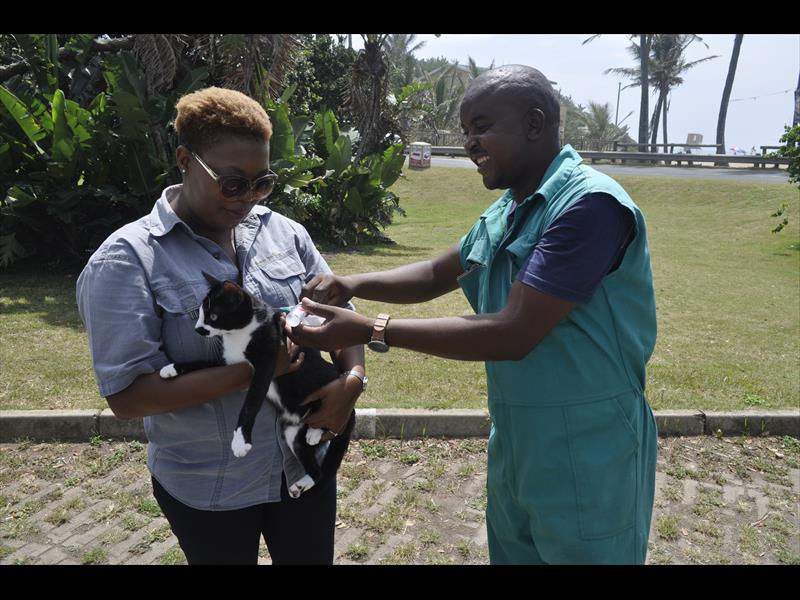
Until recently KZN was considered rabies free thanks to mass dog vaccination programmes spearheaded by the KZNDARD, the World Health Organisation and the Bill and Melinda Gates foundation.
“We are targeting the vaccination of more than 70% of the dogs in these districts as they remain the main source of the disease for the rest of province,” said ministry spokesperson Khaye Nkwanyana shortly after the death of the toddler.
In the long run, mass vaccination and education campaigns are planned for across the province from Inanda to Richards Bay.
According to the World Health Organisation, an average of 60 000 people die globally from rabies every year.
Treatment should be sought as soon as possible from the time of suspected exposure to the virus
Also read: Rabies kills two-year-old in Upper Tongaat
The rabies vaccine is given in a series of five shots over 14 days. In more than 99% of all cases of human rabies, the virus is transmitted via dogs but cats, rabbits and other wild animals can also be carriers. The rabies virus is contracted through wounds (e.g. scratches from an infected animal) or by direct contact with mucosal surfaces (e.g. bite from an infected animal).
Once inside the body, the virus travels to the central nervous system, where a majority of the clinical symptoms manifest. The incubation period averages two to three months and death occurs within two weeks after the appearance of clinical symptoms if intensive care is not sought.
At the initial onset of rabies, symptoms begin with flu-like symptoms, including: fever, muscle weakness, tingling and burning at the bite site. As the disease progresses, the person may experience delirium, abnormal behavior, hallucinations, and insomnia.
Once clinical signs of rabies appear, the disease is nearly always fatal, and treatment is typically supportive.
Contact Doidge on 076 821 7086 or the department of agriculture office on 032 437 7500/4/9.
>> Ready to say ‘I Do’ on the Dolphin Coast? Meet the team ready to advise, help and deliver on your big day.
>> Visit our Education feature for a collection of all the best schools, tutoring systems, and even some colleges and training facilities on the North Coast.

Do you want to receive news alerts via WhatsApp? Send us a WhatsApp message (not an sms) with your name and surname to 061 718 4438.
Please read our WhatsApp broadcast list disclaimer.
Join us on BBM at 59015786
Join the conversation on Facebook, Twitter and Instagram
Stay in the loop with The North Coast Courier on Facebook, X, Instagram & YouTube for the latest news.
Mobile users can join our WhatsApp Broadcast Service here, or if you’re on desktop, scan the QR code below.