

Chaka’s Rock tidal pool under threat from poachers
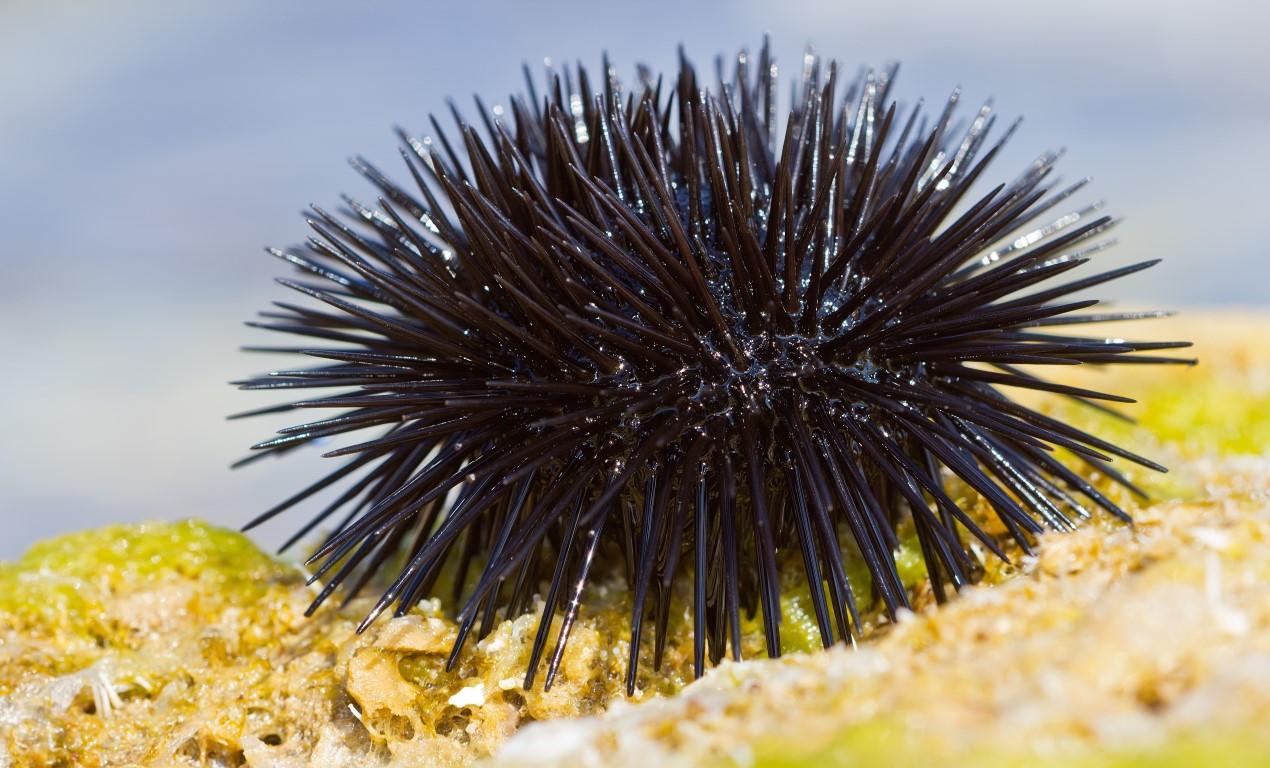
Sea urchins are collected for their roe, which you will find on sushi menus as uni and are considered a culinary delicacy in Asian cuisine.
Under the cover of darkness a Ballito resident stumbled on poaching activity recently, highlighting the threat to the area’s marine life from lack of policing.
The resident, whose apartment has a direct view of the Chaka’s Rock tidal pool, spotted the poachers at around 8.30pm about two weeks ago, at full moon.
“I noticed lights on the tidal pool and I thought it was maybe an educational group, but all I could see was two figures. I looked more closely and could see two men reaching down and removing things from the water and placing them into bags. They went around the pool in a few minutes and I waited to see where they were going but they came up the alley that comes out at Salt Cafe and then disappeared. Two nights later they were back again and I rushed down to the pool but they had disappeared.
“The only thing they could be removing with gloves would be the sea urchins, which come up along the wall at night,” the resident said.
Ballito’s coast is dotted with seawater pools that serve as sanctuaries for numerous sea creatures, which use the calm waters and the side walls and rocks for breeding and shelter.

According to Di Jones of the the Dolphin Coast Conservancy, the area’s tidal pools are rich with sea life habitats made up of fish, coral and invertebrate species.
Along with sea cucumber and star fish, sea urchins belong to a group called echinoderms. Sea urchins are critical to marine ecosystems all over the world, cleaning the sea floor of small particles and waste materials and turning them into nutrients that other creatures can use, much like earthworms on land.
South African Association for Marine Biological Research’s, Dr Sean Porter, a scientist with reef ecology specialisation, said urchins were an important component of coral and rocky reefs.
“They control algae and provide an important source of food for many fish.
“They also play key roles in terms of biological interactions with other species, such as with juvenile abalone, resulting in more healthy rock pools and reefs in general,” said Porter.
“All sea urchins within a Marine Protected Area are formally protected by the National Environmental Management: Protected Areas Act, and therefore cannot be harvested.
“Sea urchins outside of protected areas are conserved and sustainably managed by the Marine Living Resources Act,” he said.
However within the last decade this ecologically important species has been exposed to intense harvesting. Sea urchins are collected for their roe, which you will find on sushi menus as uni and are considered a culinary delicacy in Asian cuisine.
KDM marine safety manager Steve Honeysett said the Chaka’s Rock tidal pool was a marine protected area and no aquatic wildlife was allowed to be collected from it.
“Anyone caught poaching or collecting marine life will be prosecuted,” he added.
Since Ezemvelo KZN Wildlife lost its mandate to protect KwaZulu-Natal’s marine resources at the end of July 2016, reports of poaching and illegal fishing have increased substantially along KZN’s coastal shores.

“The amount of poaching taking place and the disregard for bag and size limits has increased since Ezemvelo staff were removed from the coast,” said Honeysett.
The decision not to renew Ezemvelo’s contract was taken by the Department of Environment, Forestry and Fisheries (DEFF) in spite of its good track record and its many years of experience.
For close to 32 years, well-trained Ezemvelo officials were responsible for maintaining wildlife conservation areas and biodiversity in KZN but the policing of the coastlines was handed back to the DEFF.
Conservation organisations have slammed the increase in illegal fishing and poaching and have accused the DEFF of not monitoring the beaches as closely.
“The situation urgently needs to be addressed by increasing the number of well-trained control officers along the KZN coast, or bringing back Ezemvelo,” said Jones.
To report poaching, illegal fishing and gill netting contact the DEFF’s Thanduxolo Ntshangase on 079 444 9951 or Govender on 072 231 6070.

Download The North Coast Courier mobile app, now available free from the Apple iStore and on Google Play, for IOS and Android phones.
WIN!
To celebrate the launch of the new app we are giving away some awesome weekly vouchers from OK Foods and Liquors and Col’Cacchio. To enter, simply download the app and submit a photo of yourself on the Facebook post with the North Coast Courier app showing us where you read your news.
Points for creativity!
Stay in the loop with The North Coast Courier on Facebook, X, Instagram & YouTube for the latest news.
Mobile users can join our WhatsApp Broadcast Service here, or if you’re on desktop, scan the QR code below.