Mermaid Tear Catcher to the rescue
Up to 90 percent of marine litter is made up of plastics, originating from both land and sea-based sources.
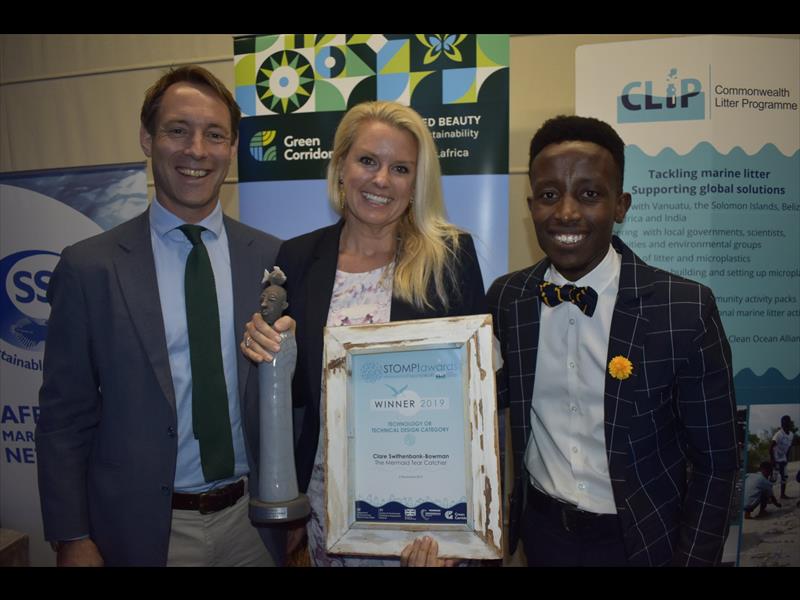
Former Ballito resident Clare Swithenbank-Bowman has struck an important blow for a cleaner marine environment.
Earlier this month Clare, who now lives in Los Angeles, presented her unique Mermaid Tear Catcher to the Commonwealth Litter Programme (CLiP) conference in Cape Town, and was judged the winner of the Technical and Technology Design category.
The “Stamp Out Marine Plastic Pollution” awards recognise individuals and organisations who take action by helping to reduce marine plastic pollution in SA.
Clare, who started the Litter4Tokens active recycling campaign in Shaka’s Head in 2015, launched her Mermaid Tear Catcher at the Ballito Pro in June, backed by the South Africa PET plastic recycling company PETCO.
The catcher is a recycled plastic “frisbee” that essentially is used to sieve out nurdles, a lentil-sized pellet that is the building block of all-known plastic products, and other small plastics from the sand and enables people to get involved in citizen science projects.
On October 10, 2017 a major spill of these translucent pellets in the Durban harbour spread along 2 000 kilometres of coastline, proving virtually impossible to clean up.
According to environmentalists the threat posed to marine and bird life was incalculable. Of the 49 tonnes which spilt into the water, only about 11 tonnes have been recovered – 23 percent of the total.
“My father and I invented the Mermaid Tear Catcher to help create awareness about the devastation of macro and micro plastics to our environment. Our beaches and rivers are full of nurdles which manufacturers use to make single-use plastic items, such as water bottles,” said Clare.
Clare partnered with the nurdle foundation in Scotland and added a unique code to each MTC which enables the user to load the geographic location and number of nurdles collected onto the Litter4Tokens website.
The data is sent to Fidra in Scotland, an environmental organisation that collates this type of data so that the effects of a spill of this kind can be understood.
Proceeds from the Mermaid Tear Catchers go towards funding the Litter4Tokens shops across South Africa.
Commenting on the judging process, Fiona Preston-Whyte, from the UK’s Centre for Environment Fisheries and Aquaculture Science which leads the CLiP programme, said that as scientists, they were looking for innovative, sustainable solutions which contributed to reducing or preferably eliminating plastic as a waste.
“The entries were of a high quality, creative and spoke of the innovative spirit of South Africans,” she said.
Up to 90 percent of marine litter is made up of plastics, originating from both land and sea-based sources.
This makes plastic pollution one of the most widespread problems facing our oceans today.
“We are working collaboratively with countries across the Commonwealth to try to find tangible and practical geographic and environmental solutions and are using these awards as a means to galvanize solution-based thinking around the issues of plastic pollution and in particular how it impacts on the oceans,” said Thomas Maes, principal marine litter scientist of CLiP.
Download The North Coast Courier mobile app, now available free from the Apple iStore and on Google Play, for IOS and Android phones.

Stay in the loop with The North Coast Courier on Facebook, X, Instagram & YouTube for the latest news.
Mobile users can join our WhatsApp Broadcast Service here, or if you’re on desktop, scan the QR code below.