

Is your speeding fine legal?
The Automobile Association of South Africa says that if you are charged for speeding, the prosecution will start from 1km/h over the posted speed limit.
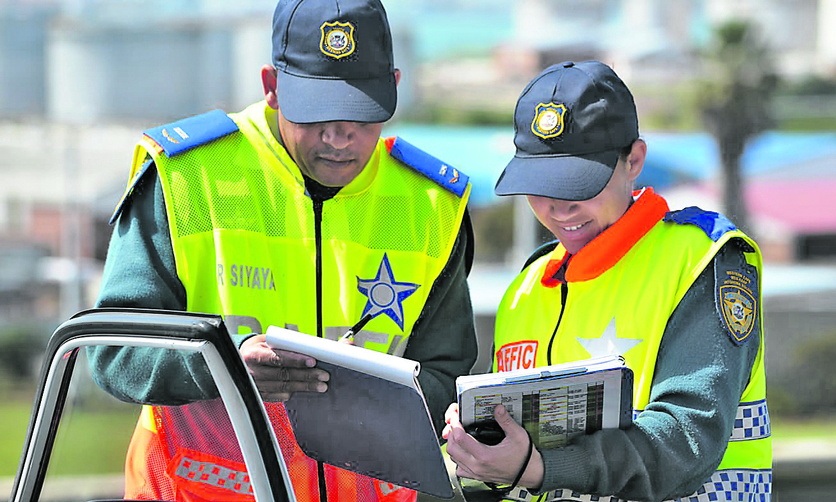
It’s that time of year again when road traffic officials are coining it, because holidaymakers are too keen to reach their destination.
Holidaymakers are fed up with being pulled over at every single roadblock while on their way down to the coast.
Unfortunately, some road users might not be aware of the requirements for a speeding fine to be legal, especially if they were caught speeding through the means of a handheld speed trap device.
So, unless you are a lawyer who knows road traffic legislation like the back of your hand, you should take the time to go through this very valuable information.
First of all, know when you can be fined. In simple terms, if you exceed the speed limit, you may be liable to a fine.
Although a 10km/h leeway of the speed limit may at times be applied, this is only a guideline.
The Automobile Association of South Africa says that if you are charged for speeding, the prosecution will start from 1km/h over the posted speed limit.
There is no minimum allowable distance between two speed traps. So, if you are thinking about flooring it having just gone through a speed trap safely, think again, that next corner might hide a very lovely Christmas present for you.
Thirdly, entering a new posted speed limit zone, for example, from 120km/h into an 80km/h zone, the AA states that you have a 300m grace distance in which to adjust your speed accordingly (an image of a drag racer with a parachute brake comes to mind in this case).
So, if you were pulled over 299.99m after entering a new speed zone, you are not liable to pay a fine – better break out the tape measure just to be sure. However, this is an operational guidelines only and the Director of Public Prosecution still has the final say.
And out of nowhere, a mustache pops out, flagging you down.
“Are you aware that you were travelling at an excessive speed of 136km/h in a 120km/h zone, sir?” to which you casually reply; “But it was downhill,” bringing us to our fifth point – a speed trap at the bottom of a hill.
Manned speed traps may be set up anywhere, but fixed, unmanned speed traps are required to have authorisation by the Director of Public Prosecutions.
This authority is motivated by improving traffic safety through reducing the speed to the speed limit in that area, regardless of the location.
Now, if you want to get really technical with a traffic officer and get his whiskery mustache dancing, you better get your facts right, especially when it comes to handheld speed trap requirements.
The guidelines as provided by the AA are:
· A valid calibration certificate and the operator’s certificate must be available at all times.
· A driver shall be afforded the opportunity to view the speed reading and the two certificates.
· The speed measurement equipment (SME) must be mounted on a firm and stable surface. If it is mounted in or on a vehicle, the vehicle must be stabilised.
The following is in terms of the prosecuting guidelines for speed measurement equipment and traffic light violation-monitoring equipment.
When selecting a site for a speed measurement exercise, the following must be adhered to, according to the AA:
· Site selection must be done during daytime for day and night time operation.
· There shall be no large, stationary, or metal objects within a radius of 50m in front of the radar SME (Speed Measurement Exercise).
· There shall be no metal road signs or vertical flat surfaces within 15 degrees on either side of the aiming direction, within a distance of 200m of the antenna.
· The equipment may only be used where there is a clear view within 45 degrees of the direction of aim over a distance of 600m.
· There shall be no high-tension cables within a radius of 100m of the antenna.
· There shall be no discharge type lamps in operation within 45 degrees of the direction of aim within 100m of the antenna.
· And finally, speed measuring equipment, the last point:
· Equipment modified or permanently set that no signals are received and processed from vehicles more than 300m away may be used on straight roads.
· Equipment not modified shall be used where rises and bends in the road take all vehicles further than 300m out of the measuring area of the SME.
Guidelines for prosecution with regard to speed measurements by laser equipment:
When selecting a site for a speed measurement exercise, the operator must have a clear and uninterrupted view of the road and the vehicle measured for the duration of the measurement.
Do keep in mind, that it is to your own benefit to know these rules and regulations.
If an officer and/or his/her senior officer is not able to provide you with any of the documents or certificates do not get involved or start an argument. Simply put, note it for your defence.
Download The North Coast Courier mobile app, now available free from the Apple iStore and on Google Play, for IOS and Android phones.

Stay in the loop with The North Coast Courier on Facebook, X, Instagram & YouTube for the latest news.
Mobile users can join our WhatsApp Broadcast Service here, or if you’re on desktop, scan the QR code below.