

High Court order gives Umhlali illegal squatters the boot
This comes in the wake of escalating illegal land invasions in recent months, which has seen people invade open unused land close to central suburbs in Ballito and surrounds.
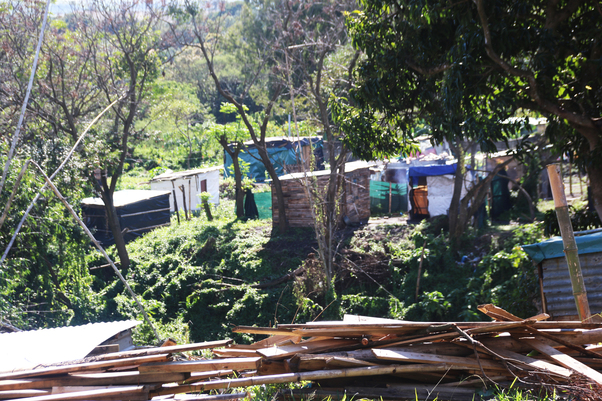
The Pietermaritzburg High Court recently granted Ballito businessman, Roy Tremearne an eviction order to remove about 80 people illegally occupying his property in the Umhlali Business Park, next to the old Umhlali station site.
This comes in the wake of escalating illegal land invasions in recent months, which has seen people invade open unused land close to central suburbs in Ballito and surrounds.
The application was defended by 80 of the land occupiers.

Eight representatives (5 of them occupiers on the land) acted on behalf of the applicants and appeared in court to oppose the eviction on February 18 after their attorney hired to represent them withdrew from the case citing lack of funds.
However, Judge Rishinand Seegobin ordered all occupiers to vacate the property on or before May 31, 2021.
The court also instructed that KwaDukuza municipality “take all possible steps necessary to provide alternative land for purposes of occupation, to the respondents and others occupying the properties”.
KwaDukuza municipality was given until April 19 to report to the court the steps taken to provide alternative accommodation to the respondents and the other occupiers, when such accommodation would be available and any difficulties it might experience in complying with the provisions set out by the court.

The matter was adjourned to April 22 for the court to consider KDM’s report.
However, KDM did not respond by the deadline because they only received the report on June 1, according to defence attorney Paul Firman.
In the report, KDM chief operations officer Mandla Manzini told the court that the municipality had a housing backlog of about 38 000 households and cited scarcity of suitable, affordable and well located land within KDM’s jurisdiction for a new housing development.
Manzini said KDM has seen a recent population growth of 3% with people coming from rural areas seeking jobs.
The economic migration had imposed an added burden on the already overburdened municipality, which was in litigation with numerous land invasions on municipal-owned land.
“I should point out that KDM will not be held to ransom by all illegal occupiers who are looking for a free ride and a means of benefiting from KDM’s housing policy before those who are already identified as beneficiaries.”
“KDM does not have the capacity to provide all the persons in the positions of the respondent(s) with alternative accommodation, temporary or otherwise. This would place an added burden on the municipality and its ratepayers,” said Manzini.
While the Prevention of Illegal Eviction from and Unlawful Occupation of Land Act 19 of 1998 (PIE Act) governs the eviction process in the event of a land invasion, Manzini said the act did not stipulate a mandatory obligation on the municipality to provide alternative accommodation to any unlawful occupiers who faced eviction.
He said that the absence of alternative accommodation was an important consideration which a court was obliged to take into account when granting or refusing an eviction order.
“This is on grounds as set out in section 4 (7) of the PIE Act that a court will have to consider when granting an eviction order. It is not the only ground,” he said.
KDM spokesperson, Sipho Mkhize said council had recently resolved to establish a task team to deal with the illegal occupations and related matters.
“Like the broader community of KDM, land invasion affects the council in many facets including but not limited to delaying or hindering the implementation of projects in properties reserved for infrastructure projects.”
“Many resources are required to address these land invasions which means council takes service delivery funds and channels them to clearing illegally occupied areas,” said Mkhize,
“Illegal occupation of land is driven by, in the main, economic migration and not necessarily shortage of housing.”
“In many of the illegally occupied areas you find that people choose to be there because it is closer to their work in the suburbs and some are there because its deemed to being closer to work opportunities. Central to these reasons is that its cheaper to invade land instead of renting a dwelling closer to these economic hubs,” he said.

Stay in the loop with The North Coast Courier on Facebook, X, Instagram & YouTube for the latest news.
Mobile users can join our WhatsApp Broadcast Service here, or if you’re on desktop, scan the QR code below.