

Picking the right generator for your home
As winter fast approaches and electricity usage rises, South Africa will almost certainly have continued loadshedding, aside from ongoing power issues that have arisen as a result of the floods.
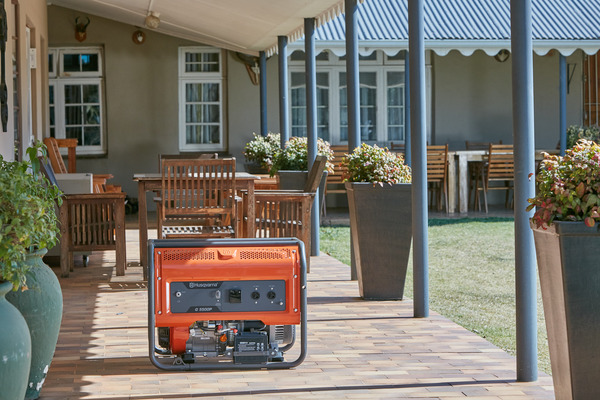
If you do not have the budget to fit solar panels to your home, but still want the lights on during power outages, you are going to have to think about a generator.
“While sitting in the dark, most people will consider a generator as an option, but the perception is that the cost and installation will cause more problems than solutions,” said Husqvarna national sales manager, Johan Kruger.
“A generator is more affordable than one would think and relatively simple to install if you use a good supplier. The reality is also that hybrid working models are becoming more common and a generator might not just be for personal use, but also as a business need,” he said,
So you have landed on a generator, but how can you gauge what power output and level you will need for your home or business?
Choosing the right generator for your needs
• Make a list of all of the appliances and tools that you would like to use when the power is off.
• Use a website such as daftlogic.com to get a rough idea of how much power each item on your list draws, and then add it up to find your power requirement.
• Decide how much you are prepared to spend and then balance this with generator sizes to find your ideal choice.
Installation and maintenance
Kruger says in his experience, the maintenance and use of a generator is often the main factor for people being put off a purchase.
“It is a common reservation that I encounter. Where do I put it? How do I connect it and turn it on?”
There are basically two types of generators that are available for at home use.
Standby generator
A standby generator is the top of the range product which will need professional installation.
These generators work by continuously monitoring your home’s voltage supply.
If there is a drop in power, or other issues are detected, then the generator will automatically turn on and restore power without any input from your side.
Standby generators are also much quieter than portable versions.
As the best option, these generators are more expensive, said Kruger.
Prices vary significantly depending on the power needed, but you are likely to pay more than R30 000.
Portable Generator
A portable generator is one you would more likely have seen in private use.
It works like an engine, turning an onboard alternator – which is fuelled by a petrol motor – into electricity which you can then use to power your appliances.
The generator will have built in outlets into which an extension cord can be directly plugged.
Portable options will need a manual start-up however, but once you have been taught how to do it, it is not difficult.
The benefit of this generator is that is much more affordable, while also being mobile and versatile for different uses.
“A generator is actually a very simple purchase once you know what your needs are. Considering the unstable electricity supply and the pressure to maximise earning potential, a generator really is an essential tool in South Africa today,” Kruger said.
Portable generators start at around R2 000, but for home use, you will likely be looking in the R6 000 and up range.
Follow The North Coast Courier on Facebook, Twitter, Instagram & YouTube for breaking news
Telegram Broadcast Service: https://t.me/joinchat/yJULuN8NaCs5OGM0
WhatsApp Broadcast Service: Add The Courier to WhatsApp at 082 792 9405 and WhatsApp your name and surname to be added.
Stay in the loop with The North Coast Courier on Facebook, X, Instagram & YouTube for the latest news.
Mobile users can join our WhatsApp Broadcast Service here, or if you’re on desktop, scan the QR code below.