

‘Blood moon’ lunar eclipse captivates Ballito skywatchers
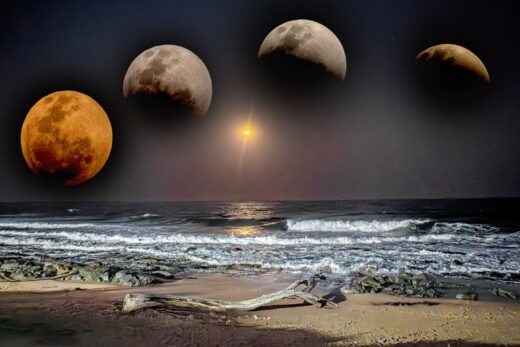
Different stages of the lunar eclipse were visible for just under five-and-a-half hours from aross the North Coast.
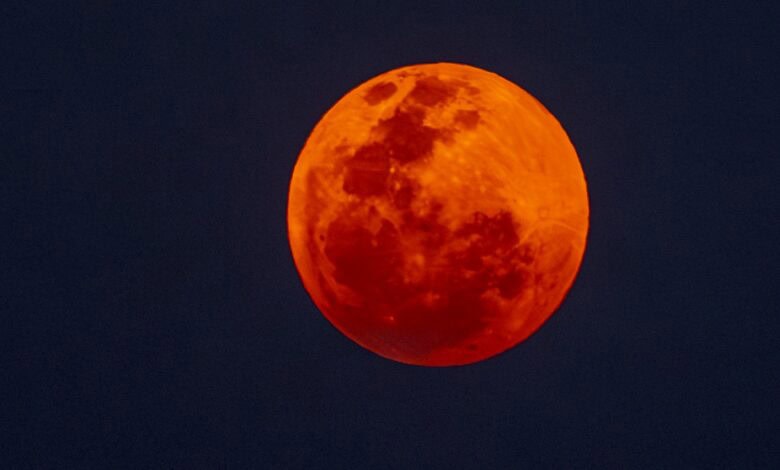
For a magical few hours on Sunday evening, millions across the globe united to witness the same celestial show.
Different stages of the lunar eclipse were visible for just under five-and-a-half hours from Ballito, with the total eclipse lasting almost an hour and a half. Total lunar eclipses occur when Earth sits directly between the Sun and the Moon, blocking all direct solar radiation.
Colloquially known as a “blood moon,” the Moon takes on a distinctive reddish colour. This happens because the only light reaching the Moon during a total lunar eclipse bends around Earth and passes through its atmosphere.
“The same phenomenon that makes our sky blue and our sunsets red causes the Moon to turn red during a lunar eclipse. It’s called Rayleigh scattering,” wrote NASA in a preview of a November 2022 eclipse.
“Light travels in waves and different colours of light have different physical properties. Blue light has a shorter wavelength and is scattered more easily by particles in Earth’s atmosphere than red light, which has a longer wavelength.”
The more dust or cloud cover in Earth’s atmosphere during the eclipse, the redder the Moon appears, as less blue light makes it through.
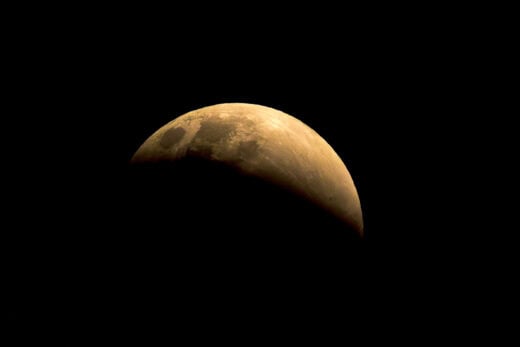
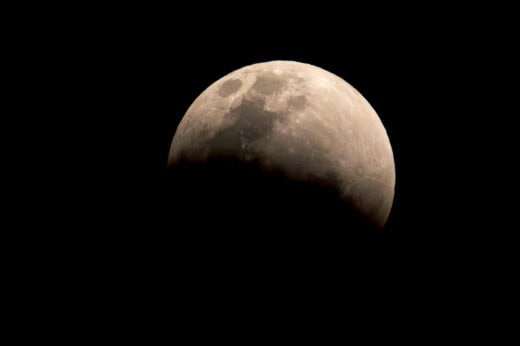
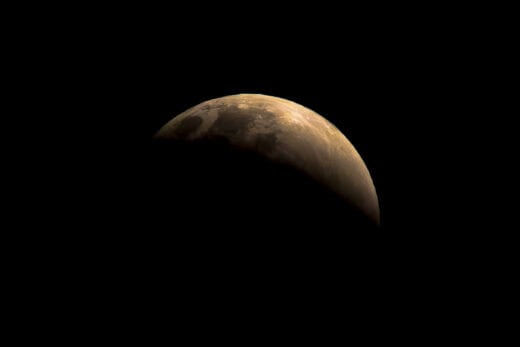
On Sunday, eagle-eyed viewers would also have noticed three distinct stages of the eclipse as Earth cast two separate shadows over the Moon – the penumbra and the umbra.
The penumbra is the first, lighter shadow, which partially blocks solar radiation. As Earth moved into position, this created the less obvious penumbral eclipse. For localviewers, this began while the Moon was still below the horizon and lasted until 6.27pm.
The umbra is the darker central shadow cast by Earth itself, more commonly recognised as an eclipse. It produced a partial eclipse while shifting into place, before causing total eclipse from 7.30pm to 8.52pm. A second partial eclipse followed as Earth moved out of alignment, with a second penumbral eclipse ending at 10.55pm.
Total lunar eclipses are relatively rare, with just 23 recorded so far in the 21st century. The next will be visible on March 3, 2026.
Stay in the loop with The North Coast Courier on Facebook, X, Instagram & YouTube for the latest news.
Mobile users can join our WhatsApp Broadcast Service here, or if you’re on desktop, scan the QR code below.

Stay in the loop with The North Coast Courier on Facebook, X, Instagram & YouTube for the latest news.
Mobile users can join our WhatsApp Broadcast Service here, or if you’re on desktop, scan the QR code below.