

Pollution provides major risk to protected marine areas
Upriver industrial and domestic effluent discharge is compounded by litter.
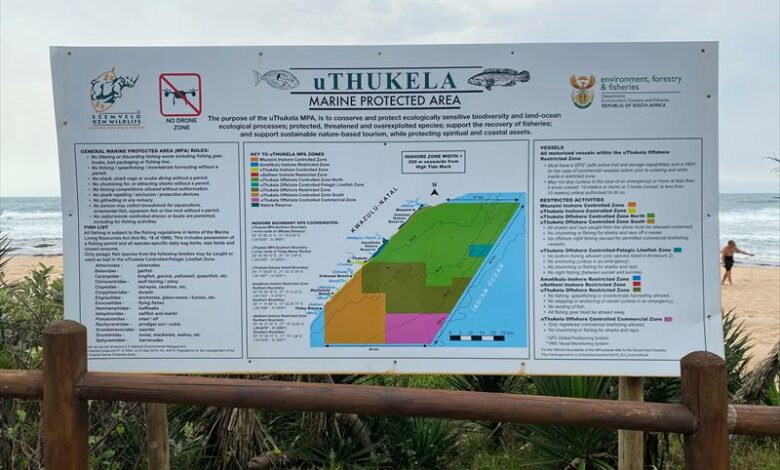
The North Coast is facing mounting pollution threats that are endangering its rivers, estuaries, and marine ecosystems.
According to marine ecologists, industrial and domestic effluent discharges are severely impacting the health of estuaries that feed into the uThukela marine protected area (MPA), a critical ecological zone along the North Coast.
Compounding this are other land-based pollutants including untreated sewage, agricultural runoff containing fertilizers and pesticides, and waste from informal settlements that lack proper sanitation and waste collection services.
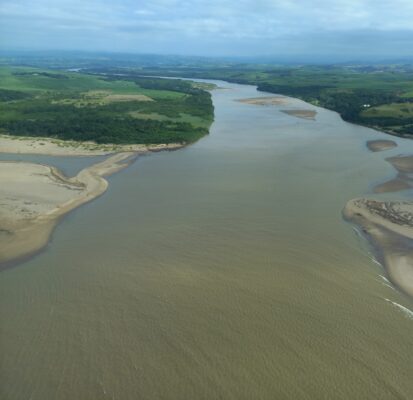
Sewage pollution is particularly severe, where failing infrastructure and poor catchment management have led to declining water quality and biodiversity loss.
A 2022 report titled State of the Coast: KwaZulu-Natal A review of the state of KwaZulu-Natal’s coastal zones, compiled by the Department of Economic Development, Tourism and Environmental Affairs and the Oceanographic Research Institute, noted that estuaries are the most polluted coastal habitats in the country.
READ MORE: Sea life thriving in uThukela Banks marine protected area | North Coast Courier
“The uMvoti estuary (near Blythedale) has been impacted by decades of industrial pollution that has resulted in it losing its status as an ‘Important Birding Area’,” said Ezemvelo KZN Wildlife (EKZNW) coast and estuarine ecologist, Santosh Bachoo.
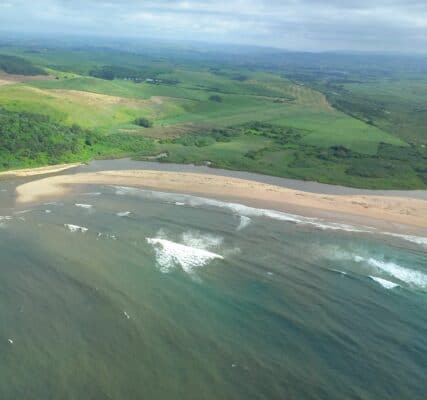
The iSiyaya estuary (near Mtunzini) faces a different set of challenges. Forestry operations in its catchment have drastically reduced freshwater inflow, leading to prolonged estuary closure. Additionally, mining activities have introduced runoff with a high-sediment load, impacting the water quality.
“Estuaries are the final recipients of everything that happens upstream. We are seeing the cumulative impacts of poor land-use practices, inadequate infrastructure, and limited enforcement,” said Bachoo.
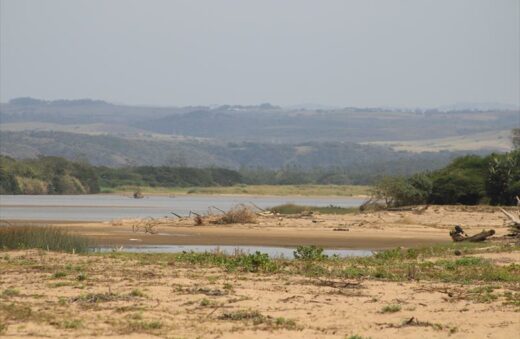
Agriculture, which dominates the catchments of these estuaries, is a significant contributor.
“The catchments at uThukela (Tugela) contribute herbicides, pesticides and fertiliser runoff that are affecting overall water quality and ecology of those systems. Additionally, water abstraction means reduced dilution capacity, increasing the effects of these pollutants.”
“Some of the estuaries have municipal sewage effluent being discharged into them without treatment to proper standards, further exacerbating the issue. Without adequate waste management infrastructure, these communities inadvertently contribute to the pollution burden,” explained Bachoo.
EKZNW’s offshore marine ecologist, Dr Welly Qwabe, added that agricultural and informal settlement pollution is not the only source of contamination in the estuaries, highlighting sea-based pollutants.
READ MORE: Illegal fishing threatens uThukela Banks marine protected area | North Coast Courier
“The runoff into the rivers is carrying agricultural waste and chemicals, plastic and industrial pollutants into the sea, which is affecting marine ecosystems,” he said.
“Sea-based threats, such as litter from vessels and oil spills, also pose risks, especially when ocean pollutants are carried into estuaries by tidal flows.”
While Ezemvelo plays a key role in monitoring and reporting, the organisation relies on other government departments and stakeholders to take action. Bachoo emphasised the need for a co-ordinated response.
“Protecting the uThukela MPA requires integrated catchment-to-coast management. Without collaboration across sectors, we risk losing these vital ecosystems.”
Stay in the loop with The North Coast Courier on Facebook, X, Instagram & YouTube for the latest news.
Mobile users can join our WhatsApp Broadcast Service here, or if you’re on desktop, scan the QR code below.

Stay in the loop with The North Coast Courier on Facebook, X, Instagram & YouTube for the latest news.
Mobile users can join our WhatsApp Broadcast Service here, or if you’re on desktop, scan the QR code below.