

Tugela Mouth photographer’s once in a lifetime shot of a pygmy kingfisher
JD Lotz reflects on photography, loss and the rare tiny bird that shaped a lifetime with his father.
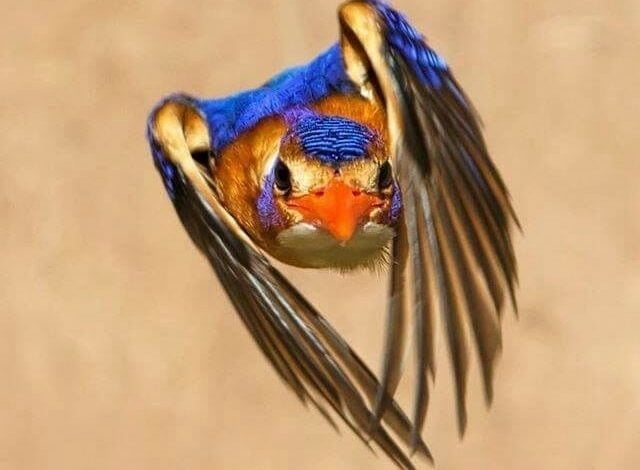
On the banks of the Tugela, a father’s love sparked a lifelong passion for photographing one of nature’s rarest and fastest birds, the African pygmy kingfisher.
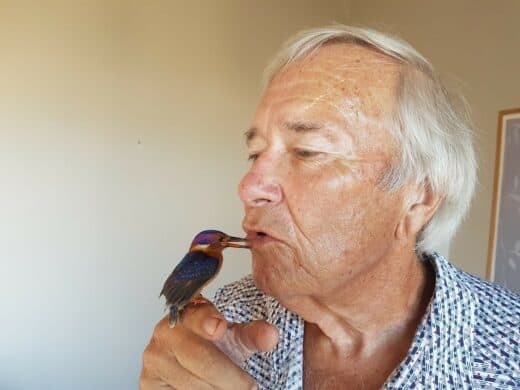
It was here that Tugela Mouth Resort owner JD Lotz first discovered his calling, guided by his father Gerrit, a renowned wildlife photographer and expert on the elusive bird. Gerrit’s connection with the pygmy kingfisher ran deep and he once hand-raised an orphaned juvenile before releasing it into the wild.
ALSO READ: Rare migratory birds flourish at Simbithi’s green spaces | North Coast Courier
In 2014, JD took up his father’s hobby to spend more meaningful time with him. Together, they spent countless hours at the estuary, waiting patiently for the fleeting moment when the kingfisher would appear.

JD often waited in silence on the muddy banks, eyes fixed on the horizon, hoping for that one timeless instant, that millisecond to capture this winged wonder in perfect flight.
ALSO READ: Salt Rock twitcher turns birding into a high-tech adventure | North Coast Courier
In 2016, he achieved a remarkable feat: a photograph of the African pygmy kingfisher flying dead-straight towards him at eye level, a nearly impossible shot, given their elusive nature and lightning speed.
“It is without a doubt the best photograph I have ever taken,” said JD.
“They are incredibly fast and difficult to capture in flight. You have to search hard; they are very scarce.”
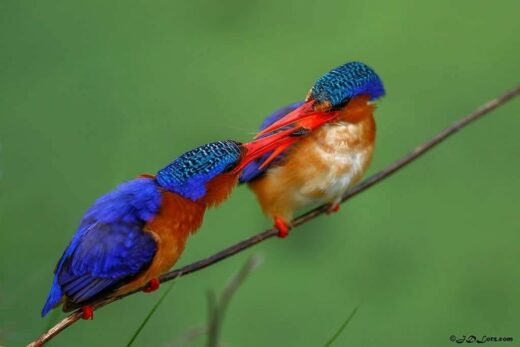
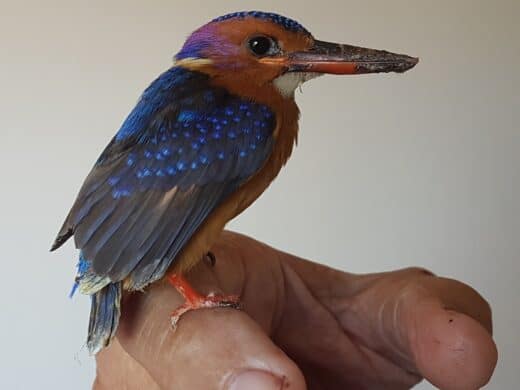
Often mistaken for the malachite kingfisher, the pygmy kingfisher is even smaller, with striking pink and purple cheeks and a shorter beak. These dazzling birds migrate to central Africa in winter, returning to the North Coast each summer to breed.
READ MORE: Conservationists unite to save the unique secretarybird | North Coast Courier
They dig nests into sandy soil banks, where both sexes excavate. Their diet includes frogs, insects, crabs and geckos but like many bird species, they are threatened by habitat loss.
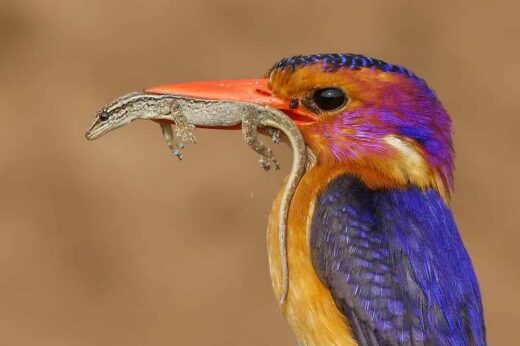
“Their mating rituals, the way they hunt, feed and interact – they are just amazing little birds,” said JD.
Over the years, JD estimates he has taken more than a million photographs trying to capture the perfect image of a pygmy kingfisher in flight or mid-meal. But after his father passed away in 2022, the joy behind the lens faded.
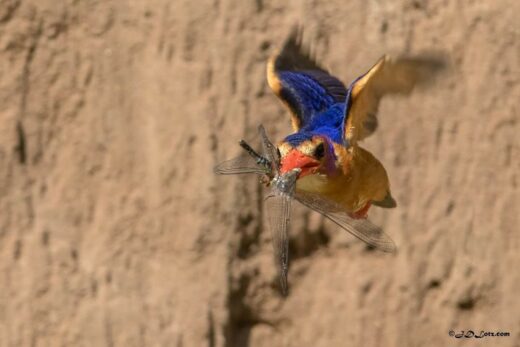
“My passion was photographing the pygmy kingfisher. It was deeply rewarding but I lost interest when my dad died.”
This article first appeared in the May edition of FastFinder – The North Coast Courier’s biannual business directory.
The second FastFinder edition of the year will be released soon.
Stay in the loop with The North Coast Courier on Facebook, X, Instagram & YouTube for the latest news.
Mobile users can join our WhatsApp Broadcast Service here or if you’re on desktop, scan the QR code below.

Stay in the loop with The North Coast Courier on Facebook, X, Instagram & YouTube for the latest news.
Mobile users can join our WhatsApp Broadcast Service here, or if you’re on desktop, scan the QR code below.