

North Coast dairy farmers tighten biosecurity amid Foot and Mouth outbreak
Experts warn that tighter travel restrictions are needed to prevent the spread of the disease.
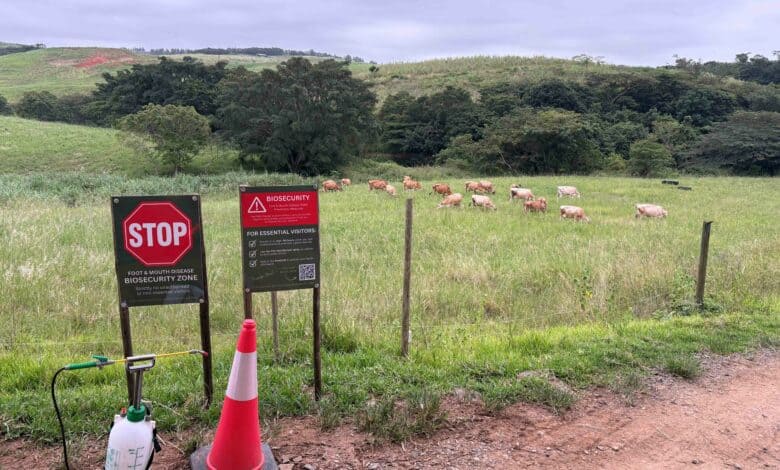
The swift spread of Foot and Mouth Disease (FMD) through herds across the province has forced farmers to take drastic measures to protect their livelihoods.
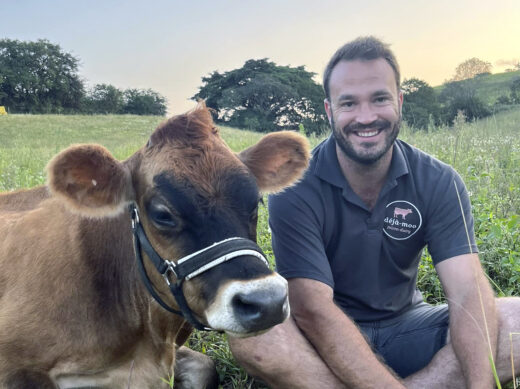
Josh Oates, owner of Déjà-Moo micro-dairy with 38 cows on Fairview Estates outside Ballito, said they have had to limit access to the farm since first hearing of the outbreak last year. That includes visitors to the farm’s shop, an important part of the business, which produces dairy products for the local market.
“We really started getting worried when one of the country’s largest beef suppliers tested positive,” said Oates.
“The farm we bought some Jersey cows from became infected and they had to shut the decades-old family business. It has been extremely worrying; without vaccinations, we are concerned about our animals’ welfare and business.”
Vaccines for the highly contagious viral disease, which affects cloven-hoofed animals such as cattle, goats, sheep and pigs, have begun to roll out across KZN but have not yet reached the iLembe District. While commercial cattle operations in iLembe are relatively small, rural farming communities have been hit hard.
The disease spreads through saliva, urine, faeces and milk, but can also be transmitted via contaminated feed, water, people and vehicles. Déjà-Moo project manager DrNicky Manning urged authorities to control livestock movement until vaccines become available.
“There is a lot of unregulated movement of animals and a general lack of awareness of disease risks. Until there are tighter controls on animal movement, the disease will spread.”
Dr Manning holds a Master’s degree in infectious animal diseases from the Royal Veterinary College in London and a PhD in veterinary vaccines from Oxford University.
She said FMD’s 14-day infectious but asymptomatic period makes containment extremely difficult. Cattle and other ruminants should be quarantined for 28 days following movement, but compliance is limited. She added that vaccines remain a challenge due to Southern Africa’s three endemic FMD serotypes (SAT 1, 2 and 3), which require diagnostic testing to confirm circulating strains.
“If you do not know the strain, it is difficult to know which vaccine is best to use,” she said.
KZN MEC for Agriculture and Rural Development Thembeni Madlopha-Mthethwa urged people not to transport livestock between districts without a permit until the outbreak is contained.
“Traditional leaders must advise their subjects against illegal movement of animals in their communal lands – this disease is serious,” said Madlopha-Mthethwa.
Stay in the loop with The North Coast Courier on Facebook, X, Instagram & YouTube for the latest news.
Mobile users can join our WhatsApp Broadcast Service here or if you’re on desktop, scan the QR code below.

Stay in the loop with The North Coast Courier on Facebook, X, Instagram & YouTube for the latest news.
Mobile users can join our WhatsApp Broadcast Service here, or if you’re on desktop, scan the QR code below.