

Rare palm-nut vulture sighting in Mount Moreland
The range of the species has increasingly been spreading south.
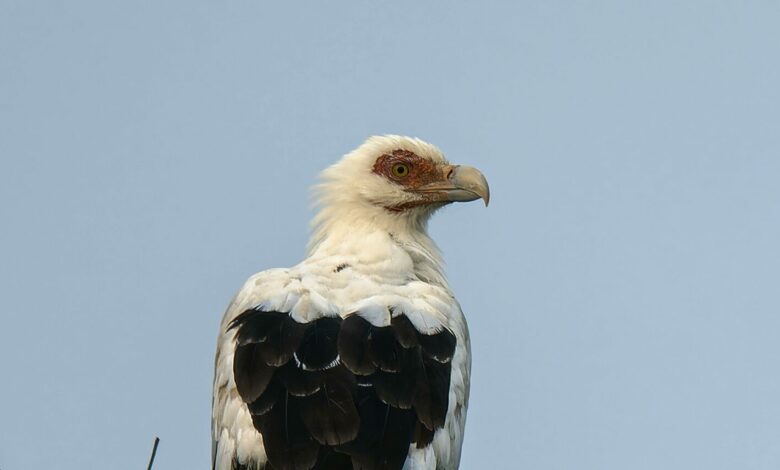
A rare spotting of palm-nut vultures in Mount Moreland has birders hopeful of a range expansion into local forests.
The curious, mostly vegetarian vultures are typically found in the coastal swamp forests around Mtunzini and Kosi Bay, as well as further up the African east coast. Palm-nut trees (commonly known as Kosi palms) are central to their distribution, as the birds feed on the fruit and use the trees for nesting.
The Mount Moreland sighting is rare, but fits into a gradual southerly range migration pattern for palm-nut vultures. This is according to Feziwe Phoswa, a young scientist at the University of KwaZulu-Natal currently completing her PhD in Ecological Sciences, focusing on the ecology and conservation of the species in KZN.
Phoswa’s research has identified several nests outside the historic range, including at the Durban Botanic Gardens, in Westville and as far south as Port Edward. Notably, the botanic gardens nest is in a pine tree, suggesting a potential shift in nesting behaviour.
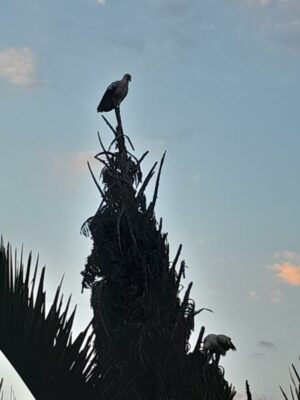
Unlike other vulture species that exclusively feed on animal carcasses, palm-nut vultures primarily eat fruit, while also scavenging along beaches for crabs and dead fish. The unusual diet has earned them the nickname ‘vegetarian vultures’.
Phoswa said they generally roam solo or in pairs rather than in large groups as other vulture species do. She said the birds spend much of the day resting in trees or nests and are active at sunrise and sunset, when sightings are most likely.
Local horticulturist Billy Blackbeard is spearheading the planting of 100 Kosi palms in Mount Moreland, donated by Twin Streams Nursery. Costs are limited to delivery, planting and soil enrichment. Those interested in contributing can contact him on 072 793 0179.
Phoswa said neither the birds nor the trees are invasive and that expanding Kosi palm populations to support the species is unlikely to have a negative environmental impact.
Stay in the loop with The North Coast Courier on Facebook, X, Instagram & YouTube for the latest news.
Mobile users can join our WhatsApp Broadcast Service here, or if you’re on desktop, scan the QR code below.