

Online grooming: How social media can expose children to predators and radicalisation
Predators can exploit what appear to be safe spaces by posing as peers, offering friendship or giving children roles that make them feel valued.
Giving a child a digital device gives them access to the world, but it also gives the world access to them.
Manifestos attributed to the 16-year-old boy accused of stabbing a six-year-old girl at a local school on October 13 have linked him to the controversial True Crime Community (TCC), an online subculture in which some members idolise mass murderers and school shooters.
He has been charged with housebreaking with intent to murder, attempted murder and trespassing, and remains in custody at the Durban Youth Correctional Centre in Westville while court proceedings continue.
In a second manifesto, released shortly before the school attack, the author credited online friends with helping him plan the attack and identified a US school shooting he intended to emulate. While this does not diminish the gravity of the alleged attack or portray the teenager as a victim, his case raises troubling questions about the dangers children may encounter online. The Courier’s investigation into the online activity associated with the manifestos led into a disturbing world of violent content, from TikTok and Telegram to Discord and websites hosting graphic footage of killings and extremist executions.
But how does a child progress from watching seemingly innocent videos to consuming extreme content or falling victim to online predators?
Umdloti digital wellbeing expert Christy Herselman, founder of The Chat, likens the progression to a frog in slowly heating water, where danger develops so gradually it goes unnoticed.
“It can begin with a simple online search about a topic of interest, such as kissing. Algorithms are designed to keep users engaged by serving up more of what they have searched for, each time adding just a little more spice,” she said.
She warned that children may be drawn from public social media platforms into more private online communities, including Discord servers and gaming groups.

Predators can exploit these spaces by posing as peers, offering friendship or giving children roles that make them feel valued. Over time, conversations may become sexual or violent. Children can be pressured to view disturbing material or share intimate images, which may then be used to blackmail them.
Herselman highlighted an interview on The Shawn Ryan Show with YouTuber Schlep, who described being groomed and extorted through an online gaming community as a teenager.
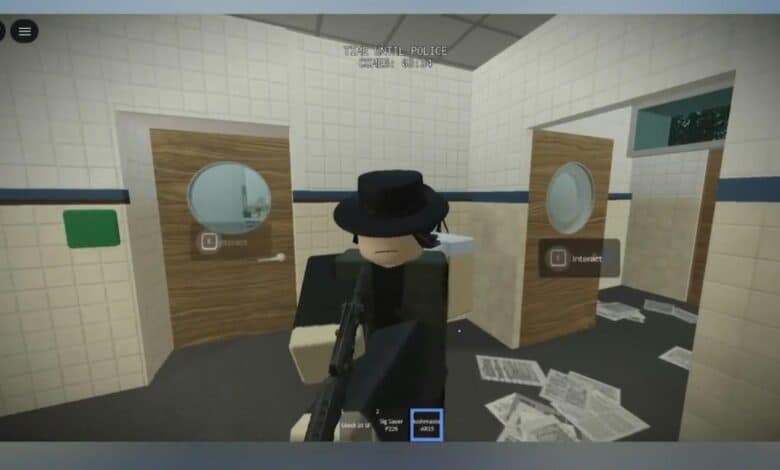
During the interview, Schlep demonstrated games he said were available on Roblox at the time, depicting re-enactments of school shootings, including Columbine, Sandy Hook and Uvalde, in which players could participate in simulated attacks from a first-person perspective. He also described being pressured to watch disturbing material through screen-sharing, with threats of being banned from the online community if he refused.
His account illustrates how online manipulation, exposure to graphic violence and threats can become intertwined.
What parents should watch for
Herselman advises parents to delay social media access until children are mature enough to navigate complex online relationships, preferably not before the age of 16, and introduce it gradually.
Warning signs to look out for include secretive device use, attempts to bypass parental controls, withdrawal from family and friends, and sudden changes in behaviour, dress or language. An obsession with violent or extreme content should also raise concern.
If a child has been groomed, Herselman advises parents to stop contact with the suspected predator, preserve the evidence and seek professional help.
“I encourage parents to take screenshots, screen recordings or, even better, to record the screen with another device, because screenshots can be generated with AI,” said Herselman.
Crucially, children must not be blamed or punished for what has happened.
“The child most definitely needs help, needs support, needs space to talk about what they’ve gone through,” she said.
Above all, parents must remain involved in their children’s digital lives.
“Just like parents know where their children are going on playdates, they need to know where their children are playing online and who they are playing with.”
Her final advice is simple: “Get devices out of bedrooms. That is one of the most important rules.
“Children should not be on devices behind closed doors because that is where they are more likely can fall prey to predators, in secret places where they can be taken advantage of.”
Stay in the loop with The North Coast Courier on Facebook, X, Instagram & YouTube for the latest news.
Mobile users can join our WhatsApp Broadcast Service here, or if you’re on desktop, scan the QR code below.