

Why sea turtles return to the same KZN beaches decades after hatching
While five turtle species occur in South African waters, only loggerhead and leatherback turtles nest regularly on local beaches.
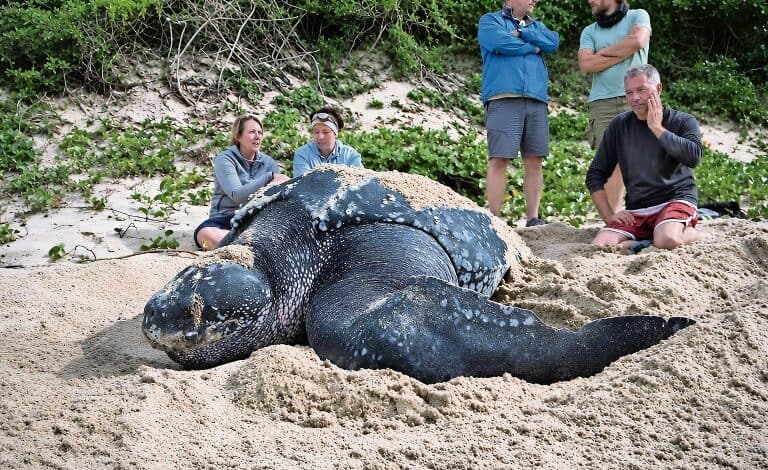
One of nature’s most remarkable journeys is underway as loggerhead and leatherback turtles return to the beaches where they hatched to lay their eggs.
Every year, from late October, sexually mature females make their way back to their birth beaches, continuing a cycle that has endured for millions of years.
Of the world’s seven sea turtle species, five occur in South African waters: loggerhead, olive ridley, hawksbill, green and leatherback turtles.
Sea turtles can find their way back to their birth beaches, even after decades at sea. Loggerhead turtles reach reproductive maturity at around 30 to 35 years, while leatherbacks generally mature earlier, at around 15 to 19 years.
Only loggerhead and leatherback turtles nest regularly on South African beaches, primarily along the protected coastline of iSimangaliso Wetland Park, from near Mapelane towards the Mozambican border.
South Africa has the world’s longest-running continuous turtle conservation and research programme, established in 1963 by Dr George Hughes of the former Natal Parks Board. Monitoring continues along the iSimangaliso coastline from Sodwana Bay to Bhanga Nek, near Kosi Bay.
Sheffield resident Peter Jacobs, a former lodge owner who spent 25 years working in the park and now runs a tour company, has been closely involved in turtle conservation.
He said sea turtles generally nest in tropical and subtropical regions, where sand temperatures determine the sex of hatchlings.
The pivotal temperature is about 29°C, with warmer nests producing predominantly females and cooler nests mostly producing males.
“We often use the term – ‘Hot chicks and cool dudes’,” he laughs.
Jacobs said turtles have returned to the Maputaland beaches for millions of years, partly because the sand’s mineral composition and moisture content help create suitable incubation conditions.
Loggerhead turtles are listed as endangered, while leatherbacks face serious conservation threats, with their status varying between populations.
Guardians of the ocean
Sea turtles play an important role in maintaining healthy marine ecosystems.
“Sea turtles are regarded as keystone species in our oceans. They help to keep the ecological balance on our coral reefs.
Loggerhead and olive ridley turtles eat shellfish, crabs and crustaceans, thus keeping their numbers in balance,”
said Peter.
“Green turtles are mainly vegetarian, maintaining sea grass beds and keeping algae growth on our reefs in check. They get their name from the green colour of their fat and not from the colour of their carapace. Hawksbill turtles feed on soft coral, sponges and soft bodies organisms on and around the reefs, maintaining healthy numbers.”
Leatherbacks are the largest sea turtles, sometimes weighing close to a ton. Unlike other species, they have a soft, leathery shell and feed mainly on jellyfish and other gelatinous marine animals, helping to regulate their populations.
A dangerous start to life
Sea turtle survival rates are extremely low. Jacobs estimates that only about one in 3 000 hatchlings survives to adulthood.
Females may mate with several males, increasing genetic diversity. Loggerheads can also store sperm, allowing them to fertilise successive clutches of eggs during a nesting season.
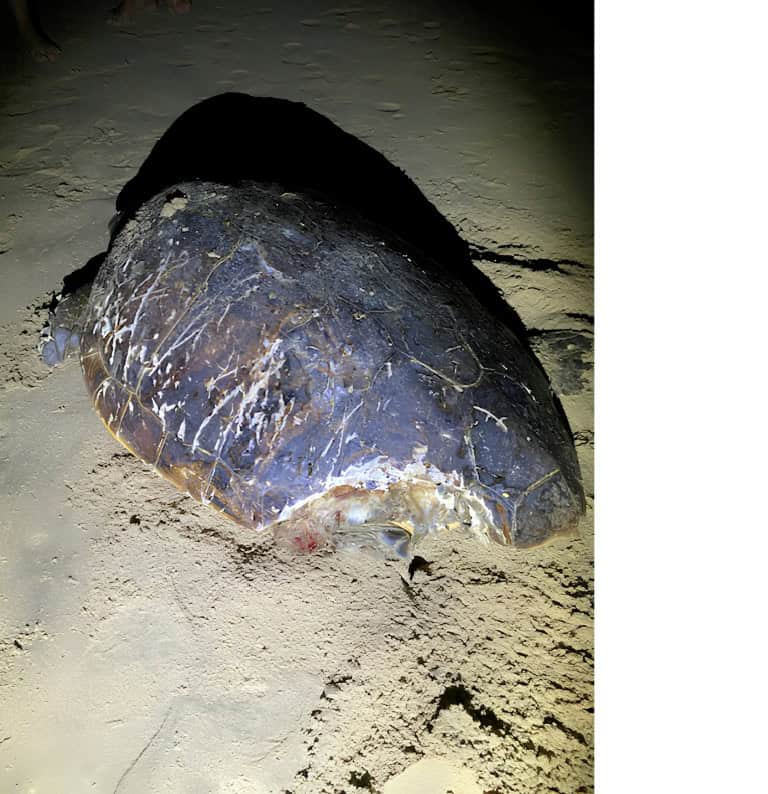
Hatchlings face numerous predators from the moment they emerge. Many spend their early years in the open ocean, feeding on small marine organisms before moving closer to shore as they grow.
Leatherbacks travel vast distances along ocean currents in search of jellyfish, while loggerheads migrate from feeding grounds along the East African coastline and surrounding islands back to their birth beaches.
Why turtles sometimes nest in Ballito
Jacobs said turtles have occasionally nested on beaches around Ballito and Westbrook.
However, these are unusual occurrences, and he believes local sand conditions make successful incubation less likely.
“There are no recorded hatching of any of these nests. The female turtles will release sperm to fertilize the egg cells, sometimes on their way to the nesting beaches. The fertilized eggs usually take 12-14 days to develop fully.
“If these eggs develop before they arrive at their birth beaches, often due to storm surges or unusual currents, they will have to get rid of these eggs. Instead of discarding the ripe eggs in the water and driven by strong instinct, they would come out onto any suitable beach on the way to lay the eggs in the sand, giving them any chance of hatching. This is much like having a baby in a car or a taxi on the way to the hospital,” he says.
Threats to survival
Although sea turtles have natural predators, including sharks and orcas, human activity poses additional dangers.
Plastic pollution is particularly dangerous to leatherbacks, which can mistake floating plastic bags for jellyfish.
Their mouths and throats contain backward-pointing spines that help them swallow slippery prey. Plastic can become lodged in their digestive systems, causing injury, starvation or death.
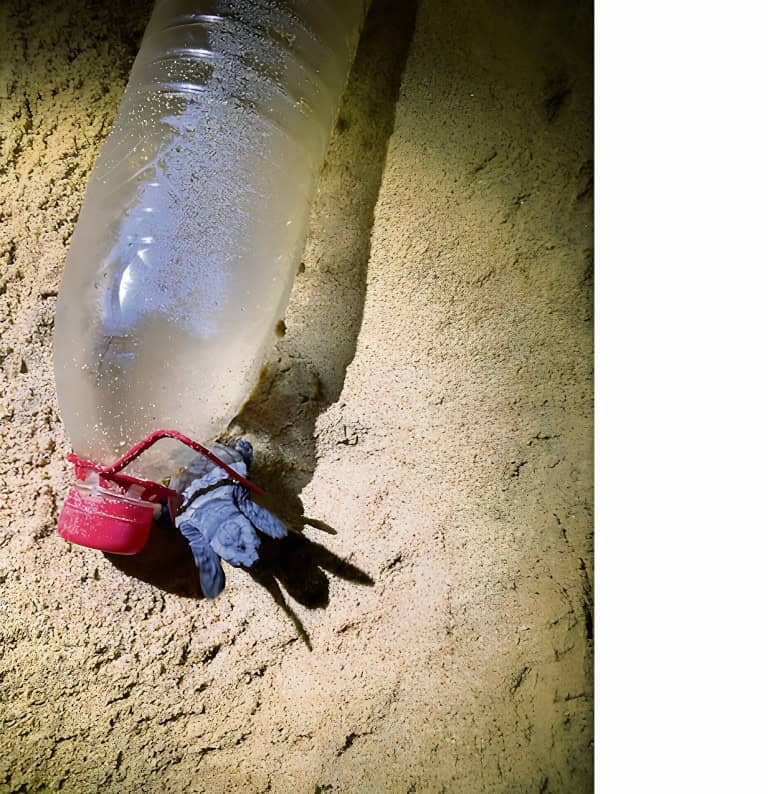
Turtles are also poached for their eggs, meat and shells.
In South Africa, false beliefs about the supposed medicinal benefits of turtle eggs have contributed to poaching. These include unfounded claims that eating the eggs can prevent HIV or Covid-19 infection or improve fertility.
Turtle body parts are also used in some traditional medicines.
Protecting nesting beaches and reducing human threats are essential to ensuring these ancient ocean travellers continue returning to our shores.
What to do if you encounter a turtle or marine animal on the beach
• If a turtle is nesting, keep your distance. Do not approach, touch or disturb it.
• If a turtle is inactive, stranded or injured, do not attempt to return it to the ocean.
• Record the animal’s location and condition.
• Keep people and pets away, and remain nearby if it is safe to do so.
• Contact one of the following organisations for assistance:
– National Marine Stranding Network:
082 746 5579
– Peter Jacobs, Ufudu Tours: 082 391 1503
– NSRI: 087 094 9774
– uShaka Sea World: 031 328 8222
– You can also contact your local vet.
Stay in the loop with The North Coast Courier on Facebook, X, Instagram & YouTube for the latest news.
Mobile users can join our WhatsApp Broadcast Service here, or if you’re on desktop, scan the QR code below.