


On Monday morning last week, it was reported that there was a two metre swell out at sea and on Tuesday the swell had risen to three metres.
By Wednesday it was at five metres so the prospects for anglers on Thursday morning were not looking too good.
By Friday morning the sea was looking quite good but that soon changed as the swell pushed by the passing cold front had risen to five metres, peaking at six metres in some areas on Saturday morning.
The front was slow moving producing cold weather with some rain plus the accompanying Southerly winds that lasted the entire weekend, ruining many well laid plans.
It is the last official month of winter and the cold fronts now moving up the coast are usually what we receive during the month of July. This suggests that the seasons are changing and we could be in for a long hot summer.
In years past, anglers could predict the arrival of the different species of fish and change their fishing tactics to target the different species but that has now also changed to some extent.
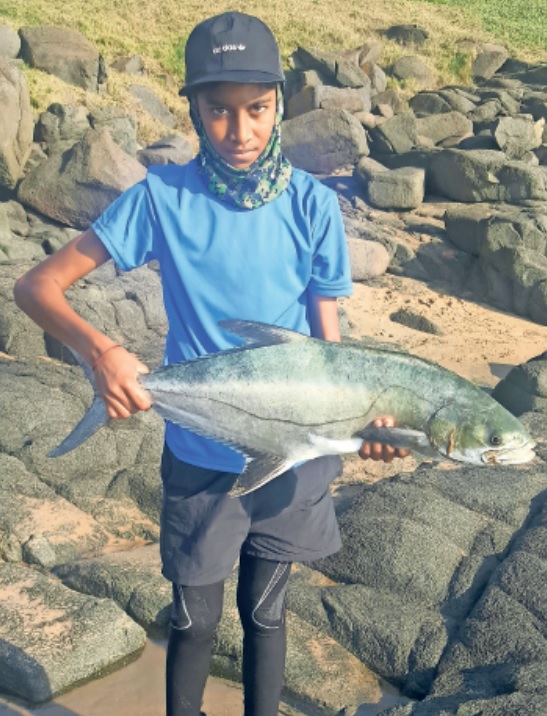
During the so called golden years of shore angling along the Natal coast, it was widely known that during the months of June and July the small green or china shad would arrive in numbers followed by the garrick and daga kob.
Towards the end of August and beginning of September, the larger blue shad would appear and the run would last until the end of November.
The small green shad have only now begun to arrive along the local beaches meanwhile recently some big blue shad have been caught up North and the shad season that used to end at the end of August has been extended to the end of September.
In the past, anglers would catch only small shad during December but recently there have been a number of big shad being landed during this time even up until February. During the autumn months of April and May, local anglers knew that the big pompano would arrive but this has not happened over the past couple of years.
During summer the north easterly winds would bring the sand that formed large sand banks along the beaches and this sand would be removed by the heavy winter seas.
A friend of mine told me last week that he was at a beach in Umhlanga Rocks and the water was so shallow that it was possible to walk out about 500 metres during low tide.
With the water so shallow even during high tide it would be fruitless to fish the area because it was unlikely that any fish would move inshore, even though offshore anglers report there were plenty of fish just off the wave line. Once the sea and surf settles, anglers should check carefully whether some deep channels have been formed and these would be the areas to target.
There were signs that the inshore fishing was improving a bit before the onset of the bad weather. Garrick and kob could become more numerous so early morning anglers trying for shad could have some excellent sport sliding out a live bait. The north easterly winds are expected from now onward so the early mornings could be the best time to land a nice fish.
I believe that the south coast has still produced good results even though the sea has been rough. There have been reports of some excellent fishing from the Bluff beaches recently.
An angler had a big daga salmon taken by a large shark recently and all he was left with was the head of the fish which was estimated to weigh about 30kg.
Sealice
Send a photo of your catch to sport@northcoastcourier.co.za and share your success with all the ardent fishermen on the North Coast. Include the angler’s name and surname, species, weight (estimated or actual), where and when it was caught and what bait was used.
Who knows, you could win a R200 voucher from our sponsor for “Catch of the week”.
Stay in the loop with The North Coast Courier on Facebook, X, Instagram & YouTube for the latest news.
Mobile users can join our WhatsApp Broadcast Service here, or if you’re on desktop, scan the QR code below.