

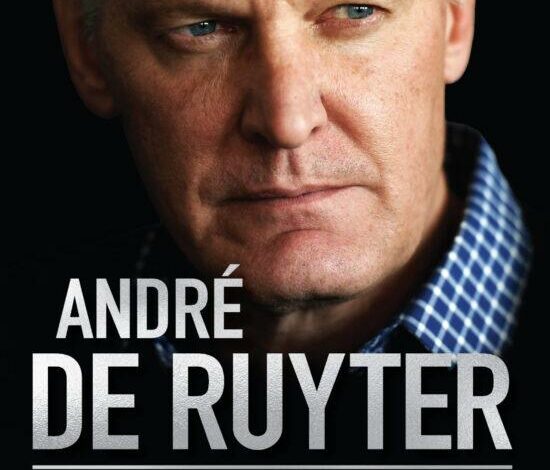
#BookReview: Truth To Power – My Three Years Inside Eskom by Andre de Ruyter
Was De Ruyter right in everything he claimed? Time will tell, but hopefully before the lights are switched off.
I enjoy a thriller, but of course most thrillers are fiction, a figment of someone’s imagination.
While non-fiction is factual and so more useful, it has the drawback of being set in the past and often isn’t thrilling.
Truth To Power is non-fiction and very definitely thrilling. It is factual but of immediate interest to all South Africans.
There is political intrigue, backstabbing, sabotage and corruption on a massive scale. If one day you wake up and the lights don’t work, this book explains how this country will have reached that sorry state, unless the situation is turned around pretty damned fast.
De Ruyter describes himself as a plain-speaking Afrikaner, born of Dutch immigrant parents and brought up in the unpretentious dorp of Bronkhorstspruit near Pretoria.
Most of his career was with Sasol, so he had a good grasp of the energy business.
How this white Afrikaner was appointed head of Eskom is an interesting tale: essentially his name was put forward by former finance minister Tito Mboweni after no fewer than 28 executives, predominantly black, had turned the job down.
I had some personal experience of Eskom politics while a reporter on the Rand Daily Mail in the 70s. Megawatt Park, Eskom’s headquarters, was a National Party temple.
As a representative of what they regarded as no more than a terrorist rag, I was given a rough ride dealing with Eskom executives.
So while the ANC’s mission to purge Eskom of its ‘verkrampte’ executive in the 90s was politically understandable, they also managed to throw the baby out with the bathwater.
Eskom had been a model of efficiency pre-1994. The Eskom De Ruyter inherited, however, was a shambling hulk, a Frankenstein’s Monster caused by lack of maintenance and government decisions against building new power stations.
He met station managers with shiny suits and pointy shoes who had never toured their own plants.
His policy of ‘boots on the floor’ took him to every corner of every power station, where he found huge mounds of dangerous ash, neglected machinery and a ‘don’t care’ attitude among workers.
He was equally alarmed by the lack of understanding by politicians of the size of the problem.
At one stage he was told by Public Enterprises minister Pravin Gordhan and ANC deputy-secretary general Jesse Duarte that the ANC was ‘fed up’ with loadshedding and they demanded he explain the cause of it.
“I wanted to say, ‘Guys, you were in control for 28 years and now you want to wake up and ask what is going on?’ The lack of self-awareness from the ANC was astonishing. It was as though they didn’t realise they were the government that put in place the policies that led to loadshedding. It was as if all these bad things that were happening were somehow the result of other people’s actions.”
He scoffed at a colleague who in the first days on the job said, ‘You are now the head of the largest organised crime syndicate in South Africa.’
But the truth was worse.
The largest offender is the Mpumalanga coal mafia, who orchestrate breakdowns of coal conveyor belts from the mines so their trucks can take over transport.
And what is more, deliver rocks to the power stations to cause more breakdowns while the coal is sold off elsewhere.
His stories of theft and corruption go on chapter after chapter, providing the most intriguing reading. Criminals cost Eskom R1-billion a month, he claims.
And what have the authorities done about this state of affairs? Absolutely nothing. The police and State Security sit on their hands. Even intervene to free crooks caught by Eskom security.
De Ruyter says he took this up with his political masters. Gordhan did nothing, while Energy minster Gwede Mantashe publicly accused him of playing policeman instead of doing his job and of sabotaging the state.
After De Ruyter’s dramatic departure, Mantashe and ANC secretary-general Fikile Mbalula strenuously denied that corruption lay at the heart of Eskom’s problems.
They accused De Ruyter of being a ‘right-winger’ (i.e. white Afrikaner) and a bad manager who deserved to be hauled before court. Nothing came of those ravings.
Which is where this tale of intrigue takes the reader right up to the present day.
The new Electricity minister, Dr Kgosientsho Ramokgopa, at first said Eskom’s problems were technical, but quickly changed his tune. A few weeks ago he agreed that corruption was at the heart of the problem. So De Ruyter was right all along, but nobody in government is saying thank you.
De Ruyter says he took the job knowing it was a poisoned chalice, because he wanted to ‘do something positive’ for the country.
Little could he have realised that he would be forced to flee the country in fear of his and his family’s safety.
Was De Ruyter right in everything he claimed? Time will tell, but hopefully before the lights are switched off.
Follow The North Coast Courier on Facebook, Twitter, Instagram & YouTube for breaking news
Telegram Broadcast Service: https://t.me/joinchat/yJULuN8NaCs5OGM0

Stay in the loop with The North Coast Courier on Facebook, X, Instagram & YouTube for the latest news.
Mobile users can join our WhatsApp Broadcast Service here, or if you’re on desktop, scan the QR code below.