

City Power under the microscope as entity rates itself almost 4/5
Click on the circles/links below for related articles


City Power under the microscope as entity rates itself almost 4/5

Emily Wellman Bain and Waydon Jacobs
nmt@caxton.co.za
Experts agree that if City Power, which runs at a loss, does not change its working model to become a forward-looking organisation with solid plans to accommodate a growing city, it will slide into the lanes of other failing city entities in a municipality plagued by service delivery failings and decay.
City Power Scores itself: 3.85
“As a city, Johannesburg is moving backwards and City Power, which is running at a loss, cannot be excluded from its contribution to the dysfunction.”
This was said by energy expert and managing director of EE Business Intelligence, Chris Yelland who holds no punches when evaluating City Power’s performance.
“The city is losing so many residents, especially wealthy ones, who are moving to cities like Cape Town and George, causing an exodus of money from Johannesburg. This leaves the city poorer and poorer.”
He says the same ‘semigration’ activity is underway with businesses which find operating in different cities more attractive due to better infrastructure and public services.
In the 2023/4 financial year, City Power says the entity has performed better than it has in the previous five years with overall performance sitting at 77.27% according to their Key Performance Indicators.
The lived experience of many City Power customers, however, does not reflect this.
Community WhatsApp groups are often populated with the following complaints:
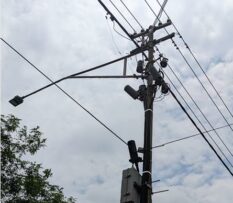
- Pole electricity units to houses sometimes develop a fault or problem that is not resolved timeously
- Tickets and calls closed without resolution
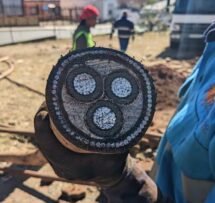
- Cable faults
- Outages lasting more than 12 hours
- Tripping affecting multiple areas
- Streetlights not working (sometimes for years)
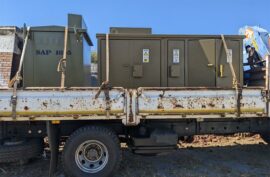
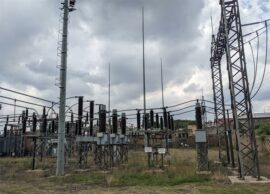
- Mini substations not adequately protected leading to vandalism.
It is worth noting that City Power receives money from the National Treasury every year that boosts its budget, funded by customers using its service.
Yelland says this is important because, despite this unearned cash injection, City Power still operates at a deficit.
“When running at a loss, you can’t do your work properly, can’t do upgrades and carry out essential maintenance. You also start raiding other sources of income and cut back on work that is not essential for that moment.”
The entity currently has an infrastructure backlog of R44b for refurbishments and replacement of ageing equipment and resources.

The spokesperson for City Power Isaac Mangena admits that the entity does not have the budget to eliminate the backlog.
“When assets reach a certain age, they must be maintained or replaced. When this is not done, the wheels don’t fall off immediately. But when they do come off, say five to 10 years later, the problems are much bigger than the original work needed, and costs have risen exponentially to carry out the work in a crisis,” says Yelland.
Eskom failed at this for years and we see the effects of that.

According to Rod Crompton, a visiting adjunct professor at the African Energy Leadership Centre based at the Wits University Business School, City Power is hindered by a lack of investment in infrastructure and the diversion of funds intended for electricity services.
“This misallocation has resulted in insufficient maintenance and a deteriorating service quality.”
He says the lack of investment has a material impact on maintenance, upgrades and new investments which are essential as ‘densification of land use and higher population in the city puts more pressure on infrastructure’.
Ward 101 councillor Ralf Bittkau says, “On top of a badly failing system that has been further compromised by the constant switching on and off during load-shedding, City Power also deals with highly violent and organised criminal elements that sabotage the system through cable theft and vandalism of substations.”
City Power says its two biggest problem areas are:
Vandalism and infrastructure theft
Mangena says for the 2023/24 financial year, City Power suffered a financial loss of about R160m due to cable theft, illegal connections and vandalism. “This figure pertains to direct loss where City Power replaced damaged, stolen and vandalised equipment. This loss, however, does not include unserved energy loss [revenue] and direct loss suffered by businesses due to outages caused by cable theft and vandalism. City Power is improving its systems to ensure these costs are also captured.”
Illegal connections also overload the network and cause further faults and problems.
Mangena says the power utility has now adopted a multi-faceted security strategy to mitigate cable theft risks and infrastructure vandalism. “This includes intelligence-led joint operations targeting criminal syndicates, scrap metal dealers, illegal connection groups and other illicit activities.”
He says armed response and armed security tactical teams work closely with the police in high-risk hotspots and community engagement partnerships ensure critically important information about illegal activity is collected, as residents are additional ‘eyes and ears’ on the ground.
Further, he says daily operations with the Essential Infrastructure Task Teams and monthly meetings with the Non-Ferrous Crime Combating Committee and prosecutors have yielded results.
Liquidity risk
City Power’s intensified revenue collection drives are conducted weekly on Thursdays for defaulting businesses and residential customers. “There are daily cut-off operations of defaulting customers, who may not necessarily have high debt but are in arrears and have not made an acknowledgement of debt arrangement,” says Mangena.
“Most recently we welcomed the ruling by the Johannesburg High Court, compelling a prominent hotel in the Joburg CBD to make an upfront payment of R1.3m towards its outstanding R4.1m electricity debt before power supply is reconnected. This was after a disconnection was enforced during a revenue collection operation on September 12.
“City Power is hard at work in its efforts to audit and install smart meters across the City. Installing these smart pre-paid meters will curb the high rate of non-payment culture in many areas that are currently not paying across the city.
“The high number of non-vending meters (providing power not linked to usage or billing) is also a concern. While City Power has made tremendous progress in updating meter codes for paying customers, a significant challenge has remained with 142 282 customers whose meters are not vending, primarily due to tampering.”
Successes in fighting back
Statistics as they relate to financial years:
- 34% decrease in essential infrastructure crimes from 2 347 in 2022/23 to 1 556 in 2023/24
- 268% increase in court appearances to testify during prosecution of suspects from 31 in 2022/23 to 114 in 2023/2024.
- 138% increase in suspects convicted from eight in 2022/23 to 19 in 2023/24
- 90% increase in the number of cumulative sentences meted out to suspects from 86 years in 2022/23 to 163.3 years in 2023/24
- Reduction of incidents at substations guarded by contracted security officers.

Yelland says the theft of hardware costs the entity a fortune. “When you lose control of your assets it is a nightmare. City Power needs to invest seriously in security which will cost less than the replacements, which means budgets could be seriously boosted with the savings, so there is less disruption to residents who bear the brunt of outages.”
Crompton concurs, “City Power has to spend more money on the security of its infrastructure. There are a thousand different things that they can do. Eskom has made some progress on this, [City Power] could talk to Eskom and the police.”
The effect of the political landscape
Yelland also speaks poorly of the political landscape. “Coalition politics is dysfunctional and is at the centre of why Johannesburg is moving backwards unlike other cities that are forward-looking and trying to improve services to residents and make their locations attractive to businesses and wealthy residents.”
Looking forward, Crompton says, “City Power must adapt its business model to align with the changing energy landscape, taking cues from cities like Cape Town that have embraced competition and innovation in energy supply.”
He argues that without significant changes, the power utility will continue to struggle with reliability and customer satisfaction.
“As residents await improvements, the urgent need for effective solutions to these interrelated challenges remains clear. The safety of communities and the reliability of electricity services in Johannesburg depend on decisive action from City Power and the council.”
Yelland agrees, and to break the cycles of dysfunction he says, “The toxic political environment needs to change and other cities like Cape Town should be included in any solutions so Johannesburg can learn from their successes and problems to change the trajectory we are on.”
How load-shedding messed with City Power’s ability to carry out its duties
Having recently passed the 200-day mark without load-shedding, its impact cannot be understated. Mangena says, “Reversing the impact of load-shedding will take years.”
Financial hits that the power utility has faced did not lessen with rolling blackouts. During load-shedding Mangena says, “City Power experienced significant financial losses due to unserved electricity, resulting from blackouts. During those hours of load-shedding, customers were not consuming electricity, meaning City Power was not earning any income during that period. Eskom, however, still charged us at the same fixed rate despite our ongoing losses.”
Daily power cuts also rapidly deteriorate the lifespan of City Power’s electrical equipment.
“The cost of buying replacement materials at such short intervals was quite exponential because even manufacturers could not keep up with the demand, leading to additional costs of having to buy from suppliers who charged higher rates,” says Mangena.
Attending to the frequent outages also meant City Power spent close to R10b in overtime.
“Overtime was needed to ensure that we tried to restore power supply on time, address the plants that were out of service and other maintenance challenges,” says Mangena.
The Randburg Service Delivery Centre (SDC) is one example of this. In-rush currents during power restoration after load-shedding caused network equipment failure resulting in the blowing of equipment such as mini-substations, transformers, ring main units, joints, and terminations.
“As a result, 57.98% of high and medium voltage outages were caused by equipment failures – 95% of which happened during and immediately after power restorations. Of these outages, 13% were caused by theft and vandalism during load-shedding. In the 2023/2024 financial year, the SDC planned to spend R46.6m on maintenance and repair costs but spent R53.5m,” says Mangena.
Similarly, the Inner City SDC had to spend an estimated R50m due to the negative impact of load-shedding.
During load-shedding, theft and vandalism increased astronomically. “Criminals were able to plan their unscrupulous activities based on the easily accessible load-shedding schedules,” says Mangena.
Post-load-shedding achievements
- 560 plants that were out of service have been restored
- Extensive damage to infrastructure has not vanished now that there has been a break in load-shedding
- Attention has been focused on addressing the maintenance backlog as many projects were put on hold during this period
- Many faults caused by load-shedding have been attended to during this reprieve.
Caxton score: 3.5
It is important to acknowledge that many of the problems City Power faces relating to hardware and infrastructure are not all due to their action or non-action. Years of load-shedding wrecked much of the grid and will take years to reverse at great cost.
Points of interest
- Forecasts estimate that the electricity demand will increase by 133% by 2030 and 185% by 2040.
- About 25% of the electricity delivered is not paid for and is called non-technical losses.
- Reported streetlights should be repaired within six days
- Contractors are supposed to stay on a job until it is finished, regardless of the time the fault is worked on
- City Power is working to audit and install smart meters across the city. The installation of these smart pre-paid meters will curb the high rate of non-payment culture in many areas that are currently not paying
- 142 282 customers’ meters are not billing, primarily due to tampering
- City Power has more than 120 appointed operators
- There are more than 20 000km of cables underground and overhead.
Service delivery
- Unplanned outages: The turnaround time for unplanned outages is supposed to be four hours
- The average response time for closing open calls and resolving outages in each SDC is 24 hours
- Why are calls or tickets closed?
- Multiple tickets have been logged for the same fault
- Supply has been restored
- An area outage affecting many people with the same fault.



Click on the circles/links below for related articles
