

Who is ultimately responsible for keeping public parks usable?
Click on the circles/links below for related articles


Who is ultimately responsible for keeping public parks usable?
Emily Wellman Bain and Aimee McGill
nmt@caxton.co.za
With City Parks being unable to arrest or deter criminal or destructive behaviour in its 2 172 parks and green spaces it is little wonder teams of community volunteer heroes have stepped up to help.
The importance of safe public green spaces within a city cannot be understated, especially in a city plagued by crime, grime, unemployment, and a council which is, seemingly, treading water under the direction of its latest leader.
Wendy Carstens, chairman of the Friends of Melville Koppies Nature Reserve says, “green spaces provide important areas for exercise, relaxation, meditation, mental health, and destressing. The richness of green spaces is also important for early childhood development and offers an essential break from the hi-tech world many children are continually exposed to.”
So, how well is City Parks and Zoo doing at maintaining these essential green spaces? With challenges including budget constraints, crime, homelessness, and vandalism that are beyond the control of the entity, its struggle to maintain an acceptable level of service provision is understandable, but remains a core function of the city that needs to be upheld.
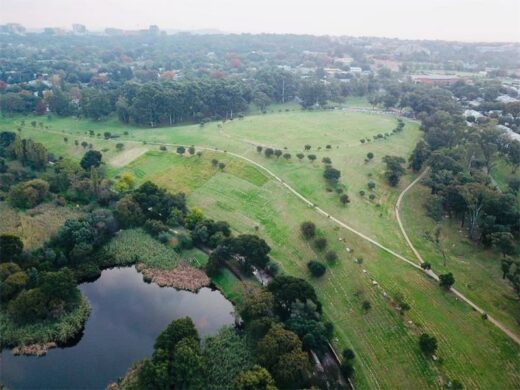
Johannesburg City Parks and Zoo (City Parks) is the city entity tasked with caring for and maintaining:
• 2 172 parks and open spaces,
• 35 cemeteries,
• 23 nature reserves,
• 21 bird sanctuaries,
• A botanical garden, and
• 137 expansive conservation areas.
These spaces range from little corners like Verity Park in Parkhurst, to nature reserves like Albert’s Farm which spans 114 acres.
Safety and security in open spaces
Many parks are protected by metal fencing that the city is responsible for maintaining. Two locations where stolen or deliberately damaged fencing causes ongoing headaches, and sometimes heartache for volunteers caring for the spaces, are the Braamfontein Cemetery and Melville Koppies. Gaps in the fences enabled vandals in March last year to desecrate over 5 000 graves held within the ash walls at the cemetery, and the ‘continual’ theft of fencing and fence divisions at the koppies is becoming a major problem.
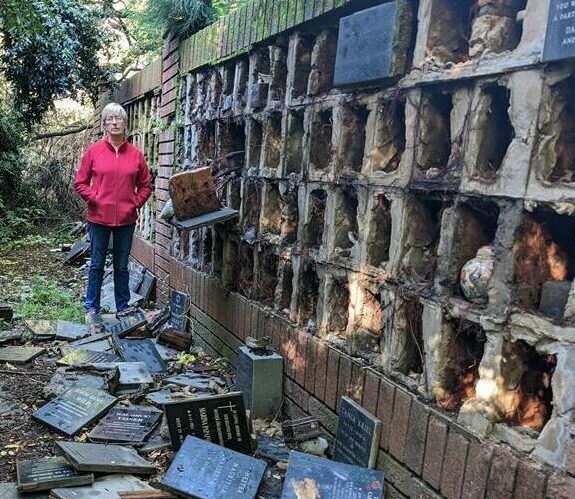
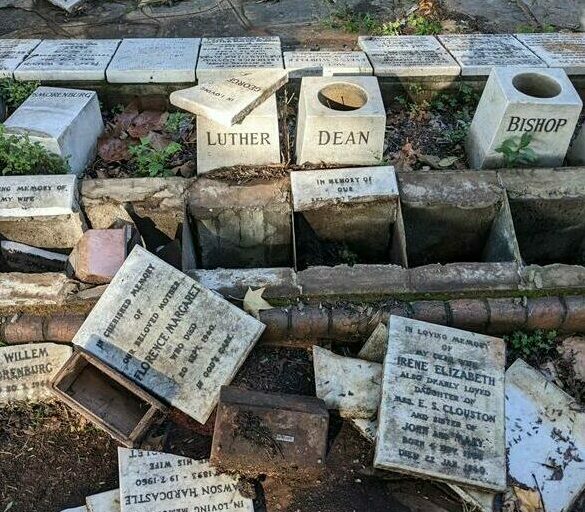
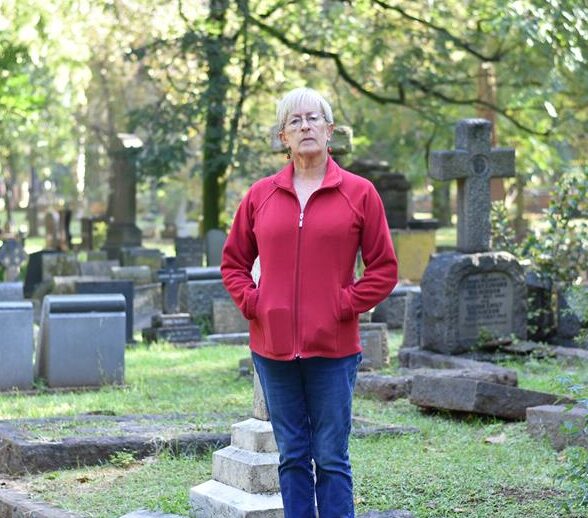

The Friends of Johannesburg Cemeteries volunteers have painstakingly worked and fundraised to restore the graves themselves because, “city by-laws stipulate that the onus of maintaining the graves and headstones and tombstones remains with the family,” says City Parks spokesperson Jenny Moodley. However, it must be added that City Parks donated 130 blank granite plaques and lent support where it could.
The panoramic views of the city from the Northcliff Eco Ridge were not accessible to the public following the site closure for many months, due to unruly behaviour, alcohol abuse, underage drinking, and other disturbances of the peace on the dangerous rocky outcrop. It was re-opened when City Parks could post rangers at the entrance to ensure no alcohol made its way inside and everyone remained calm. SCP Security was also brought on board to open the lookout point each morning and do a sweep at dusk before closing it at night.
These are just three examples that showcase how underfunded budgets and strained resources make it impossible for City Parks to care for their green spaces alone.
Incidents like these often result in the green spaces not being utilised by families and residents who live near them, and turning them into handy spaces for nefarious activities by lawbreakers.
Public/Private partnerships
Since 1959 the city has been in a public/private partnership when it comes to the Melville Koppies, an arrangement that would be called an ‘adopt a park’ style collaboration by today’s lingo.
It is an agreement between the city and a community of people who wish to invest time, sometimes money, and sometimes infrastructure in a park, so that it becomes more of an asset to the area than it is without their input. Parks often are plagued by mostly petty criminals, are defiled by people using the parks for ablution areas, or are turned into places for people to dump unwanted rubbish or other items.
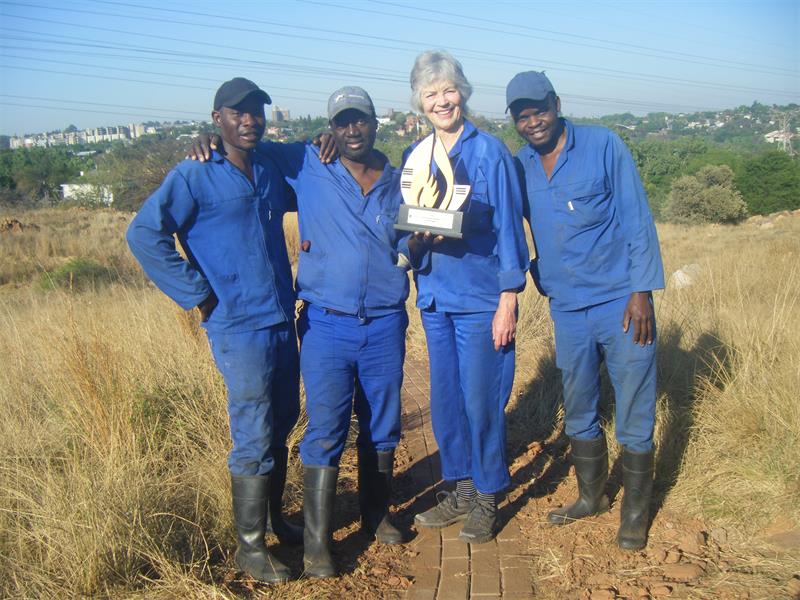
Teams of volunteers are often the catalyst for changing unused and spoilt spaces into green lungs of the city, which can be enjoyed by residents.
A more recent example of this is the James and Ethel Gray Park in Melrose. It is now considered a ‘flagship’ park by the city.
At the 2019 launch of the foundation which manages the park, then MMC for Community Development Nonhlanla Sifumba said, “the limitations of the city, with regards to resources, are no secret – we are clear in the understanding that we cannot achieve greatness and excellent service delivery without the help of key partners.”
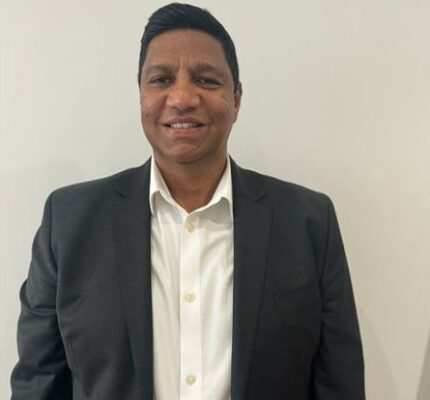
Sunil Geness spearheaded the project back in 2018 after living adjacent to the park became unbearable.
“There were four murders, a person’s finger was bitten off, and a youngster was stabbed more than 25 times.”
“There was a growing community of drug addicts in the park, houses were being broken into at night with the criminals fleeing into the large area, and more. Something had to be done.”
It was clear the city was unable to manufacture a solution. Unfortunately, time and time again community organisations and informal groups have to come together to forge the solution.
No authority of arrest
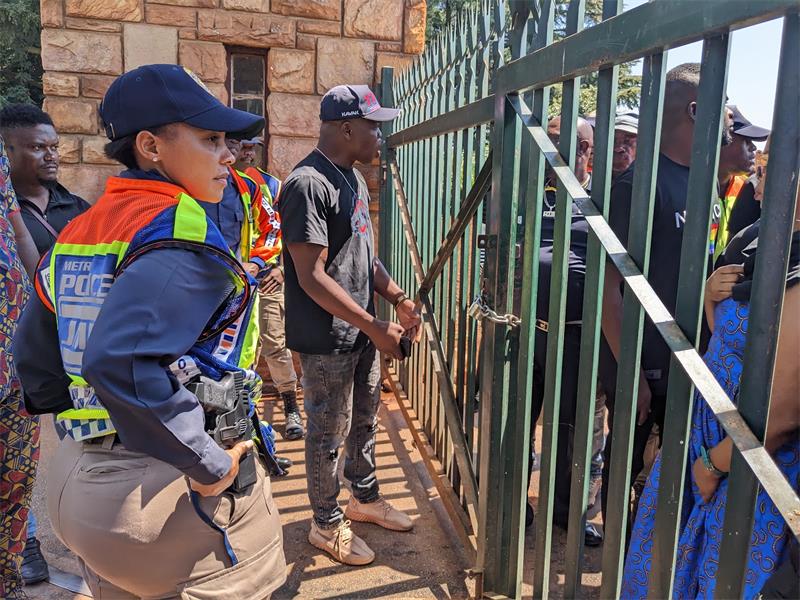
City Parks employs 37 Environmental Enforcement Unit members (park rangers) and 15 Groen Sebenza interns who only have 12 vehicles between them, and do not have powers of arrest. Should they see someone committing a crime, which requires the police who too are stretched trying to deal with a city under siege, they are basically powerless.
The South African Police Service’s (SAPS) 2024/25 Annual Performance Plan identifies several areas where the organisation is performing poorly:
• Increased crime rate,
• Over-stretched policing capacity,
• SAPS members involved in corruption and crime,
• A need for modernisation of policing, and
• Reduced budget allocations.
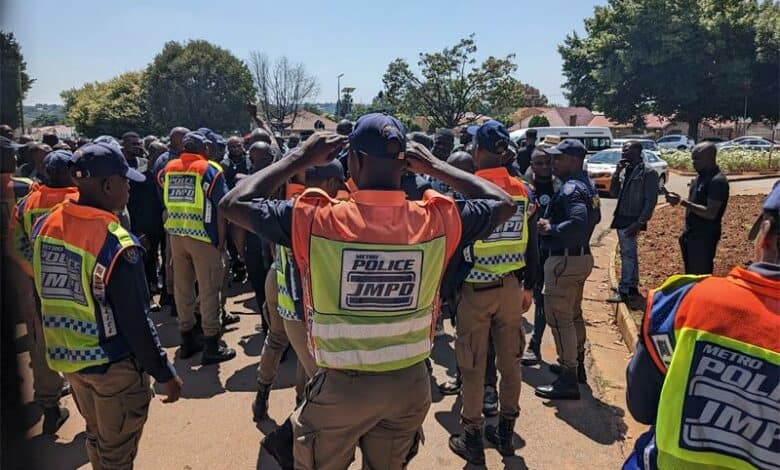
The JMPD, and occasionally SAPS, are a semi-permanent fixture at the Westpark Cemetery in Montgomery Park, especially over weekends, to curb and quell gangster-related violence, public drinking, and so on, which can be rife. This further enforces the limits of city park rangers who cannot intervene in by-law infringements they may see.
Some of them are:
• Drinking alcohol in public,
• Illegal dumping,
• Disturbance of the peace/noise complaints,
• Informal trading without a permit, and
• Traffic management.
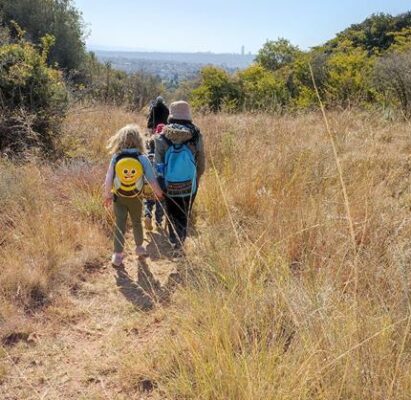
The ’adopt a park’ initiative is a vital lifeline for City Parks as successful projects lessen the load of maintenance and upkeep. It must be said though that City Parks do not wash their hands of a park in these instances. It is a partnership where the city carries out maintenance and litter-picking operations as much as budgets would allow.
The problem, ultimately, is that City Parks works in isolation and is underfunded, as are most entities, making it difficult to attend to problems that need a broader more holistic approach.
This results in, at times, City Parks doing no more than mowing the lawns and pruning trees as best as they can to a schedule.
A resident, who wishes to remain anonymous due to his role in the community, says, “they very seldom do a proper grass-cutting job, sometimes it is just the tractor and no brush cutters, so the grass along the verge or around trees doesn’t get cut. If a branch has fallen, they won’t bother to pull it out of the way. They just cut a big circle around it. We have some parks still with leftover grass cut four months ago.”
He says they have even been asked to lend out their rakes.
“Surely you make sure you have the right tools when you go out on jobs?”
He and others double down in their conviction, stating that well-maintained parks are a deterrent to criminals who may use unkept spaces to hide in.
City Parks maintenance agreements per year
• Flagship parks – 12 maintenance cycles
• Developed parks – 4 maintenance cycles
• Undeveloped parks – 4 maintenance cycles
• Landscaped islands and town entrances – 12 maintenance cycles
• Flagship/active cemeteries – 4 maintenance cycles
• Passive cemeteries – 4 maintenance cycles
The Golden Harvest Park in Randburg is a prime example of how entities, not systematically working together, negatively impacts residents. There are well-documented incidents of criminal activity at the park, making the lovely space underutilised by residents.
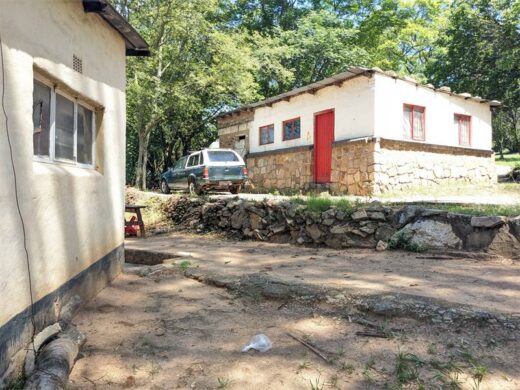
Moodley says, “City Parks and Johannesburg Property Company (JPC) jointly manage Golden Harvest Park. JPC handles the leasing of houses on the property, which falls outside our mandate. We are responsible for horticultural maintenance on a 30 day cycle and litter picking as needed. The undeveloped sections are maintained quarterly. Safety issues are reported to JMPD and police by park rangers, who lack enforcement authority and rely on police support.”
With all the finger-pointing about who is responsible for what, it is virtually impossible to hold anyone accountable.
Ward 101 councillor Ralf Bittkau says, “City Parks is ham-strung by a shortage of budget. This is very evident in areas like Golden Harvest Park and numerous other parks that have regressed in the past 5–10 years to a degree beyond salvage on the current budget. Luckily, volunteer groups such as Azis Wao, a Korean worldwide church volunteer group, are willing to help together with community assistance.”
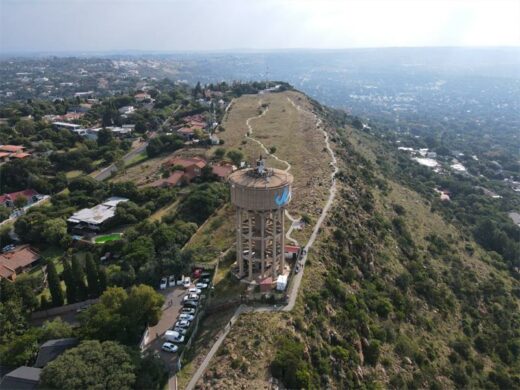
Eleanor Huggett, Ward 73 councillor, says, “residents are having to put in a huge amount of effort and money to maintain parks, but are losing the battle at times. Homelessness – people setting up informal camps, defecating, drinking, drugs, and so on means residents can no longer use these spaces. Norwood Park was so lovely not too long ago.”
Also read: City Parks and police address safety concerns after Delta Park shooting
Moodley says they operated with a shortfall of R90m in the last financial year. (OUT OF HOW MUCH). “R50m was cut from horticulture and arboriculture services, R40m was cut from security services.” The budget allocated to City Parks and Zoo in order to perform its duties, is largely influenced by the Integrated Development Plan (IDP) process, which has been dubbed as ‘deeply flawed’ by community representatives, including JoburgCAN’s Julia Fish. “The IDP process is a ‘talk shop’ event, where city representatives do not listen to the needs of the community members, nor include the needs of those people in budget allocation,” says Fish.
RATING
• They rate themselves as 4/5 with the following justification: City Parks generally performs well throughout the year, maintaining a high standard of service. However, during the warm and wet seasons, the surge in overgrowth can challenge their resources, slightly impacting their ability to deliver consistent services.
• We rate them at 3, with the following justification: If it were not for private citizens and some businesses coming together to save their local parks, City Parks would be unable to pick up the slack.
*For this feature we did not look into the Johannesburg Zoo.
Follow us on our Facebook, X, Instagram, and TikTok pages. Join our WhatsApp group for any story ideas you may have.
Related article: How to log maintenance issues with Joburg City Parks
Click on the circles/links below for related articles
