Transforming transport
JOBURG - Transport is at the heart of the city's growth and development strategy.

To be free in post-apartheid South Africa means to have the right and means to be mobile.
Transport and public transport, by extension, therefore take centre stage in Johannesburg’s Growth and Development Strategy (GDS).
Much has been said about Johannesburg’s apartheid past and the legacy of spatial development aimed at separating people. Informed by the GDS 2040 framework, the City of Johannesburg now has a workable plan to transform the city for those who live in it.
Nicknamed the Corridors of Freedom, the concept was introduced by the Mayor of Johannesburg, Parks Tau. The planning involves developing corridors along public transport routes, much like many quaint towns in Switzerland developed around train stations.
The corridor along the Empire-Perth Rea Vaya route will change forever as block upon block of high density housing pierces the skyline in the coming decades. Areas immediately surrounding the transport corridors will be optimised to make space for non-motorised forms of transport.
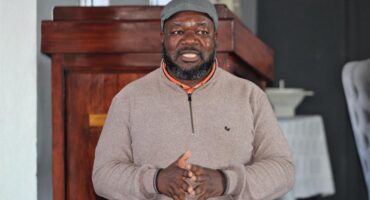
Modern mixed-use buildings will include shops, offices, recreation facilities and various sizes of apartments to suit most budgets. A man who introduced himself as Johann Grobler did not echo the sentiments of most other residents.
He accused residents of adopting a “not in my backyard” attitude, soliciting whispered accusations of being a ‘dirty developer.’
“You are not unique in what you are going through,” he said during the public meeting last Tuesday.
“I saw the same thing in Pretoria when Hatfield started densifying. Residents fought the process but today it is very different place, from which they also benefit.”
“You cannot resist the changes,” he added.