Zoleka Mandela’s whisper of hope
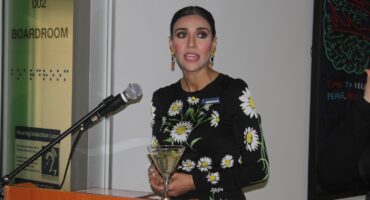
AUCKLAND PARK - Zoleka Mandela reflects on her losses and recoveries captured in her autobiography, which she discussed at the University of Johannesburg.

Zoleka Mandela is all about being a mouthpiece for the mute women who have remained silent about their challenges.
Mandela engaged in a discussion that shed light on the brave decision she made to divulge all in her autobiography When Hope Whispers at the University of Johannesburg on February 26.
The granddaughter of Winnie Madikizela-Mandela and Nelson Mandela exuded contentment as she described the tell-all book and life after her struggles.
At the tender age of 34, Mandela has suffered the loss of two children, sexual and physical abuse, and survived breast cancer.
After years of substance abuse, she got a tragic awakening when her daughter was killed in a car accident on the night of the 2010 FIFA World Cup opening.
“It seemed as if my days mattered only to remind me of my loss,” Mandela recalled with a deep sense that she had failed her children.
From then on, her life took a turn for the better.
“For as long as you aren’t up for making changes in your life, your life is never going to change,” Mandela said having made the decision to check herself into rehab after the tragic loss.
“Now I am over three years and six months clean and sober.”
She recalled the words of comfort that Nelson Mandela offered just after she lost her daughter.
“He said ‘darling, you’re not the first person to have lost a child, I’ve lost children. There are so many women who’ve lost their children and I think the reason why you lost a child is to instill hope’ ”.
Despite the challenges, suicide attempts and volatile relationships, more than anything, Mandela wants to be a person who inspires hope as she can relate to every women’s story.
Her journey to recovery, finding herself and her way back to God led to the man she now calls her partner and companion in prayer, Thierry Bashala.
In spite of the splendour her surname carries, Mandela acknowledges that she is a mere human being and therefore capable of fault.
Even more so, she is capable of recovery.