
Musicians call for the death sentence to rapists that murder their victims
JOBURG – Some of the women present wore torn clothes marked with blood-like stains, which for Malinga was a picture South Africans needed to see.
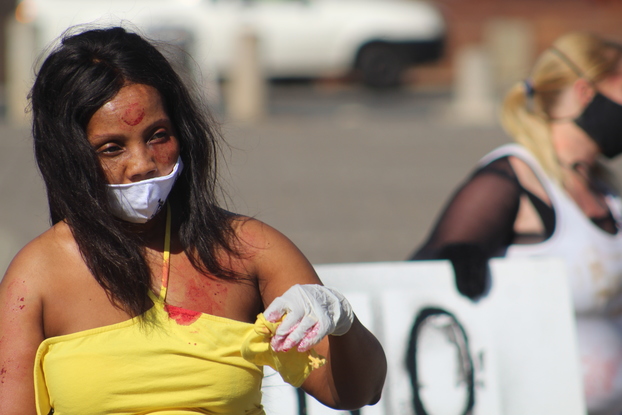
Mzansi Kwaito and House Music Awards organisation alongside entertainers in the music industry took to the streets of Johannesburg to call for what they believe is a solution to the ‘ludicrous’ gender-based violence statistics in the country.
For these protesters, the return of the death penalty for those found guilty of sexual offences and murder was the top of their demands as they handed their memorandum to Gauteng District Commander Major General Max Masha.
Masha said, “Some of the demands are immediate, some are interim, some of them are long term but ours (as the police) is to take the memorandum and hand it over to the office of the minister, who will then respond accordingly.” That being the Minister of Police Bheki Cele, parliament and all other policy-making role players.
CEO and founder of the organisation Perfecta Malinga said, “It’s the only solution for these killers. They know they can rape and kill today, go to jail and be out the next day.”
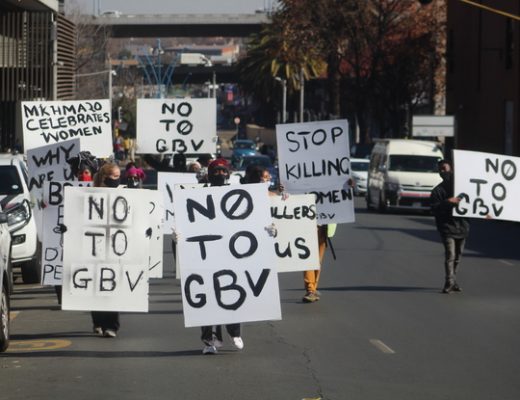
The protest began with a silent demonstration in the middle of Mary Fitzgerald Square in Newtown where protesters stood with their placards visible to the general public. Some of the women present wore torn clothes marked with blood-like stains, which for Malinga was a picture South Africans needed to see.
She added, “Women go through hell so we look like hell. We want the whole of South Africa to see the hell we go through before we are raped and killed.” With constant reports of women found brutally beaten, badly burnt or dismembered, Malinga spoke directly to a serious problem within South African society.
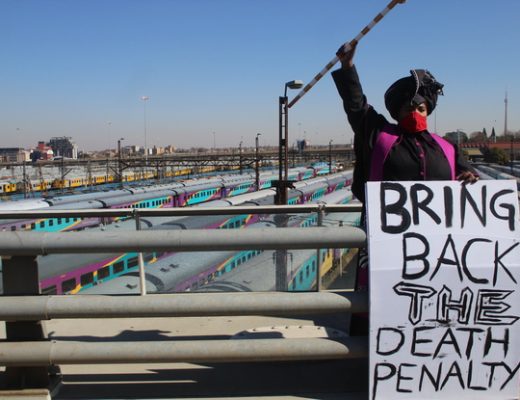
Praise poet Jessica Mbangeni who formed part of the demonstration explained what they wanted, “The death penalty has got processes, so right now when we say the death penalty we are actually challenging the processes that are going to enable our lives to be on the safe side.” She added that the laws of the country were duty-bound to protect women from gender-based violence. Mbangeni said, “It is our responsibility as a collective government, because this government is for and by the people, in our communities it starts from there, pointing the way forward to where else the problem can be resolved.”
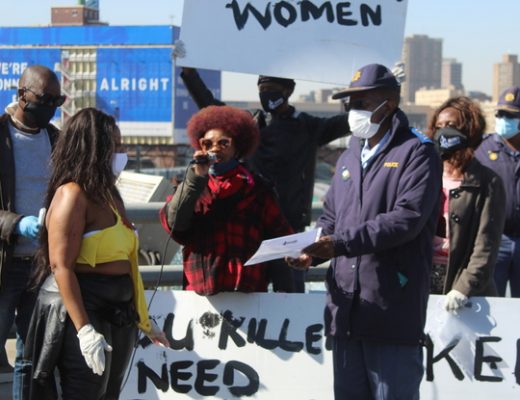
Malinga added that prayer was what the public needed to be constantly doing to rid this ‘demonic spirit of killing’. She said government could not do it alone and needed the assistance of the people through prayer.