We must protect our trees for future generations
Budget constraints mean our city's trees are not given the attention they deserve.
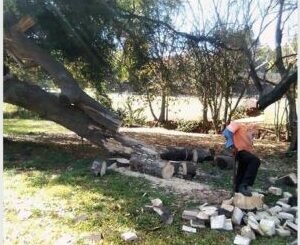
After hearing about an unresolved year-long struggle one East Town homeowner had when dealing with Johannesburg City Parks and Zoo to remove a dead pavement tree entangled in City Power lines, the Northcliff Melville Times made enquiries into the city’s preparedness and ability to look after its trees.
According to City Parks website, the city has ‘more than 10 million trees’ with an estimated 2.5 million that they are responsible for in parks, cemeteries, nature reserves and along roadsides. Roughly four million are contained in private gardens, for which individual homeowners are responsible.
Johannesburg is the largest man-made urban forest in the world, and the city will change dramatically if one of our biggest natural assets is not cared for properly.
Apart from beautifying shared spaces, trees provide vital functions like acting as our ‘green lung’, reducing temperatures, and assisting with controlling the greenhouse effect.
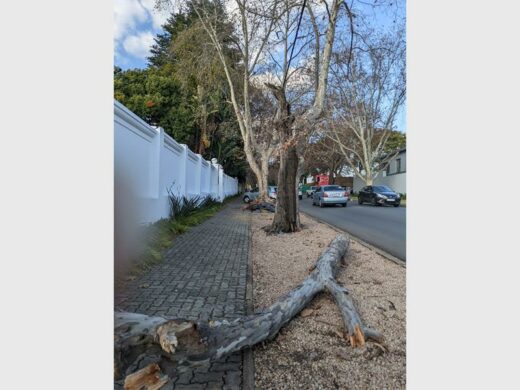
It is clear when driving though some suburbs that maintenance of city trees is being neglected with dead or damaged trees dotted along pavements with no visible remedy being implemented and that pruning of trees has not been done systematically.
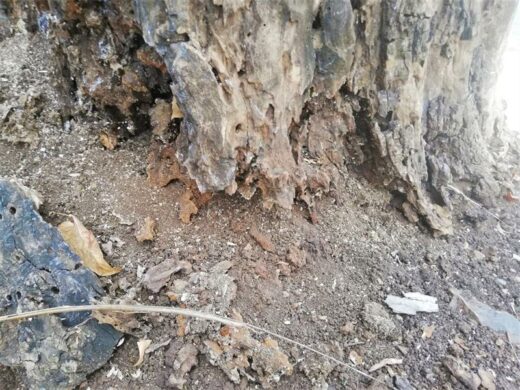
With many trees dating back to the early 1900s, it is expected that some will be dying of ‘old age’ while others are perishing from disease or illegal cutting for firewood, known as tree poaching. The ability of the city to keep up with replenishing dead or diseased trees feels uncertain.
Added to that, in 2018 the discovery of the polyphagous shot-hole borer beetle was found to be decimating trees in the city, for which there is no known treatment.
Ward 117 councillor Tim Truluck has been actively involved in the beetle’s effects on trees. “The city simply does not have the money to be actively maintaining and protecting trees under their care. Often, rather than being proactive and looking after trees, they wait for a tree to die and remove it if it is a danger to people, property, or other infrastructure.”
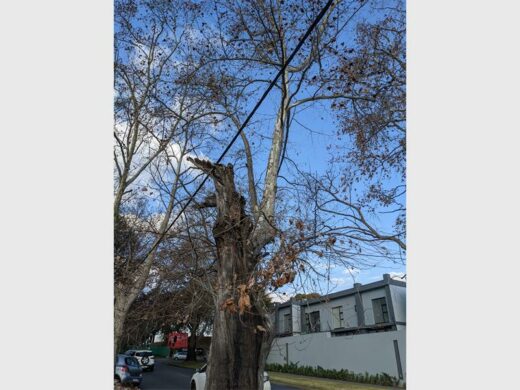
In some cases, though, even that is not done efficiently as illustrated above, and it is often illegal for residents to remove dead pavement trees themselves.
Truluck said, “In the summer months when trees are no longer dormant, we will know how active the beetle will become again. Planting new trees to replace those lost to the beetle is not always a viable option as there is no proven treatment against it.”
Adelaide Chokoe, an arboriculturist with City Parks, said the city does have a tree-replacement plan and is, ‘interplanting trees with non-host trees that seem resistant to the beetle’.
So a slew of new indigenous trees is planned for coming generations to enjoy, but there is no escaping the fact that our urban forest will look very different in the future. Truluck, however, believes that our city will still be ‘an urban forest, just with less trees’.
To report fallen or dead trees, please email trees@jhbcityparks.com and escalate fallen and uprooted trees to the emergency WhatApp number on 082 803 0748. General enquiries can be directed to the Joburg Connect call centre on 011 375 5555.
Related articles:
City Parks cannot divulge specifics for environmental monitors yet