Questions arise as to the real effectiveness of the G20
As South Africa hosts 20 of the world’s countries for the G20, questions are being raised as to whether it is an effort in futility, or if it can really bring about change.
As South Africa prepares to host the G20 summit, at Nasrec, questions are being raised about whether the forum can fairly serve both rich and poorer countries.
The G20 brings together some of the world’s most powerful economies, including developed nations and major developing countries, such as India, Indonesia, Brazil, and South Africa. The African Union has also recently joined, giving African countries a stronger voice in global economic discussions.
Read more: Women for Change bring a haunting silence to Emmarentia at the Johannesburg Botanical Gardens
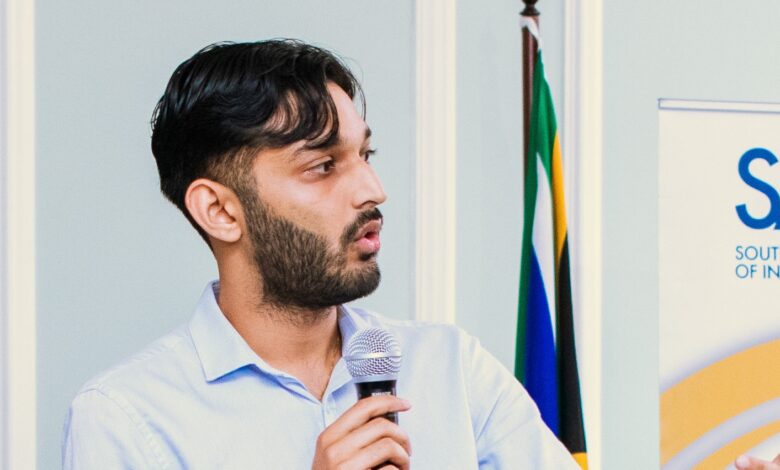
Rahul Gandhi, a research assistant at the Southern Centre for Inequality Studies at Wits University, said that while the group looks balanced on paper, real power still lies with wealthier nations. “The G20 puts rich and poor countries in the same room, but in reality, the richest countries often still shape the final outcomes because the rules are not enforced.”
The G20 chairmanship rotates between regions, giving different countries a chance to set priorities. South Africa has used this opportunity to push issues, such as inequality, to the top of the agenda. However, Gandhi warned that these efforts can easily be undone. “Good work done by one presidency can be reversed by the next, especially when powerful countries change direction.”
Even though the G20 represents much of the world’s economy and trade, many people feel it has little impact on their daily lives. Meetings of leaders and officials are mostly closed to the public, which has led to criticism that the G20 serves elites, rather than ordinary citizens. “Most people are not part of these conversations, so the G20 can feel distant and irrelevant to everyday life.”
To address this, the G20 has created engagement groups and a new social summit. At the same time, civil society organisations have organised a people’s summit, taking place from November 20 to 22 at Constitution Hill, to give ordinary people a platform to share their concerns.
Also read: SME Growth Summit 2024 empowers small businesses
The G20 has, in the past, shown that it can act when the world faces major crises, said Gandhi. “During the 2008 global financial crisis, it helped co-ordinate a $5t global stimulus. It also helped inject emergency funding into the world economy during the Covid-19 pandemic through International Monetary Fund Special Drawing Rights.”
He added that under South Africa’s presidency, President Cyril Ramaphosa created an extraordinary panel on global wealth inequality, chaired by Nobel prize–winning economist Joseph Stiglitz. The panel, which included Prof Imraan Valodia, Winnie Byanyima, Jayati Ghosh, Adriana Abdenur, and Wanga Zembe-Mkabile, recommended setting up an international panel on inequality. “If world leaders take these recommendations seriously, it could be one of the G20’s most important achievements.”
However, the G20 has also faced major criticism. Its response to climate change has been seen as too slow. G20 countries, excluding the African Union, produce 77% of global emissions, yet they have failed to meet the goal of limiting warming to 1.5°C.
Many poorer countries are also heavily in debt, making it hard for them to invest in green energy and social services. The G20 common framework for debt relief has been criticised for being slow and ineffective.
The group has also failed to make real progress in ending the Russia/Ukraine war, even though Russia is a member of the G20.
Recent tensions, including the United States’ boycott of South Africa’s G20 presidency, have increased doubts about whether the forum can reach agreement on major global issues. Despite this, South Africa has said it will continue working with the United Kingdom, which will take over the presidency after the US, to keep pushing for action on inequality.
As leaders gather in Nasrec, many will be watching closely to see whether the G20 can move beyond promises and deliver real change for people on the ground.
Follow us on our Whatsapp channel, Facebook, X, Instagram, and TikTok for the latest updates!