
Linden Community Policing Forum hosts talk about men and suicide
A recent Linden suicide prevention talk helped open the conversation about male mental health, warning signs, and how communities can help.
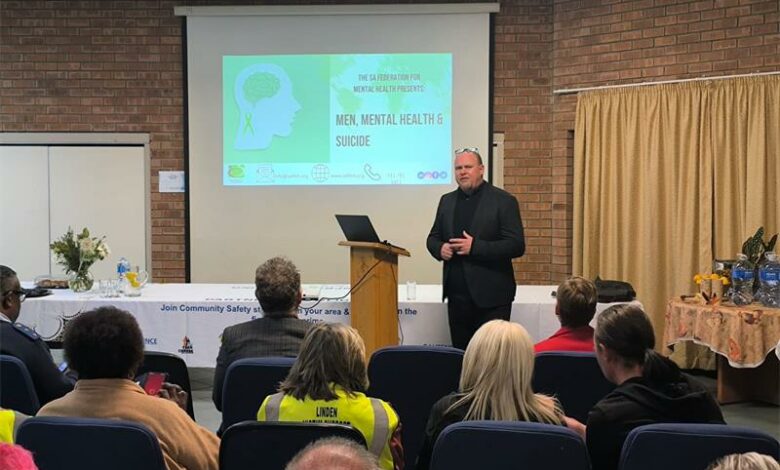
Behind the expectations to be strong, dependable, and always in control, many men are carrying battles that few people ever see.
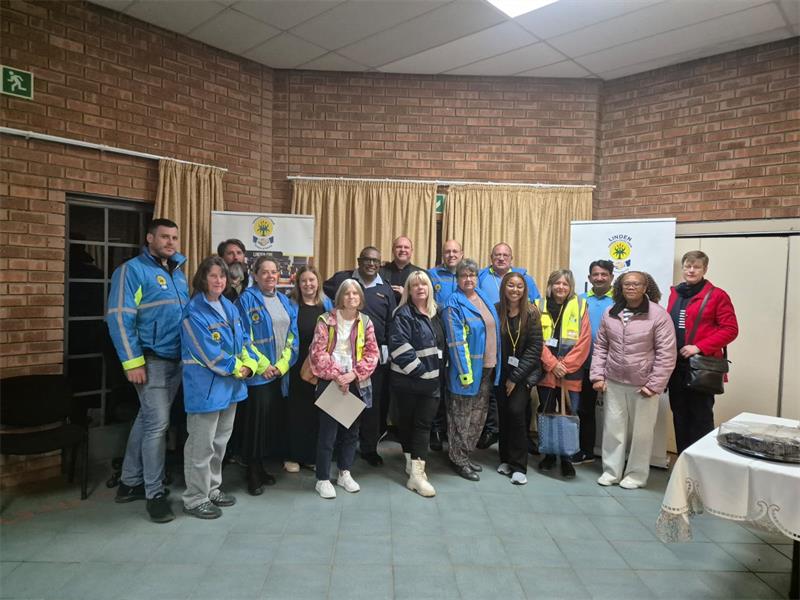
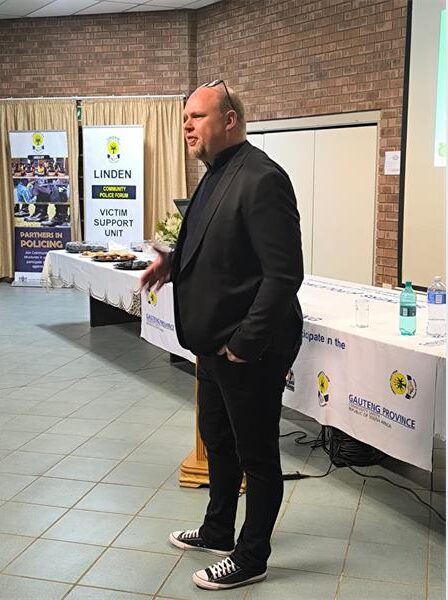
That was the uncomfortable, but necessary reality explored when Leon de Beer, deputy director of the South African Federation for Mental Health, addressed residents, police officers, mental health practitioners, and community members at a suicide prevention talk hosted by the Linden Community Policing Forum (CPF) at Linden Police Station.
Under the title: Men and Mental Health: Male Suicide – A Growing Crisis, De Beer challenged one of the most deeply rooted ideas about masculinity: That asking for help is a sign of weakness. “Men are less likely to speak up about their feelings until it’s too late,” he explained, pointing to the way societal expectations can teach men to suppress vulnerability rather than seek support.
Read more: Ward 86 residents urged to make their voices heard at upcoming CPF meeting
The consequences can be devastating. According to statistics cited by De Beer, about 23 suicides and 230 serious suicide attempts occur in South Africa every day. Of 13 774 recorded suicides in a particular year, 10 861 – almost 79% – were men. Globally, too, male suicide rates are consistently higher than those of women, despite women reporting higher rates of suicidal thoughts and behaviours.
For De Beer, these figures show what has increasingly been described as a silent epidemic, but silence does not mean there are no warning signs. A sudden change in behaviour, particularly following a loss, painful event, or major life change, can be an important signal. Withdrawal from friends and family, increased alcohol or drug use, aggression, fatigue, changes in sleeping or eating habits, risky behaviour, and losing interest in previously enjoyed activities can all indicate that someone may be struggling.
So can what a person says. Talking about feeling hopeless, trapped, being a burden, experiencing unbearable pain, or having no reason to live should never simply be brushed aside.
De Beer said that not every person showing these signs is suicidal, and some people may show no obvious warning signs at all, but when something feels different, the safest response is to pay attention. Maybe, most importantly, that conversation can begin with the question: Are you okay?
Asking someone directly whether they are thinking about suicide does not mean putting the idea into their head. Instead, it can open a door that someone may have been too frightened, ashamed, or overwhelmed to open themselves. Listening without minimising their feelings is equally important. For men who have spent years being told to man up, admitting that they are struggling can feel like surrender.
Also read: Linden CPF meeting highlights community frustrations
De Beer, however, argued that the very expectations intended to make men strong – being the provider, protector, decision-maker, and emotional rock – can leave them feeling inadequate when life becomes overwhelming. Mental health struggles, he emphasised, are not failures of character. “Having a mental health condition, struggling with your mental health, or having suicidal thoughts is not a sign of weakness.”
The answer, therefore, cannot rest solely with the individual. Families, friends, workplaces, schools, community organisations, churches, and local structures all have a role to play in creating spaces where people can speak honestly without fear of judgement. That is why conversations such as this talk matter.
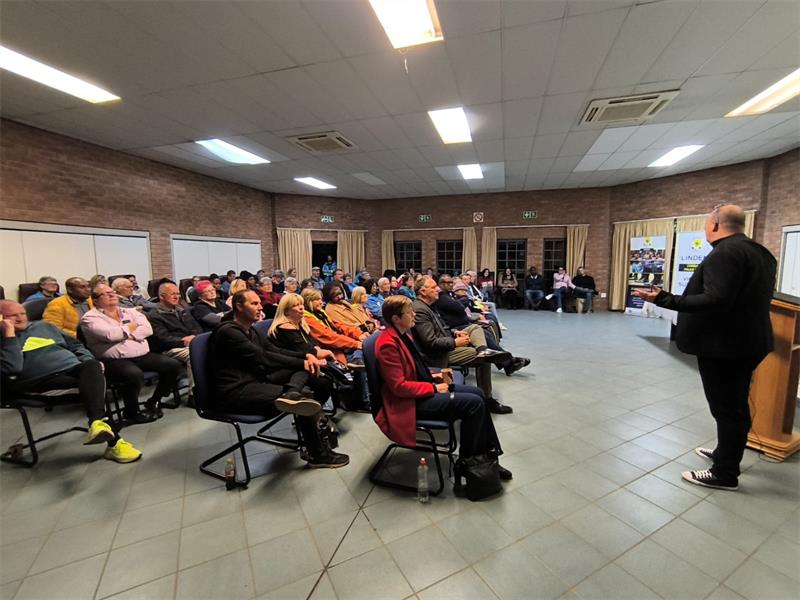
De Beer praised the Linden CPF and Linden SAPS for bringing together people from different parts of the community and creating an environment where an often-taboo subject could be discussed openly. “These types of events should be replicated far and wide.”
De Beer stressed that conversations about men’s mental health are not only for men. Women, too, need to understand the warning signs because everyone has the potential to notice when someone they love is struggling.
For De Beer, hope lies in the fact that the conversation is finally becoming harder to ignore. There is growing recognition of the importance of men’s mental health in South Africa, including increased attention from government, researchers, organisations, and community groups. Changing statistics, however, begins with changing the silence around them, and sometimes, that change does not start with a grand intervention, but with noticing that someone has become quieter, angrier, more withdrawn, or simply not themselves.
As De Beer reminded the group: “It is okay for someone not to be okay.”
Follow us on our Whatsapp channel, Facebook, X, Instagram, and TikTok for the latest updates!