An act of compassion, not cruelty
The desperate, pitiful yelps of an animal in physical torment were the first indication that SPCA official, Corné Slabbert, had about how badly the dog was injured.
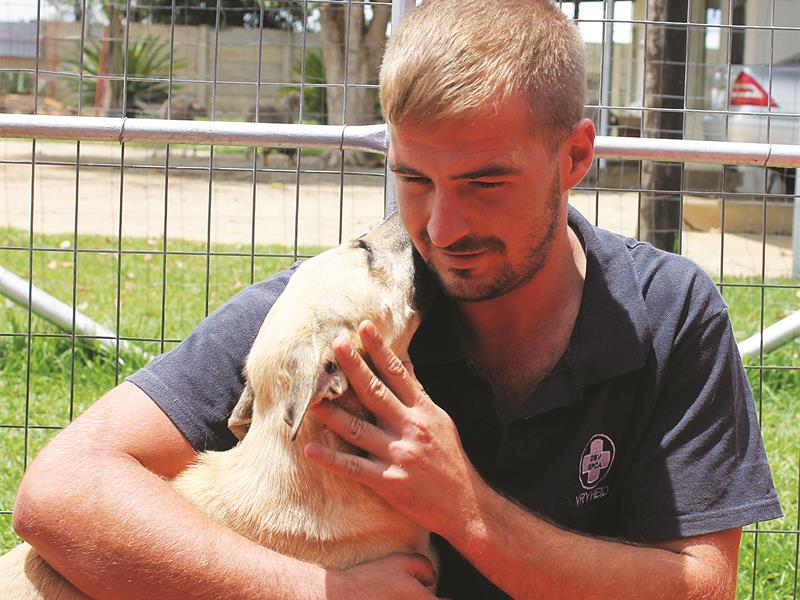
The desperate, pitiful yelps of an animal in physical torment were the first indication that SPCA official, Corné Slabbert, had about how badly the dog was injured.
A concerned resident had taken the dog indoors and contacted Mr Slabbert for help after it had been hit by a car.
When Mr Slabbert arrived at the resident’s home, the dog was lying in the bathroom. It was struggling to get up but couldn’t, it was clear that it had broken bones, and it was bleeding from its injuries and even out of its anus.
“It ripped my heart apart to see an animal lying there trying to pick itself up,” said Mr Slabbert. “As I moved toward him, he didn’t back away. He was also trying to come toward me as if he wanted me to help him.”
Mr Slabbert wrapped the dog in a towel and gently lifted it off the floor. “When I had him in my arms, the dog turned and actually looked me in the eye and I could see his pain in his eyes. It actually brought me to tears as I thought that this poor animal couldn’t have been put on this earth to endure that pain. All I wanted to do was to help him.”
Mr Slabbert lay the dog on the back of his bakkie and made a phone-call on the emergency number of a local vet but there was no answer. “I then slowly drove to the vet’s office, avoiding any bumps to prevent the dog going through any more pain than necessary, and tried the numbers that were on the vet’s door but I still couldn’t reach him. I, then, had a choice. I could drive 70km out of town to Dundee, which is where the next closest vet is, or I could put the dog down myself. I called an SPCA committee member to explain that I felt that putting the dog through that long trip while it was in that condition would be cruel, and I would rather put it out of its suffering, and the committee member agreed.”
Mr Slabbert then drove to the SPCA, where the municipality has provided a grave, used a captive bolt to stun the dog so that it wouldn’t feel any more pain and then slit the dog’s throat quickly to ensure that it died before the effects of the captive bolt wore off. As a trainee inspector, Mr Slabbert is not legally allowed to use euthanase to put an animal down, and the captive bolt pistol was the only means at his disposal according to the National SPCA.
Unfortunately members of the public observed the scene at the SPCA and were traumatised by what they saw as a gruesome and unnecessary act.
Responding to questions about why, “the dog’s throat had been cut so deeply that its head was only attached to its body by a flap of skin,” Mr Slabbert explained, “I would rather cut very deep to make sure that the animal is dead than risk it waking up and enduring any more pain.”
Once the dog’s body had been discarded into an open grave, Mr Slabbert went home. “I walked into my house feeling too terrible to even speak to anyone. I just went in quietly and sat on my bed, still wishing that the vet had just answered the phone so I wouldn’t have had to put the dog down myself. I had been sitting on my bed for less than five minutes when my phone started ringing.”
Mr Slabbert was being summoned back to the SPCA by an angry mob of residents demanding an explanation for the manner in which he had put the dog down, and for the fact that the grave had not been covered up.
“The municipality digs the grave, they tell us where the grave is and they cover it up. This is out of our hands at the SPCA. It was a Sunday and the municipal staff was off duty so they only covered up the grave the next morning,” he explained.
“Even if there had been 200 people threatening me and my life was on the line. I would give my own life so that the dog would not have to suffer any more,” continued Mr Slabbert.
Mr Slabbert is the only inspector responsible for a vast area within the Zululand District. On average, the Vryheid SPCA takes in between 50 and 100 animals every month, excluding cruelty cases and livestock. Only about half of these animals are ever adopted.
“We deal with some terrible cases. One of the dogs adopted by the SPCA, for example, was brought in when she was so skinny her ribs were poking out painfully against her skin. Some dogs come in with blackened bruises from chains that were wrapped around its neck to tightly the dog could barely breath anymore. I love animals. That’s the reason I applied for this job. I, myself, have adopted five dogs, geese, ducks and goats. They are my pets. They cost a lot of money but it doesn’t bother me because I love animals.”
Asked if he had a message for residents who have criticised his actions, Mr Slabbert simply asked, “What would you have done in that situation? I understand that people are angry because they didn’t understand why I did it. Now, I hope they will understand that there is a reason behind it.”