Marching in the memory of Gandhi
More than 2 500 people attended the annual Mahatma Gandhi Commemorative March.

More than 2 500 people gathered at the Charlestown Mosque on Saturday, November 30, for the 100 year Commemoration of the Mahatma Ghandi 1913 Great March.
People travelled from all over the country to march the 6 kilometers from the Mosque to the Volksrust Prison, where Ghandi and others were detained.
In 1906, a law prohibiting the Indian people and the Chinese from entering the Transvaal was constitued. However, they were determined to defy this law.
After numerous attempts to change the government’s position, in October 1913, Gandhi led about six thousand Indians from Newcastle to the Transvaal via Volksrust, in defiance of the Transvaal Immigrants Law and the £3 tax imposed on Indians.
After travelling for nine days they finally reached Volksrust on the 6th November 1913. The Volksrust whites had promised to shoot any Indian who crossed into the Transvaal, but they did nothing when the resisters eventually entered.
Gandhi was arrested and fined £50 bail. After he was released he joined other Indians who continued marching. He was again arrested in Standerton. Again he was fined and released. He was arrested for the third time, and taken on warrant to Dundee, where he was accused of inducing miners to go on strike.
In October 1913 Gandhi had advised miners in Newcastle, Natal, to leave their compounds after their employers had tried to intimidate them to return to work.
The court found him guilty and sentenced him to nine months’ imprisonment. He was then transferred to Volksrust Old Prison. This prompted more Indians to defy the laws and hand themselves over for arrest.
General Jan Smuts, feeling international pressure, appointed a commission to investigate the Indian issue. Before the commission could sit, it recommended that Gandhi should be released. As a result Gandhi only served six weeks in prison.
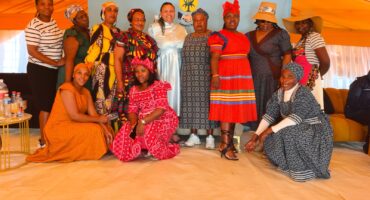
Prominent figures in the march included Ela Gandhi, Mahatma Gandhi’s daughter, the MEC of Arts, Culture and Recreation KZN and Mpumalanga, Mrs N Sibhidla-Sapetha, High Commissioner to South Africa from India, Mr V Gupta and the Secretary of Culture from India, Ravindra Singh.
The Mayor of Newcastle Cllr Afzul Rehman, welcomed the marchers.
“Today we struggled because of heat, but those who came before us struggled because of oppression. The area of Newcastle is rich in history, and today were commemorate an event that shaped that history. Mahatma Gandhi introduced a structure of fighting oppression, a structure of non-violence,” said Cllr Rehman. “I hope the spirit of Gandhi will forever live in you,” he concluded.
Delivering the keynote address was the MEC of Arts and Culture KZN; Ms Sibhadla-Saphetha, “Government recognizes the role played by Indian people in our country, we celebrate this event together with the 16 days of activism,” she said. “As we commemorate this day, we also re- commit ourselves to fight abuse against women and children. History records show that 127 women and 57 children walked in the march in 1913.”
Many people lost their lives during the Great March in 1913. Mahatma Gandhi became a model for those fighting for their voices to be heard, and for the correction of injustices against them.
“We thank all those who were involved in the orginisation of the event, and we encourage more people to attend this annual event,” concluded MEC Sibhadla-Sapetha.