Editor's choiceLocal newsNews
Preserving our natural heritage
A team of specialists from the Rhino Rescue Project administered a relatively new anti-poaching method called ‘horn devaluation’ where the rhino’s horn is infused with an animal-friendly toxin and an indelible dye, making it worthless for medicinal or ornamental purposes
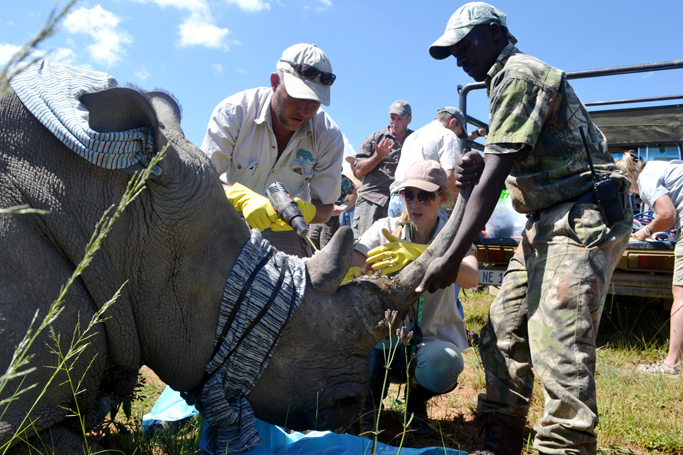






A team of specialists from the Rhino Rescue Project administered a relatively new anti-poaching method called ‘horn devaluation’ where the rhino’s horn is infused with an animal-friendly toxin and an indelible dye, making it worthless for medicinal or ornamental purposes. The toxin is not harmful to the animal itself but is extremely toxic to humans should it be ingested, causing severe nausea, vomiting, diarrhoea and convulsions.
The dye infused into the horn will turn the inside of the horn a bright pink, contaminating it for approximately four years. If the rhino is poached, its horn has no use to the end consumer and also may be picked up by airport security, even if the horn is ground to a fine powder. This procedure demands careful planning, strategy, a unified team and utmost care for the animal.
It unfolded on the expansive reserve on Friday morning when officials from the Rhino Rescue Project – Dr Charles van Niekerk, Lorinda Hern and Dean Riley-Hawkins, staff from ZuluWaters, Ezemvelo KZN Wildlife officials, the media and the public were invited to witness this revolutionary anti-poaching procedure.
The rhino are identified from the air and darted. Once they are asleep, the team clinically begins the process of infusing the horn. To begin, a small hole is drilled into each of the two horns.
A sample from the horn is taken, which along with other DNA samples are logged into a database and sent off to Onderstepoort to be included in the national database.
Thereafter the dye and toxin is inserted into the horn through a specialised steel nozzle and tube.
The amount of dye infused into the horn depends on the size of the horn.
While the infusion process goes on, the team regularly checks on the rhino while collecting other DNA samples, including horn measurements. The rhino are also microchipped in 3 different places on their bodies and horns for identification purposes.
Once the horn infusion process is complete, the horn is patched with putty and sealed with duct tape before the rhino is woken. Friday’s procedure was a great success, according to Lesley Terwin from ZuluWaters Game Reserve. “We hope that by being proactive, this process will protect the future of the rhino at ZuluWaters for many generations to come,” she said.
When asked why this decision was taken, Ms Terwin explained: “By infusing the horns it renders them valueless both for medicinal use as well as ornamental use and so we decided on this method rather than dehorning.
With a major source of income being eco-tourism, dehorning is not an ideal solution, particularly because rhinos are still poached for the base of their horn. In addition, the rhino’s horn is also an important part of their daily life, so we wanted to keep their horns intact if at all possible.”
Notices have also been placed around the 3 200-hectare reserve informing the public that this procedure has been done.
Watching this process was an amazing experience and being so close to these majestic animals was extraordinary but observing the team meticulously execute their job was awe-inspiring.
At Caxton, every story is written by humans. We use AI only to perform quality checks - never to generate the news. Happy reading!