
With the Duke of Lancaster’s on the battlefields
This battlefield tour was unique in the sense that the objective was to investigate the two iconic battles of Isandlwana and Rorke’s Drift according to the classic Clausewitzian principles of warfare, as it would have been drawn up by the Prussian general, Von Clausewitz. Every member was invited to participate, and they started with the …
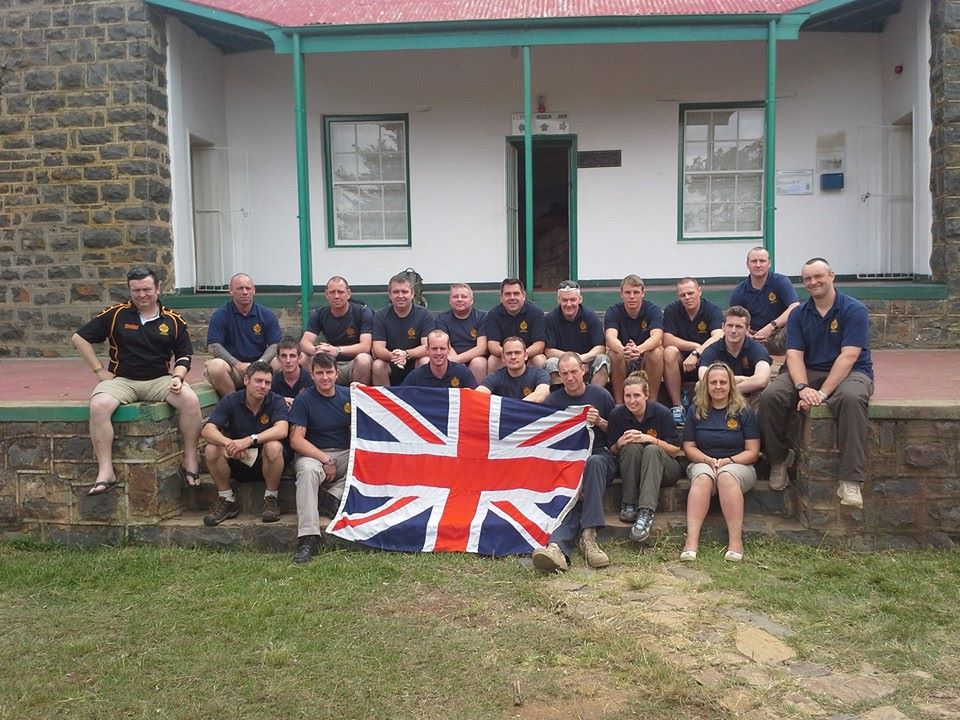
This battlefield tour was unique in the sense that the objective was to investigate the two iconic battles of Isandlwana and Rorke’s Drift according to the classic Clausewitzian principles of warfare, as it would have been drawn up by the Prussian general, Von Clausewitz. Every member was invited to participate, and they started with the battle of Isandlwana. We have dabbled in the modern doctrines of, primarily the old pre-1994 South African Army, as their main strength and methodology was centered in the absolute maintenance of mobility, which could not really be applied on the 1879 Isandlwana campaign of Lord Chelmsford, the British GOC in South Africa at the time, and have thus been responsible for a large measure of his downfall.
The following quote of General J. F.C. Fuller, “Unless history can teach us how to look at the future, the history of war is but a bloody romance,” was an apt start to our endeavours of the day, the generally accepted principles of warfare, as developed and adhered to by several generations of thinkers on the subject.
The Study of War
We briefly applied the following principles to each of the two battles mentioned, and discussed it as the day allowed. If the soldiers of the future, which were these men at some point in the past, were to gain any knowledge of war, or increase the stock of actual experience, they must perforce read military history. This profession is not sculpted entirely by desk-bound theory, and reading must be complemented by succinct and readily assimilable analysis. This checklist of immutable principles of warfare will serve as an aid for a subaltern suddenly faced with the command of a company, or a vade – mecum for a staff officer, if you like.
They are:
1. The Object, which encompass the need to select the primary target, and not to be deflected from that aim;
2. The Offensive, which is the stronger form of warfare, and it affirms morale, and only it can lead to victory. Defensive is a weaker norm, because it disperses resources and yields the initiative to the enemy. Only acceptable as the prelude to a counter-attack;
3. Security of Forces, the importance of keeping your guard up, while striking the enemy, protecting your own lines of communication, while falling upon the enemy’s ;
4. Surprise, which is physical or psychological, and ensures moral superiority over the enemy. It must be read in conjunction with Offensive;
5. Concentration, which is bringing the biggest mass of troops possible to bear on the decisive point;
6. Economy of effort, which is the level at which the commanding officer decides the upper limit of strength required. This is notwithstanding the concentration principle, and has bearing on the point of using a sledgehammer to swat a fly;
7. Flexibility and mobility, important elements in attacking decisively, concentrating effort, and using surprise, with no more effort than is required;
8. Simplicity of plan, as excessive complexity may overtax training, capability and command structures of the force involved. Carries its own risk of breakdown;
9. Unity of command, ensuring effective co-operation of various parts of forces involved; and
10. Morale, probably the most important principle of all. No amount of troops will achieve the primary objective without it.