Trees are no protection
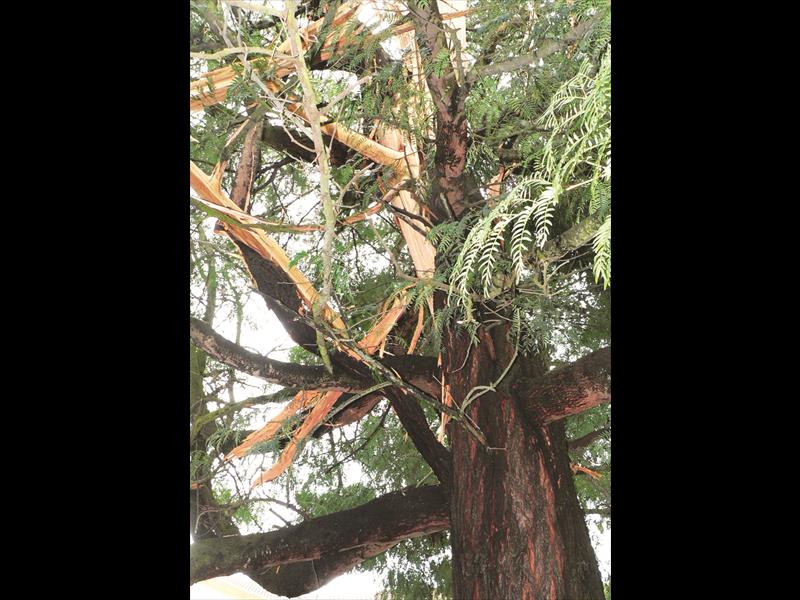
RESIDENTS are again warned – trees are not the place under which to seek shelter during a thunderstorm. You take your life in your hands if you do so. The tree in the picture stands in President Street, and shortly before Christmas it was struck by lightning, and the damage illustrates the danger. “Since sap …
RESIDENTS are again warned – trees are not the place under which to seek shelter during a thunderstorm. You take your life in your hands if you do so.
The tree in the picture stands in President Street, and shortly before Christmas it was struck by lightning, and the damage illustrates the danger.
“Since sap is a relatively poor conductor, its electrical resistance causes it to be heated explosively into steam, which blows off the bark outside the lightning’s path.” In this case, the top of the tree literally exploded, and bits of tree flew for metres.
The Weather Library puts it this way: “It’s a proven fact – standing under a tree is one of the most dangerous places to be in a storm. And for a good reason – trees protrude from the earth’s surface, making them frequent victims of direct lightning strikes.
“Electricity seeks the path of least resistance, and the moisture (sap and water) inside a tree is a much better conductor than air. The result: a tree provides a preferred path for lightning to reach ground.”
The Weather Library continues: “In some trees, especially those with dying or rotting areas in the trunk, the predominant moisture may be concentrated deep in the core of the tree. In this case the lightning, seeking the well-conductive moisture path, will travel through the centre of the tree with devastating results.
“The powerful, explosive return stroke(s) will blow the trunk apart like a stick of dynamite- sending large branches flying, splitting the trunk in two, and/or reducing large parts of the tree to splinters.”
In a storm, seek shelter in a structure, not under a tree.