En Passant: What history will say about us
IN THE grand scheme of things Vryheid is still a juvenile at only 131 years old. That’s less than two full human lifetimes each of three-score-years-and-ten. It is not very long at all, and the furthest reaches of our history are relatively recent. To put this into context, London in England is around 2,000 years …
IN THE grand scheme of things Vryheid is still a juvenile at only 131 years old. That’s less than two full human lifetimes each of three-score-years-and-ten. It is not very long at all, and the furthest reaches of our history are relatively recent.
To put this into context, London in England is around 2,000 years old, and there are places in the Middle East which can double that. Isn’t Damascus the world’s oldest continually inhabited settlement?
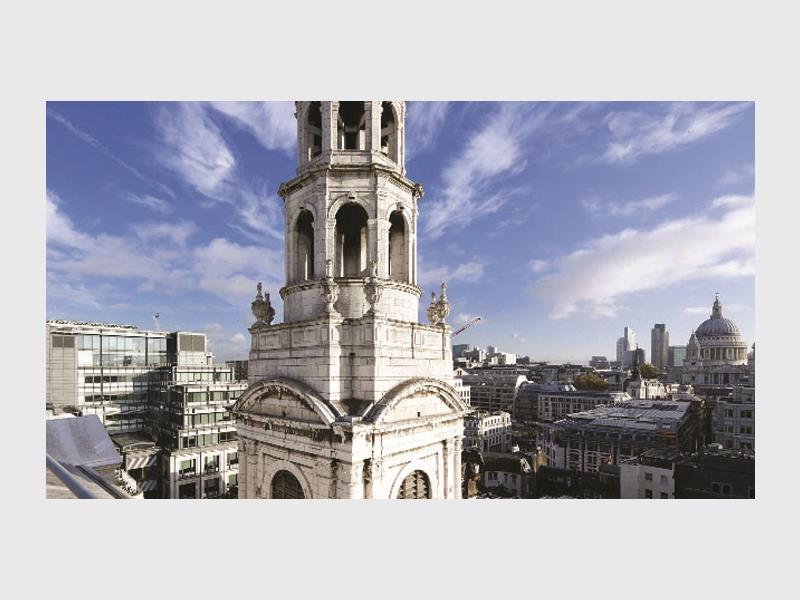
In these old cities, they are continually unearthing relics of their histories. In London, for example, there’s a church in Fleet Street called St Bride’s, which I have visited, and which was bombed to rubble in 1940 during the Blitz in World War II. It was one of the churches built by Christopher Wren, so they thought it was worth restoring after the war, and I presume they had the plans that made this restoration possible.
When they started removing the rubble, and digging down to establish a solid base for the new foundations, they discovered that St Bride’s had been built on an older church, in fact on six older churches, each one going further back in time. They discovered a charnel house, which if I understand it is a vault used for the disposal of corpses or bones, the ones under St Bride’s probably being Plague victims.
And even further down they discovered evidence of the Roman occupation of England. There’s a wonderful old mosaic down there. And they restored St Bride’s so that you can go downstairs into what I suppose would be called the crypt, and you can’t see into the charnel house but you pass it to where the Roman remains are exposed and exhibited. If you’re ever in London go to St Bride’s, Fleet Street, it’s worth it.
Anyway, I was thinking; what would archaeologists discover if they started digging in Vryheid in a thousand years’ time? Well, one thing I have seen unearthed is evidence of the town’s old water distribution method.
I don’t know when they stopped this and instead had water piped directly into homes, but there was a time when residents got water only once or twice a week, and it was released from reservoirs on Vryheid Hill to flow down open channels to the homes. I presume each home had, I dunno what you’d call it, an off-tributary and a small reservoir or cistern tank which was filled, and then I suppose you’d have to bring the water indoors with a bucket.
One of these water distributing channels, lined with stone as I recollect, was unearthed some years ago in Utrecht Street, and I presume the rest of the system is now filled up with earth and lying dormant under our roads and sidewalks.
I remember too that when the Pick ‘n Pay parking lot was being excavated the most interesting artefacts uncovered were some old liquor bottles. That old house on the corner of President and Utrecht streets had once upon a time been the home of the first dominee of the Klipkerk back in the 1880/90s, but also, later, where Vryheid’s gentlemen’s club was located.
I presume that the liquor bottles found there were from the club’s tenure of the property, and not the dominee’s. They were really quite beautiful bottles, the glass in many cases being flawed as if they weren’t mass-produced, and the colour of the glass was not of a colour that you see today.
So an archaeologist who dug the ground of Vryheid, and discovered, or uncovered, our primitive water reticulation channels and some liquor bottles could conclude that the inhabitants of Vryheid drank alcoholic beverages which they mixed with water.
However, were these future archaeologists to dig further east of the existing town they’d get a different picture. They’d discover Vryheid’s midden, a midden being described by Wikipedia as “an old dump for domestic waste which may consist of animal bone, human excrement, botanical material, vermin, shells,sherds, lithics (especially debitage), and other artifacts and ecofacts associated with past human occupation.”
What these archeologists would discover which would be odd about our town’s midden, was that at regular intervals there would be a layer of burnt materials – ash, the remnants of burnt plastics of different sorts, and all sorts of charred and semi-combusted stuff. This they would find curious.
An analysis of the plastics remnants and residues would lead them to conclude that these fires emitted huge volumes of toxic fumes, and they would wonder why it was that this civilisation (if that’s the right word) annually set its rubbish dump on fire. They would find this not only curious but damned stupid.
They would wonder about the people who lived in this old settlement, that history recorded as being a town called Vryheid, and why the people almost on an annual basis allowed themselves to be poisoned with the sort of fumes that at best exacerbated bronchial complaints, and at worst were the suspected cause of malignant tumors.
They would think we were really dumb, and I think they would be right.