Getting to the root of the krantz aloe
The krantz aloe is possibly the most widely cultivated aloe found growing in gardens around the world.
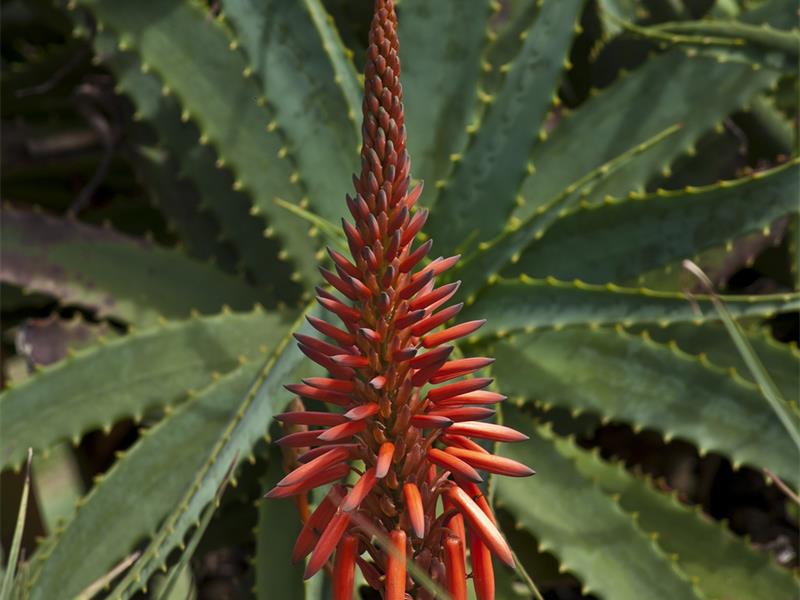
The krantz aloe is possibly the most widely cultivated aloe found growing in gardens around the world. It is concentrated mainly in the eastern, summer rainfall areas of South Africa. It is adaptable to many habitats, but favours exposed ridges and rocky outcrops, from coastal scrub to mountain tops.
The krantz aloe will form a spreading, multi-headed shrub, growing about two to three metres tall, with striking green leaves arranged in attractive rosettes. The leaf margins are armed with small teeth.
From May to July, it bears a profusion of colourful flower spikes, which will brighten up even the dullest winter garden. Deep orange is the most common colour, but there are also striking bi-coloured forms of a deep orange-red, as well as pure yellow.
The krantz aloe is a valuable accent plant in the garden, with its attractive foliage and decorative form. It can also be grown as an excellent and impenetrable hedging plant. The flowers produce copious amounts of nectar, attracting many birds and especially sunbirds, as well as butterflies, bees and other insects.
It is the only other member of the Aloe family claimed to be as effective as Aloe Vera for medical uses. The sap of the leaves has many uses and has been used to treat stomach ailments for many centuries, plus abrasions, burns and skin ailments. The Zulu people use the leaves of this plant as protection against storms and in the Transkei leaves are used for stomach ache and given to chickens to prevent sickness.
The krantz aloe is fast growing and hardy, tolerating drought and neglect once it is established. Choose a site in full sun and ensure the soil is well-drained and enriched with compost. For best results in the garden, water judiciously when required, and mulch with compost or kraal manure in autumn.
The plant is easily propagated from branch or stem cuttings. Allow the branches to dry for a day, or until the wound has sealed, before planting into well-drained soil or washed river sand. Do not overwater the cuttings or they may rot. Seed can be sown in spring, taking about three to four weeks to germinate.
What are your views about this story?
Tell us by posting on our Facebook timeline, Newcastle Advertiser or tweet us at @nnadv.
Get the news straight to your phone.
Add us on BBM . PIN: 2B6C7269, or join our news service on WhatsApp.
(Please note: Comments posted on this issue may be used for publication in the Newcastle Advertiser)