Drought aid has dried up for farmers
The allocation of funds has also perhaps created false expectations amongst many, the need to still take proactive measures to reduce livestock numbers, implement better animal health care and look at ways to mitigate that disaster should not be forgotten and probably most importantly each person must take ownership of this.
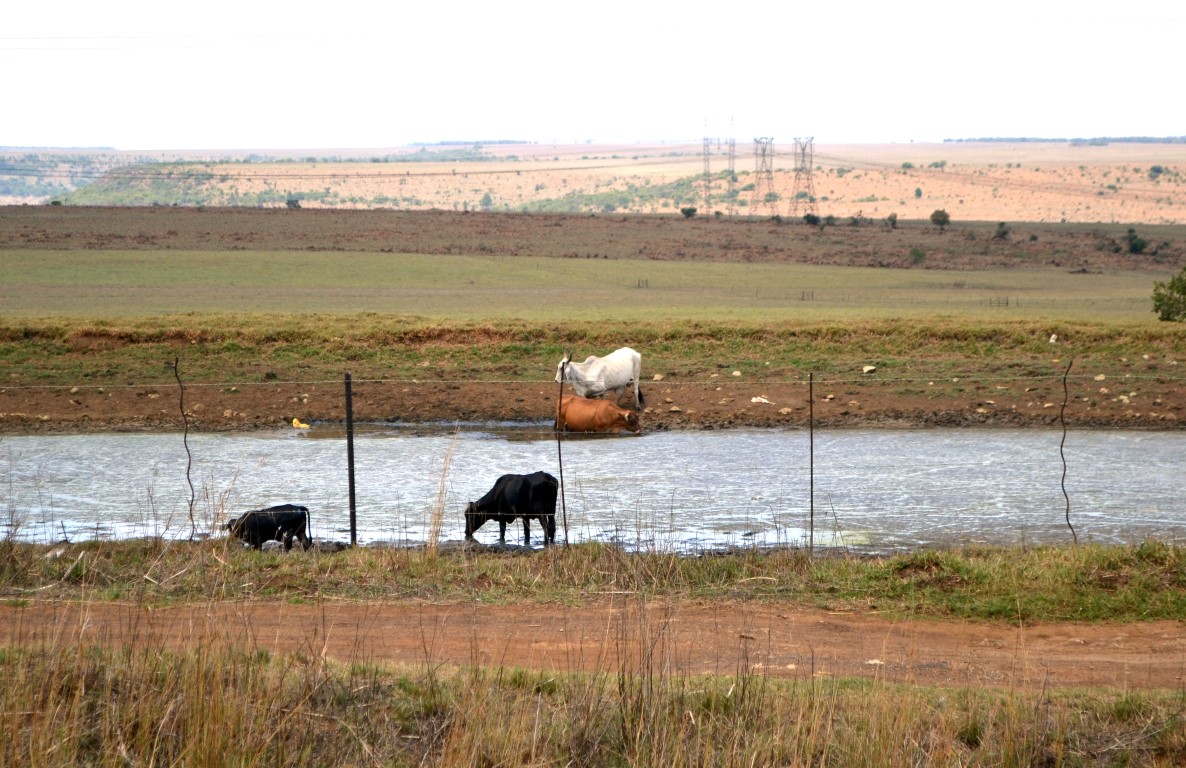
Organised agriculture in the province is concerned that the drought-scheme announced by the KZN Agricultural Department, KZN DARD, is being mismanaged.
“We understand that KZN DARD made an allocation of funds to each district.
However, reports regarding alleged mismanagement of the scheme, including and among other non-verification of applicants, discrimination of applicants, abuse by applicants, and changing the rules without proper engagement. Bona fide farmers that have not benefitted by the scheme have been reported. We believe this may have led to the funds being exhausted within a very short time period. It would appear that many bona fide farmers have not received any assistance at all,” said KWANALU’s Sandy La Marque told the Courier.
“While we are very grateful for the assistance and forward thinking of KZN DARD to make some provision for assistance at the same time for many of our bona fide farmers this has sadly come a little late. The allocation of funds has also perhaps created false expectations amongst many, the need to still take proactive measures to reduce livestock numbers, implement better animal health care and look at ways to mitigate that disaster should not be forgotten and probably most importantly each person must take ownership of this.
“While we are very grateful for the assistance and forward thinking of KZN DARD to make some provision for assistance at the same time for many of our bona fide farmers this has sadly come a little late. The allocation of funds has also perhaps created false expectations amongst many, the need to still take proactive measures to reduce livestock numbers, implement better animal health care and look at ways to mitigate that disaster should not be forgotten and probably most importantly each person must take ownership of this.

“Kwanalu has always engaged in an open and constructive manner with KZN DARD, as such we will continue to do so. The MEC also announced his intention to create a forum and we would also seek to participate in this, Kwanalu currently sits on the Provincial Disaster Management Forum and is an active member of any discussions on disaster management in the department.
“Reports regarding alleged mismanagement of the scheme, including, among other non-verification of applicants, discrimination of applicants, abuse by applicants and changing the rules without proper engagement. Bona fide farmers have not benefitted by the scheme.”
“We still remain highly concerned that at this stage that only livestock farmers have received any relief. The drought goes across all boundaries, categories of farmers and commodities. The impact has a greater social and economic consequence than just those who may be immediately affected.
“Reports have been received that the price for a bag of maize has doubled, people do not have spare funds so their last resort is to cut down on a meal every day.
“On November 20 the province of KZN was declared a disaster zone as a result of the protracted drought. The declaration is valid for a period of three months thereafter a further process would need to be undertaken. All districts were included.
“The result of this is that, simply put, relief can now be implemented. Currently, DARD is only looking at the following relief:
Procurement of inputs for livestock and water harvesting – R60 million; aggressive de-worming of livestock- R9 million (to be conducted by veterinary section at dip tanks); and borehole drilling and dam scooping – R45 million (contracted service providers to implement).
The possibility of using state land for grazing – (No grazing in the northern parts of KZN. Other areas are under investigation).

The scheme will be implemented as follows:
A once-off, one-stop service, on a first-come-first-serve basis (collect and pay which will run for a period of three months or until the funds are depleted).
Farmers are categorised according to emerging farmers who receive a 100% subsidy and decreases down 20% according to the various levels of the farming operation as determined by DARD.
To access the subsidy, a farmer will be required to supply the following information and documentation at registration, i.e.: Farmer ID, name, Farm/Ward Name, Local Municipality, District Municipality, Livestock numbers.
The following proof must be provided: Farmer must reside in the area (FICA – Letter, proof of address, Nkosi or Councillors letter), be a livestock farmer (Copy of a brand mark certificate or application), be a South African citizen (copy of an identification certificate/book), Farmer to Sign (or thumb print) and date the form (No crosses)
A reminder that this assistance will be on a first-come-first-serve basis and run for a period three months or until the funds are depleted.
Kwanalu continues to serve on the Provincial Disaster Management Forum, meet with the relevant stakeholders
“While we are grateful for this assistance we will continue to lobby as we believe a more holistic approach which would include all farmers should be considered. In addition, consideration to further subsidised aid, provision of a Grant or Wage subsidisation, MPR rebates, tax concessions, incentives on stock reduction, finance bridging, subsidisation of interest on production credit and long term loans, among others, could be secured.
“A national forum has been convened by Agri SA with a broad group of stakeholders to look at the above proposals and further ways in which the drought and other disasters could be attended to.
“Kwanalu continues to serve on the Provincial Disaster Management Forum, meet with the relevant stakeholders, MEC and other parties to ensure the voice of agriculture is heard.” Ms La Marque said.