Coffee – not just the the drink of poets and politicians….
Elements of today's coffeehouses (slower paced gourmet service, tastefully decorated environments, or social outlets such as open mic nights) have their origins in early coffee houses, and continue to form part of the concept of coffee culture. Pieter Bester, take note.
A passion for coffee, that dark beverage, slightly habit-forming and the social lubricant on which a lot of world history had been written, had always been one of my salient vices. That is, if you can call it that. When you include my overriding passion for military history, the all-consuming kaffeeklatsches of the Austrian and German sidewalk coffee shops of the 19th century will inevitably raise its head in the narrative.
The coffee shops of Vienna and Berlin saw the rise and fall of political parties and empires. It played host to the furtive trysts of secret agents and wartime spies, and it became the stuff movies was made off. Who will ever forget René, that French Resistance coffee shop owner in the sitcom “Allo, ‘allo…??
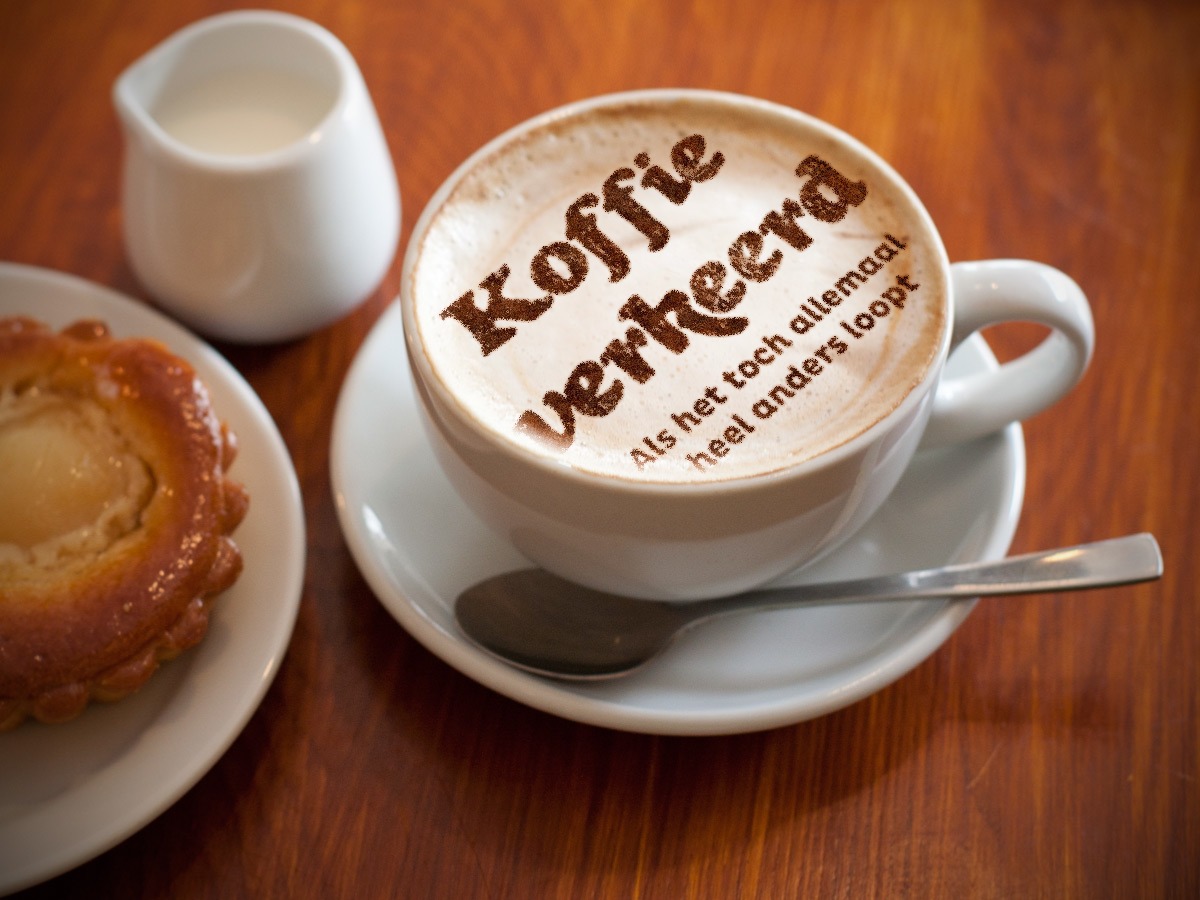
Koffie verkeerd was boiled milk with a spadeful of coffee strained through it.
I fell victim to the lure of Douwe Egberts in the Kultuurkafé (or KK) of the Vrije Universiteit Brussels during my sojourn at this eclectic institute of higher learning. I soon found out that beer was not the lubricant of choice among intellectual company like coffee was, especially not when topics like poetry, literature or history was debated. It was coffee – gallons of the stuff, espressos, strong like the blood of Lucifer, cappuccino (Dear Lord, those cappuchino’s….) and “koffie verkeerd.”
Koffie verkeerd was boiled milk with a spadeful of coffee strained through it. Hence the name verkeerd, which means wrong. That was like the blood of Lucifer with a drop of angel spit in it, and I became addicted. Immediately. No discussion in the KK on the invasion of France, or the destruction of the Paleis van Justisie was complete without it, and I fueled many a meeting with it into the early hours of the morning.
Although South Africans have a reputation as tea lovers, the past few years has seen a marked change in preference to coffee, and not any old coffee, either.
The coffee culture was a social atmosphere or series of associated social behaviours that depends heavily upon coffee, particularly as a social lubricant. The term also refers to the diffusion and adoption of coffee as a widely consumed stimulant by a culture. The formation of culture around coffee and coffeehouses dates back to 14th century Turkey. Coffeehouses in Western Europe and the Eastern Mediterranean were traditionally social hubs, as well as artistic and intellectual centers.
Those Turkish coffee shops around the Grand Market Square in Brussel were legendary…!!
Les Deux Magots in Paris, now a popular tourist attraction, was once associated with the intellectuals Jean-Paul Sartre and Simone de Beauvoir. In the late 17th and 18th centuries, coffeehouses in London became popular meeting places for artists, writers, and socialites and were also the center for much political and commercial activity. Elements of today’s coffeehouses (slower paced gourmet service, tastefully decorated environments, or social outlets such as open mic nights) have their origins in early

Elements of today’s coffeehouses (slower paced gourmet service, tastefully decorated environments, or social outlets such as open mic nights) have their origins in early coffee houses, and continue to form part of the concept of coffee culture. Pieter Bester (Guinea Fowl on Beaconsfield Street, Dundee), take note.
Although South Africans have a reputation as tea lovers, the past few years has seen a marked change in preference to coffee, and not any old coffee, either. The emerging South African coffee-lover has developed a taste for quality, speciality coffee, and may the saints preserve us from instant.
Instant blends from a tin or traditional “boeretroos” black farmer’s coffee, traditionally drunk from an enamel mug, are gone. It’s all about baristas and Mocca Java now…
We even have a caffeine-free bean, Coffea racemosa, grown along the Zululand coast of KwaZulu-Natal.
Coffee is indigenous to Africa and grown by an estimated 25-million farmers, primarily in Ethiopia, Uganda, Ivory Coast, Tanzania and Kenya. Although South Africa is not yet a commercial player, coffee is successfully grown as far afield as Crown Coffee in Tzaneen, Limpopo province, Beaver Creek Coffee Estate in Port Edward, KwaZulu-Natal and Sabie Valley Coffee in Mpumalanga. We even have a caffeine-free bean, Coffea racemosa, grown along the Zululand coast of KwaZulu-Natal.
By 2013 South Africa had established more than 30 coffee roasteries in the Cape alone. Today there are in excess of 150 coffee roasters in the country, backed by a handful of dedicated coffee publications such as The Coffee Mag and the formation of the Speciality Coffee Association of South Africa.
(Statistics gleaned from the Internet)