Cheers, John Hugo
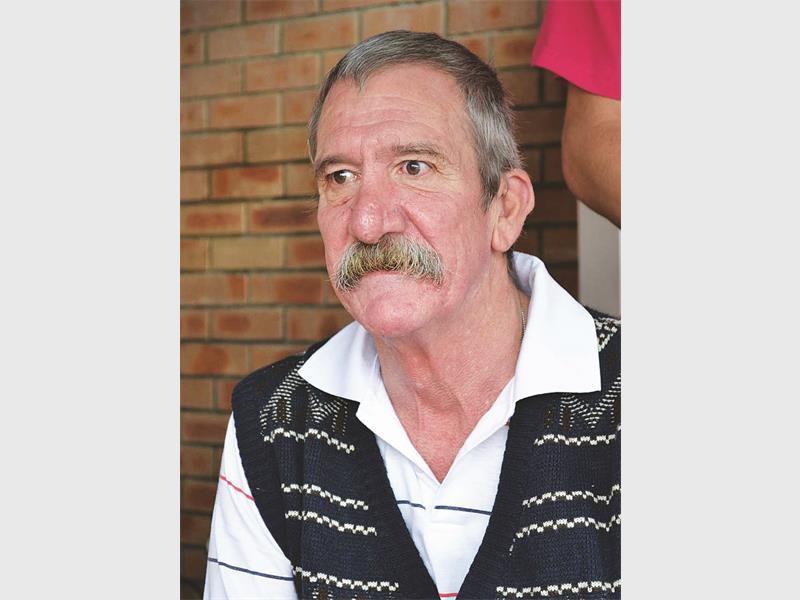
WELL-KNOWN Vryheid character and long-time resident John Hugo died on Saturday, January 30. He was 61 years old.
John Carnegie
WELL-KNOWN Vryheid character and long-time resident John Hugo died on Saturday, January 30. He was 61 years old.
It was the end of an extraordinary life, a life that was seemingly solitary, that must surely have been agonisingly lonely at times, although John would probably have denied his loneliness.
It is said that you shouldn’t speak ill of the dead but it is undeniable that John’s later life was defined by drink. He wouldn’t have denied it – if you’d asked him, “John do you drink too much?” he would have said, “Totally!” Whether he was an alcoholic or simply a drunkard is moot (he used to give up drink occasionally, apparently without difficulty), but bars were his lounge, their patrons were his family, their staffs were his valets.
But this superficial environment belied John’s huge intellect. This one-time-back-in-the-80s manager of the Permanent Building Society in Church Street had a giant brain. Asked at the bar at Dee’s one day what he was reading, it turned out to be a text book on the subject of differential calculus. “Just exercising the old grey matter,” he said, taking a swig of his “Black & Tan” – a mixture of Milk Stout and Castle Lager.
He was a wise man, was John Hugo, wise as opposed to simply clever or well-read. It was possible (and perhaps he even preferred) to have an intelligent conversation with him rather than a bar-room chat about incidentals. He exhibited complete common sense often garnished with humour.
Not always though. This was the man who once, long ago, while working in Ladysmith, borrowed a friend’s old Cortina station-wagon to use as transport in a failed attempt to import a load of Transkei dagga into Ladysmith. This was the passenger on a 14-hour flight from Johannesburg to Thailand whose alcoholically induced heart palpitations had him bumped-up to first class where he could lie down and sleep for the entire flight.
Was it a failed relationship or a particular tragedy that drove him to drink? Who knows, who now will ever know? Given his potential, was his life wasted? Perhaps, but who are we to say so? But when such an accusation was made at the Pearly Gates upon John’s arrival that Saturday, they let him in anyway. “Come in, John Hugo,” they said, “because you are a gentle soul, in you there is no spite nor a malicious bone in your body. Come in and rest in peace.”