The biggest drought post 1994
There can be few South Africans who are unaware that the country is currently in the grip of the worst drought in decades
Director General at the Department of Water and Sanitation, Margaret-Ann Diedricks writes:
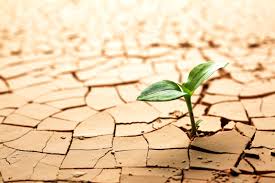
There can be few South Africans who are unaware that the country is currently in the grip of the worst drought in decades. Residents in many urban areas are facing tough water restrictions, scores of rural communities have watched their water pipes run dry, and hundreds of farmers have seen their crops wither or livestock die in the extreme heat. The drought is also threatening the economy, with billions of rands lost in the maize and sugar cane sectors alone.
Government is working hard to mitigate the impact. The Department of Water and Sanitation, together with team South Africa, is working hard to provide short-term water needs. Many district municipalities in the worst-affected provinces (the Free State, KwaZulu-Natal, Limpopo, Mpumalanga and North West) have been declared drought disaster areas.
The department has pumped millions to manage a range of interventions in drought-stricken areas. Those underway in KwaZulu-Natal which was one of the first provinces to be declared a drought disaster area, where water restrictions came into force in July last year, illustrate some of the steps taken by government to alleviate communities’ water supply problems.
Across the province, new boreholes were drilled to augment supply. Water tankers are being purchased, or in some cases hired, to supply water to communities where the normal supply has run dry, pipelines are being laid, and tanker-filling points are put in place. Old boreholes are brought back into use and water treatment and supply works are upgraded and refurbished. Projects are also underway to protect the integrity of springs that supply water to rural communities.
Similar interventions are being carried out in Limpopo, North West and the Free State.
In the short-term, boreholes are providing a much-needed lifeline for many communities, however there are other resources that can be utilised to augment water supply. Groundwater is one of South Africa’s most under-utilised resources. Water experts estimate we have tapped only half of what is available. The department has adopted a more scientific approach to the location of boreholes, taking into account the local geology as well as estimated yield of this underground water source to ensure money is not wasted. News reports referring to the recent “borehole business boom” underscore these efforts.
Another initiative promoted by the department is recycled water. While this is happening already in some areas, the use of recycled water is set to increase greatly over the next few years. Once viewed with revulsion, many South Africans are now starting to realise that recycled water is better than no water at all. Many parts of the country have either reached or are fast approaching the point at which all of the financially viable freshwater resources are fully utilised. In effect, there is no other option but to recycle.
One bit of good news is that the El Nino phenomenon, responsible for below-average rainfall and blistering heat across large parts of both South and Southern Africa, appears to have peaked. Climate experts now believe it will be over by June or July this year, notwithstanding the persisting above-average temperatures and below-average rainfall. These have seen the evaporation rate remaining high and the soil moisture content low, posing further problems for struggling crop and stock farmers.
Meanwhile, government is pushing ahead with measures to conserve critical water supplies. This is evident from the latest dam storage figures. Water levels in many of the country’s major reservoirs started to drop sharply (from October last year) below the so-called median storage trend. However, last week’s figures (national total) show that dams are levelling out at around 55 percent, the direct result of restrictions and conservation measures that are in place.
It is important to realise that attempts to mitigate the impact of the drought and conserve water cannot be the work of the department alone. Community involvement is essential. South Africans need to become actively involved in conserving and using water sparingly, complying with whatever restrictions are in force, and reporting and fixing leaks. They should also report known instances of water being illegally abstracted from rivers and dams, or stolen via illegal connections.
Farmers too need to optimise their use of this precious resource, and look to drip irrigation systems and other innovative solutions to save water. It is crucial they draw on the expertise available from various agencies when making decisions on which crops to plant, and when.
The same applies to industry, where, despite the commendable efforts of many big corporations and businesses, there remains great potential for the further use of recycled water.
Ironically, it has taken a drought to make South Africa’s more aware of our precious water resources. But, as with the big droughts of the past, the message remains the same: Save Water because water has no substitute.
The National Water Week has run from 14-22 March 2016 under the theme “Water for People, Water by People”. This emphasises the point that water is a human right.
During this week in particular, we called on team South Africa to be mindful of the people who still do not have access to this basic service and collectively pledge to save water in our households, institutions of learning and industries.
Find us on: Facebook,twitter, And on Whats app060 986 0731.