
Where have the hydrants gone?
NOBODY wants to see their home or their livelihood go up in flames.
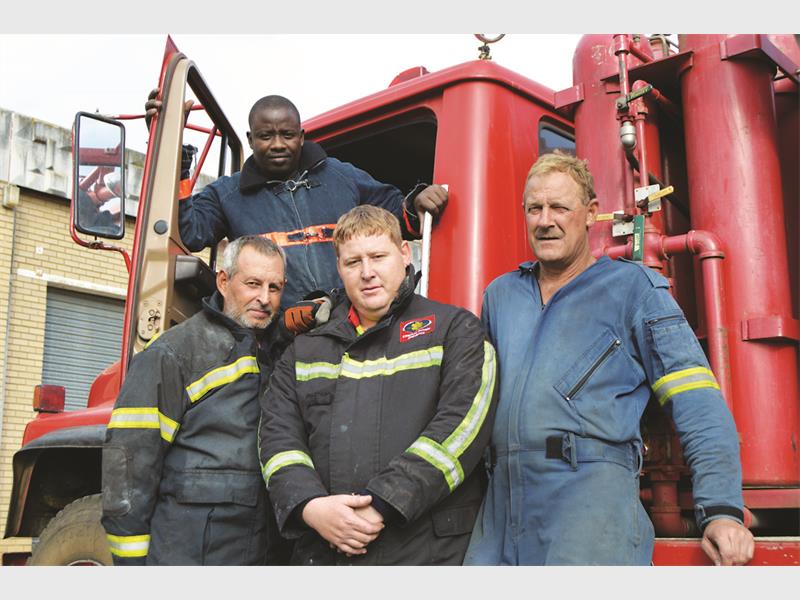
NOBODY wants to see their home or their livelihood go up in flames.
Firefighters responded swiftly to the fire in Demoina Lane last Friday, but struggled for approximately three quarters of an hour to find an adequate fire hydrant to connect to in the area.
The fire truck, a 1984 model International, is equipped to carry no more than 1800 litres of water, which is sufficient to provide a blast of water for approximately five minutes, usually enough to calm the initial flames and minimise damage until the hoses can be coupled to a fire hydrant.
Friday’s fire presented the firefighting team with several unforeseen obstacles, hindering their efficiency in putting out the fire which gutted several shops in the area. Upon their arrival at the scene of the blaze, the primary plan of action was to couple the hoses to fire hydrants which ran along Mason Street at the bottom end of Demoina Lane, where the informal stalls were erected some time back to be used by informal traders at the plaza taxi rank. It was then that they discovered that the hydrants were no longer there.
The hoses were coupled to a hydrant at Boxer Store, but the pressure was inadequate to supply a steady flow of water. In the interim, water tankers arrived to assist and the search for a suitable fire hydrant eventually came to an end at the corner of Utrecht and Mason Streets. From there, firefighters were eventually able to extinguish the blaze.
Despite strict regulations and legislations concerned with the need for all buildings to be designed, constructed and equipped with fire safety in mind however, there are some who still do not comply.
Local traffic official and firefighter, Llewellyn Schwab, who attended to Friday’s fire, urges business owners to take the fire safety regulations to heart and ensure compliance with the law.
“Fire extinguishers must be installed in all business premises.” he states, stipulating also the importance of fire hose reels and fire hydrants. “Any building exceeding 250m² needs a fire hose reel at a rate of one reel per 500m² which must be connected to a dedicated water line. Any building exceeding 12m in height and larger than 1000m² must have a fire hydrant.”
He also went on to add the importance of tendency separation elements (firewalls) stating that they must be fireproof for at least 60 minutes.
Emergency lighting must be available in the following places: places of entertainment and public assembly, theatrical and indoor sport, places of instruction, places of worship, exhibition halls, museums, hospitals, old age homes, large shops (more than 250m²), wholesale shops and hotels. The following institutions are required by law to have fire alarms: Large shops (more than 500m²), hotels, dormitories, hospitals and old age homes. Guest houses and bed and breakfast accommodation facilities are also legally required to comply with specific fire safety regulations. Business owners are urged to check their insurance policies to ensure what they are covered for.
The detailed list of specifications is available at www.sans10400.co.za or contact the local fire department for more information.
Find us on:facebook, twitter, and on Whats App 060 986 0731.