
Over 3000 new jobs created in Worker’s Month
As the world commemorates Workers' Month, KwaZulu-Natal Cooperative Governance and Traditional Affairs MEC Nomusa Dube-Ncube unveiled a significant 3662 job opportunities, adding to the tens of thousands of jobs that have been created by government on its own to cater for people in the province, who have no means and eke out a living.
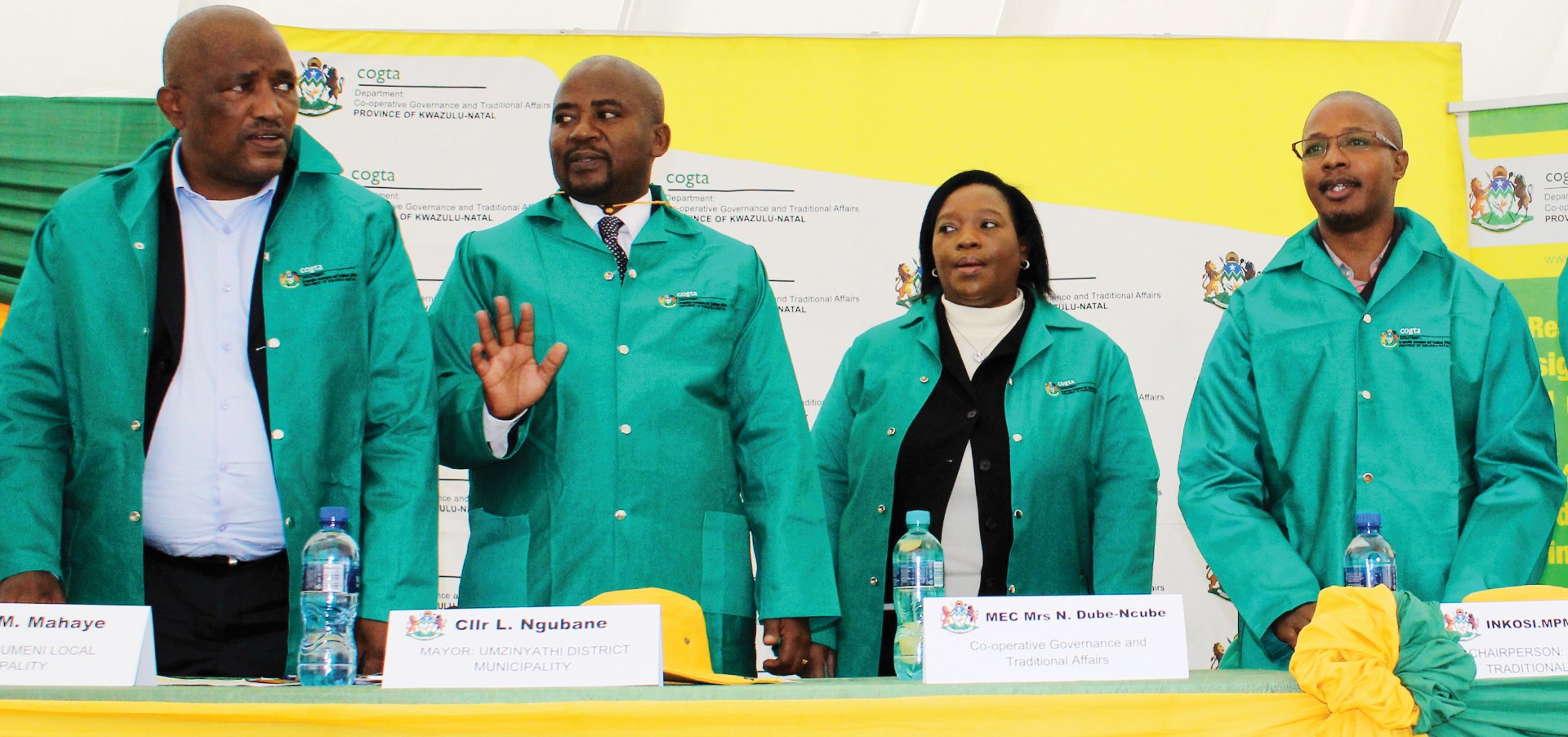
A day of relief and joy for thousands of families, who for many years have lived in untold anguish, with children forced to constantly go to bed on an empty stomach.
As the world commemorates Workers’ Month, KwaZulu-Natal Cooperative Governance and Traditional Affairs MEC Nomusa Dube-Ncube unveiled a significant 3662 job opportunities, adding to the tens of thousands of jobs that have been created by government on its own to cater for people in the province, who have no means and eke out a living. The program not only aims to create jobs but to also provide training and enhance employability as well as to boost service delivery.
“We realised as government that there are many people that are unemployed. Of these people, there are those that are not in the job market simply because they lack the right skills
Overwhelmed with joy, single-mother-of-four Millicent Mngadi failed to contain herself and sobbed uncontrollably as MEC Dube-Ncube told her on Saturday and thousands of fellow residents of Endumeni (Dundee), Umvoti (Greytown), Msinga and Nquthu, who were part of the official unveiling of work opportunities for the district of Umzinyathi, that they too will no longer rely on handouts from neighbours in order to put a plate of food on the table.
“I have lived a life of great misery and had reached the point where I had completely chucked my dignity aside, walking from door to door in search of food. Neighbours at times would help me, but on other days it would really be dark for me and my kids,” said the widowed Millicent, 47, whose parents are also no longer alive.
“I grew up on a farm, where we were not able to go to school since there was none within the farm precinct, and we didn’t have relatives in areas where there are schools. So when my parents got old and passed away, it was really difficult for me to make a living. Me and my sisters were evicted from the farm when we refused to work for the farmer without any wages,” added Millicent, whose story paints a general picture of the harrowing living conditions that are part of the apartheid legacy of forced removals and exploitation of the majority of people.

Addressing the community, a beaming MEC Dube-Ncube said the government, faced with the apartheid legacy of inequality, had come up with an initiative to improve living conditions for people like Millicent, through introducing, a few years ago, the Community Works Programme, which has generated jobs across 38 municipalities in the province, targeting areas indicated by Stats SA as being the hardest hit by the triple challenge of poverty, unemployment and equality. “We realised as
“We realised as government that there are many people that are unemployed. Of these people, there are those that are not in the job market simply because they lack the right skills. So through this programme, we are not only providing work for the sake of an immediate income but the employees get exposed to various fields of work, which then gives them that requisite experience and position them for better prospects elsewhere in the near future,” she said.
MEC Dube-Ncube added that the CWP programme does not only benefit the people employed, but it also addresses the service delivery mandate of government, albeit at a bare minimum expense to Mr and Mrs John and Jane Q. Taxpayer, in that the workers do work such as refuse collection, cutting verges, killing alien plants, aiding the frail and sick, looking after orphans and work with community policing fora in terms of safety and security at local levels – all the work that would conventionally be the responsibility of the state.
Furthermore, she said, officials from COGTA in the province work with the CWP employees and provide much-needed training in the process.
“In a way, as government, we are not just hitting two birds with one stone, but we are actually killing three birds with that one stone: We are addressing joblessness; providing skills; and are accelerating the service delivery truck. And, effectively, government is creating a better society in KwaZulu-Natal and South Africa,” she said.