Smitten by Snakes: Help, there’s a mamba!
Rian is always available to do call-outs, shows, parties, functions, or just talk reptiles. He's often in the field studying and researching these amazing creatures. He can be contacted day or night on 083 306 3787.
Issued by Rian Viljoen
Rian is always available to do call-outs, shows, parties, functions, or just talk reptiles. He’s often in the field studying and researching these amazing creatures. He can be contacted day or night on 083 306 3787.
ONE of the few snakes capable of striking fear, even into some of us herpers, is the mamba. Built up with a nasty, aggressive, kill all mythos, the truth is far from fiction, for a change.
The Black Mamba (Dendroaspis polylepis)… The name, itself, conjures up many images, from an evil snake to the king of the African reptiles.
Their venom, a fast-acting, mainly neurotoxic venom that affects the nerves, heart, and lungs, it is one of the most toxic to humans of all the snakes, and is often in the top lists of potent venoms from around the world.
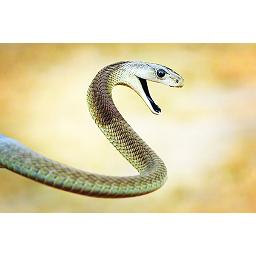
Their name refers to the black inside of their mouths, as their scale/skin colours are normally olive grey to gunmetal grey, rarely if ever black. Most darkly coloured snakes are often misidentified as Black Mambas.
Black Mambas are shy, nervous creatures that will rarely allow you anywhere near them, and quickly retire to their hiding place if disturbed.
Juveniles, which can reach lengths of up to 2m in their first year of life, are seldom encountered, and are shy and retiring. Adults average at 2.5m – 3m, but larger specimens of over 4m have been reported, although are probably rare these days.
If cornered, it will raise a good portion of its fore body up, spreading a narrow hood (similar to cobras, which are also elapids, like the mambas), hissing and holding it’s mouth agape, showing the black inside of the mouth. If harassed, cornered or if it feels threatened, it will not hesitate to bite repeatedly.
Dry bites are known, but are extremely rare, and bite victims must be taken to the nearest hospital for observation and treatment.
It’s cousin, the Green Mamba (Dendroaspis angusticeps), is smaller, seldom reaching over 2.5m in total length, it’s venom is not as toxic as the Black Mamba’s, but is still lethal to humans, nonetheless.
Emerald green in color, with the belly being green yellow to pale green, they are easily mistaken for some of the harmless green snakes (Philothamnus spp), but their limited eastern coastal distribution and greenish belly, allows them to be identified accordingly.
Green Mambas are extremely shy creatures, and move away and hide, long before you see them.
They are more reluctant to bite than their counterparts, but will readily defend themselves if molested in any way. The Green Mamba only occurs along the eastern coast of Natal, just entering into the Eastern Cape down to East London.
Most often, the green boomslang and snakes from the Philothamnus family are seen, and incorrectly identified as Green Mambas.
Individuals have been known to stow away in vehicle engine compartments, cargo(particularly fruit), and are sometimes found where they do not occur.
This happens from time to time, and are called stowaways, and in no way reflect that they are necessarily in that area.
In the Vryheid Area, and surrounds, there are NO Green Mambas whatsoever, just Boomslang, Natal Green Snakes, Spotted Bush Snakes, and Green Water Snakes. Black Mambas only start to occur south from around Swart Mfolozi, and East, past Louwsburg.
In the event of a bite, the patient must be calmed, immobilized, and taken to the nearest hospital as quickly as possible, where doctors will treat the symptoms of the bite, before administering Antivenin.
Trying to kill the snake is dangerous, and can lead to more patients having to be admitted. Rather take a cell phone picture of the snake, and take that with for ID.
Having a competent snake catcher to remove the snake can be dealt with once the patient is en route to the hospital, and if necessary, can confirm ID for treatment.
If you have any interesting stories please send them to: estella@caxton.co.za or Contact us on: 034 981 39 30.
Also Find us on : Facebook, Twitter, And on WhatsApp 060 986 0731.