
A recent outbreak of lice at a Primary School has caused frustration amongst parents and their children as they feel that the school has been inconsistent with their procedures for checking for lice.
A concerned parent, Natasha Olivier, said her child had lice once at the beginning of the year but has since been sent home three times as her teacher believed that the child was still infected. “I have to walk 5kms to drop off my child, and then the school will phone an hour later saying I have to fetch her again,” said Ms Olivier. “I have taken my child to the pharmacy, and the pharmacists could not find lice in her hair.” The school advised Ms Olivier to treat the child’s scalp with coke and coconut oil. Four to five children are being sent home every week in the younger grades according to Ms Olivier and when asked to comment, the school refrained from doing so. The spread of head lice is inevitable in any school environment because of the close proximity of scholars and teachers throughout the school day. From a school’s position, little can be done but advise parents to regularly check children’s hair for signs of itching and the appearance of little white eggs which cling to hair strands.
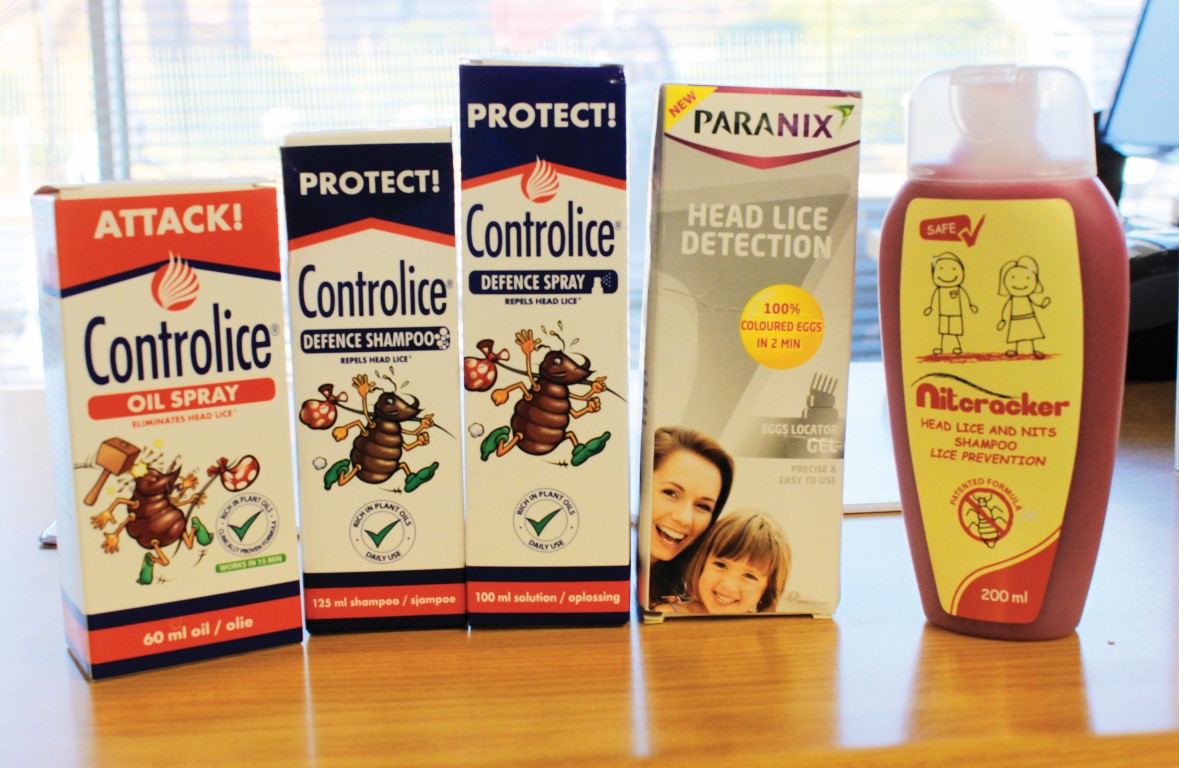
Once lice have been found in a child’s hair, it is imperative that the child’s scalp be treated with one of the many over-the-counter lice treatments that can be found at your local pharmacy. The average price for one of these treatments is around R100 and is proven to be extremely effective. There are also many home remedies that one can use, including vinegar and essential oils such as tea-tree oil and lavender oil, and thereafter carefully combing out the lice eggs whilst sitting out in the sun.
“However, these remedies are only effective up to a certain point,” stressed Chantal Fritz, a sales assistant at Mpati pharmacy. “Vinegar often burns the scalp which can cause even more discomfort for the child, but treating the scalp itself is not enough.”
The main reason why lice are difficult to get rid of is because of the child’s environment. “All bedding and toys should be washed thoroughly and left in the sun to dry” continued Ms Fritz. It is important to remember that lice can infect anyone, regardless of hygiene, in fact most cases of lice are found in clean hair. Along with regular checks, schools should also stress this fact in order to prevent the ridicule and humiliation that often follows once a child is infected with lice.