Soldiers’ graves are left to decay
“Small groups of British forces were placed along the main road at strategic places, including the coal mines like St George’s Colliery in Hattingspruit, and on farms in the area.”
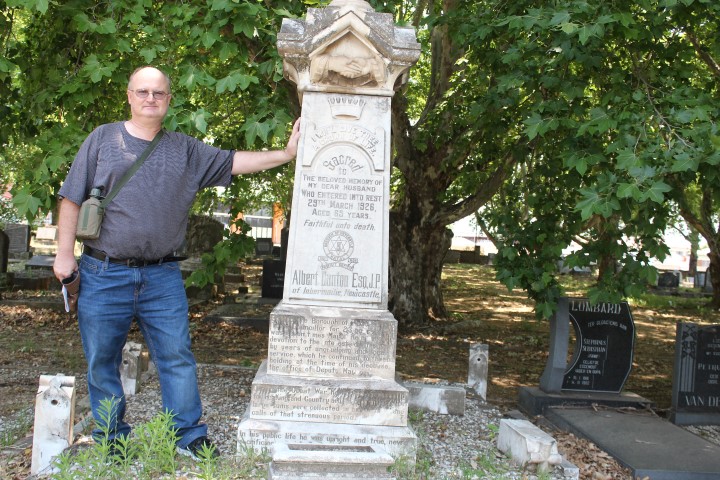
A Boer War-era burial site has become a topic of discussion on history and legacy.
Sister publication, the Northern Natal Courier recently reported on the resting places of three British soldiers, behind the present graveyard on End Street in Dannhauser.
These military graves are now forgotten under a blanket of refuse and fallen leaves.
The graveyard appears to be regarded by some as a dump site and the fence which once encircled these three Second Boer War-period graves, has been destroyed.
One of the crosses has already been toppled.
According to the engravings on the crosses, the graves belong to Private J Wooder of the 13th Hussars, who died of enteric fever on June 2, 1900 and Private D Underwood of the 1st Royal Dragoon Guards, who died of a self-inflicted wound on May 29, 1900. The third cross is worn away so the soldier buried there remains unidentified.

Curator of the Fort Amiel Museum, Louis Eksteen has significant knowledge on both Boer War conflicts and was contacted in the hopes of gaining more information on the matter.
“By April 1900, Ladysmith was relieved by the British forces under General [Sir] Redvers Buller.”
The British forces pushed north and by early May, the Boers were massed around Glencoe. They were soon forced back to Hattingspruit and Dannhauser by the British however and by mid-May, were forced entirely out of Newcastle due to the British reoccupation.
“Small groups of British forces were placed along the main road at strategic places, including the coal mines like St George’s Colliery in Hattingspruit, and on farms in the area.”
This mine on the so-called Drooge Rif was also used as a hospital for the British forces during the Second Boer War.
Eksteen explained as could be deduced from the causes of death, many soldiers died from medical conditions, especially enteric fever, while many also died from self-inflicted wounds.
“Something that is not mentioned in general during warfare is the fact that suicide was frequent among soldiers because of depression.”
In addition, British soldiers were often unpopular with the local populace.
“They frequently commandeered livestock and horses from the locals. After the war, various claims were lodged for losses suffered during the war and many farmers were never paid out.”
ALSO READ: Just In: Elderly woman’s body stolen from her grave
Contact us
WhatsApp: 082 874 5550
Email: Reveshni Douglas (Editor) at reveshni@caxton.co.za
Make sure you follow us for regular updates: