
Tempers flare as Amajuba faces first Foot and Mouth outbreak
‘Lock your farm gate if that’s what you have to do to keep people and animals out’ - advises veterinary surgeon, Ariena Shepherd
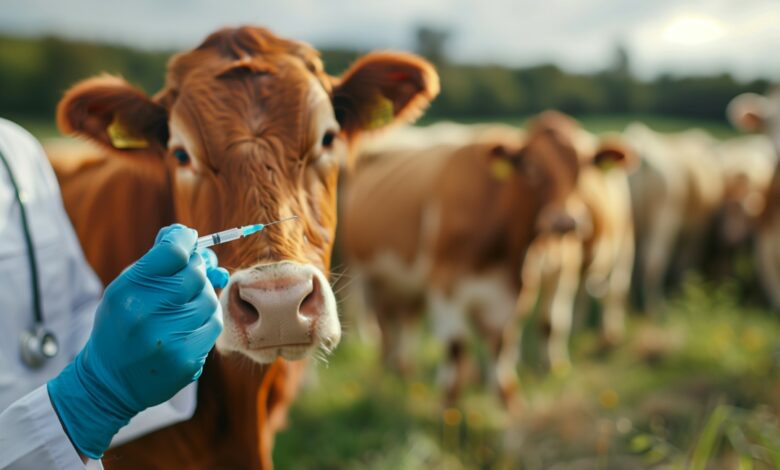
The first ever confirmed case of Foot and Mouth Disease (FMD) in the Amajuba District was reported on February 25.
Four weeks down the line, farmers in the area are still waiting on the national Department of Agriculture to gazette a notice regarding the FMD case, and for the consequent declaration of a possible new Disease Management Area to prevent the spread of the virus.
In a heated meeting between farmers and state officials, which took place in Newcastle on March 6, farmers accused the government of ‘dragging its feet’ in dealing with the highly contagious disease which could financially cripple local farmers if it is not dealt with and contained expeditiously.
First confirmed case was detected at an Osizweni diptank
The infected animal was discovered at a communal diptank in Osizweni where animal health technicians, employed by the state, treat the livestock of rural and subsistence farmers for parasites, and also assesses and treat the animals for disease.
Newcastle-based veterinary surgeon, Dr Jason Blick, explained that, at this diptank, someone had reported a lame animal that was salivating as a result of sores in its mouth.
“The state vet examined the animal and said it’s definitely foot and mouth. He then took blood samples which he sent to the lab to confirm his diagnosis and the results were positive for FMD,” said Dr Blick.
“The state vet made the diagnosis and informed the department. He also managed to acquire vaccines and started vaccinating cattle in the area. Lack of resources makes it difficult for him to do more, and what we need is policing to restrict the movement of infected animals.”
According to Blick, the infected animal should have been immediately quarantined until it was culled (slaughtered). However, multiple sources interviewed by the Northern Natal News, have said that this never happened.
“Amajuba has never had Foot and Mouth Disease before. This was the first reported case,” Blick confirmed. “…Not much has happened since then.”
What is Foot and Mouth Disease and how is it spread?
Blick described how FMD is spread, “It can be transmitted through anything the animal produces. In any secretion or excretion of an infected animal, you will find the virus. It makes the transporting of animals so difficult since cow dung might be a source of infection. An animal stepping on the dung of an infected animal may become infected itself. This animal may also carry the infected dung to another location exposing other animals to the virus.”
Bergville-based veterinary surgeon, Ariena Shepherd, said FMD is a highly contagious respiratory disease characterised by sneezing, coughing, lesions on the hoof and excess saliva production due to lesions in the mouth.
“The good news is that, even though FMD is highly contagious, it is easy to kill the virus that causes it. Most disinfectants will kill it and even a few hours of good, direct sunlight will kill it. The problem is that it can hide under the blades of grass, and it can survive in dung for a very long time,” said Shepherd.
“Just by cleaning things properly, it can be controlled very easily. Putting in place good biosecurity can keep it off your farm.”

Farmers fear not enough is being done
“Farmers’ biggest fear regarding FMD is the lack of control, and the fact that government isn’t doing what should be done to contain the disease. They (the farmers) worry how long it will go on for without proper containment measures in place. If the infected animal did come from a Disease Management Area (DMA), it should never have gotten through the access control points,” explained Blick.
Shepherd echoed Blick’s sentiments, “Nearly five weeks down the line, the state still hasn’t declared a Disease Management Area as yet. Historically, when a case of FMD was reported, a DMA was demarcated within 24 to 48 hours, and all the animals within a 50m radius were vaccinated. There were also control points manned by the army and the animals were not allowed to leave that area. In this way, an outbreak was sorted out quickly. Today, there is no control over animal movement. People move animals every day with very little control.”
“The outbreak is not being handled well,” continued Shepherd. “If under quarantine, farmers will not be able to move their animals off their farm for three to six months. As winter approaches, most beef farmers will be ready to sell their calves in the next four to six weeks. If they are unable to move the calves off their farm, how will they sell them? It means they will have to bear the cost of feeding and caring for these cows for longer than they anticipated. However, I am hoping that if we can prove a farm has good biosecurity and the animals test negative for FMD, maybe they can move to the feedlot sooner.”
Shepherd fears that, the way things are going, FMD will reach a stage where (the livestock in) the whole country will have to be vaccinated. As FMD is a state-controlled communicable disease, only the state vet may vaccinate animals against the virus.
40 000 cattle vaccinated in less than two weeks
In the past two weeks, Newcastle state vet, Wandile Ngwenya, has seen to it that roughly 40 000 cattle were vaccinated as quickly as possible.
Ngwenya clarified that the case of FMD that was detected in Osizweni is probably not the first case of FMD in Amajuba District. “It is just the first case we were alerted to,” he explained.
“This disease has a two week incubation period. It could have been in any of the animals.”
According to Ngwenya, FMD was likely introduced to the Amajuba area some time in December through the illegal movement of animals from a Disease Management Area, currently experiencing an outbreak of the virus.
The communal farming area where FMD was detected in Osizweni has been quarantined as an emergency measure and the state vet has endeavoured to vaccinate as many animals, in the area under quarantine, as possible.
However, it is now up to the national Department of Agriculture to demarcate a Disease Management Area and to provide a plan, as well as the resources, to manage that area.
Foot and Mouth Disease detected in at least 60 diptanks
“This disease spreads very quickly. We have detected FMD in at least 60 diptanks and each tank has about 1 000 animals, which gives you an idea of the scope of the problem we are dealing with. The disease is here and something needs to be done. There will be some hard decisions but when they are taken it’s because it’s absolutely necessary. An outbreak of FMD puts our meat export status in KZN at stake. We can’t just think of one cow in Osizweni. We have to think about how we are going to contain this far and wide,” said Ngwenya.
Shepherd pointed out that the brand of vaccine that the state is using makes it impossible to determine if the antibodies in an animal’s blood comes from having been vaccinated, or from having been infected with the virus.
This, despite the fact that there are vaccines available, globally, which make it possible to differentiate.
According to Shepherd, commercial farmers are not being offered the vaccine by the state currently, “In beef cattle, FMD does not cause illness as severe as it does in dairy cattle.
If the state would be willing to make vaccines available, I am pretty sure commercial farmers, especially dairy farmers will pay to have their cattle vaccinated due to the higher risk of severe illness among dairy cattle.
Impossible to tell which animals were vaccinated
Shepherd continued, “Once an animal is vaccinated, it should get a special ‘F’ brand on its neck, as well as an ear ticket. However, this is not happening, making it impossible to tell which cattle have been vaccinated and which haven’t. When we enquired about this, the state informed us that they didn’t have enough ear tickets and that they couldn’t brand in rainy weather, so they are focussing on vaccinating, instead of keeping track of the vaccinated animals. In some cases, the community farmers refuse to allow the state to brand their vaccinated cattle and remove the ear tickets themselves. However, on a commercial farm, the farmer is responsible for the branding and the ear ticket and will get into trouble if they do not comply with this regulation. This is one of the things that upsets farmers.
There seems to be two sets of rules.. The rules don’t seem to apply equally to all farmers.”
Vaccinated animals have to be quarantined for 12 months, according to Shepherd, which may explain the community’s unwillingness to have their vaccinated animals branded and tagged.
Farmers’ take a financial knock
Blick explained the economic challenges FMD poses to farmers, “With commercial farmers, it affects the price of the animals, especially that of calves. If a calf, for example, is sold to the feedlots for R37.50 per kilogram, a farmer might sell 15 calves for around R120 000. Since Amajuba is now seen as a higher risk area for FMD, feedlots are not prepared to pay as much. They may only pay R32.50 per kilogram, which means that the farmer will only be paid around R103 000 for the same number of calves. However, the cost of running the farm remains the same and some farmers may have difficulty in paying back bank loans, etc. If Amajuba is declared a DMA, it will mean that the movement of animals will be restricted and this affects access to markets.”
“The economics of farmers will take a knock,” agreed Shepherd, who offered the following advice to farmers. Protect yourself. If it means locking your farm gate, that’s what you have to do. Keep everybody off your farm …keep outside vehicles off your farm …keep outside animals off your farm. Ride out the storm. If everyone does their bit, this will be over soon.”
Utrecht-based commercial farmer, Mort Mortassagne, said the drop in weaner (calf) prices as a result of FMD has left farmers living hand-to-mouth.
“Many of the commercial farmers I have spoken to can’t afford to pay for labour, they can’t afford to pay their Eskom bills, and some are being forced to cancel their insurance because they can no longer afford the instalments,” said Mortassagne,
“How is a commercial farmer expected to implement effective biosecurity measures when we get our labour from the surrounding rural areas, where the labourers might be walking through a contaminated area and walking the virus right onto our farms? Last week, when the state was vaccinating the cattle belonging to farm dwellers who reside on commercial farms, these cattle were taken from the commercial farms to a communal vaccination site where they were mixing with other cattle, and then these cattle walked back home.
“How do you think this affects a commercial farm’s biosecurity? FMD will cripple a lot of farmers,” concluded Mortassagne.
The news provided to you in this link has been investigated and compiled by the editorial staff of the Newcastle Advertiser, a sold newspaper distributed in the Newcastle area.
Please follow us on Youtube and feel free to like, comment, and subscribe.
For more local news, visit our webpage, follow us on Facebook and Twitter, and request an add on our WhatsApp (082 874 5550).