The story of Newcastle’s Town Hall clock
Newcastle’s iconic Town Hall clock has marked the town’s history since 1901 and remains in working order today.
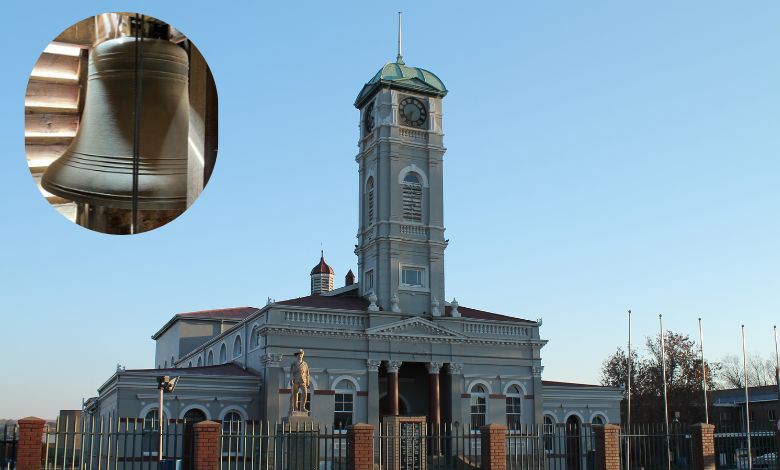
High above the streets of Newcastle, the Town Hall clock has quietly marked the passage of time for more than a century.
Through war and generations, this timepiece remains one of the town’s most recognisable and cherished landmarks.
Although the Newcastle Town Hall officially opened its doors on July 28, 1899, the clock was notably absent. It would take another two years, and the Anglo-Boer War, before the clock finally took its place.
A community effort
The installation of the clock in 1901 was not just a municipal project, but a community endeavour.
Funds were raised through public donations, led by Councillor Frank Greaves. By the time all contributions had been collected, the community had raised over £231 (over R1 million today) – enough to commission and install the clock.
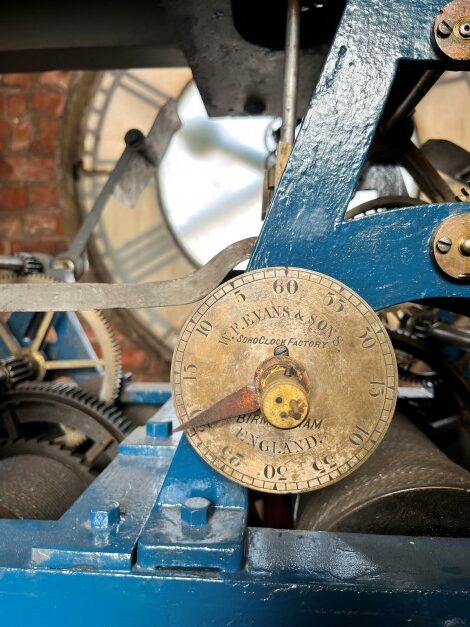
The clock itself was manufactured in Birmingham, England, by WF Evans & Sons, before making a long journey to South Africa. In a remarkable show of support, its transport – from England to Durban, and then on to Newcastle – was carried out free of charge by various companies.
Engineering the tower
Even before the clock arrived, preparations were underway. In March 1899, the Town Council made the significant decision to raise the tower by 4.6 metres to accommodate the future installation.
It was a forward-thinking move that ensured the clock would take pride of place above the town. When the mechanism finally arrived in early 1901, further structural adjustments were required before installation could be completed. By March 4, 1901, the clock was officially in position.
More than just a clock
The Town Hall clock is an impressive piece of engineering.
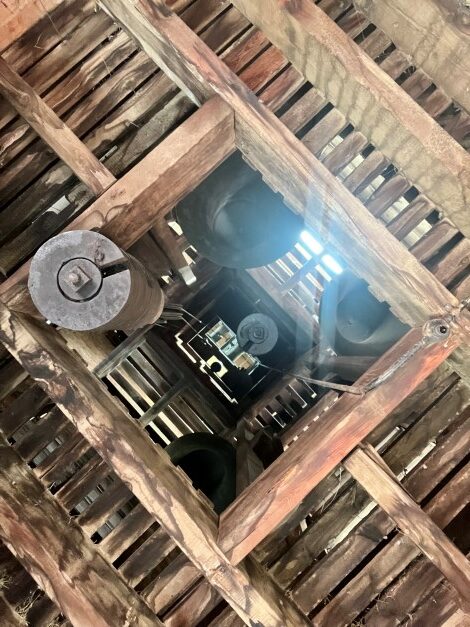
It features four large dials, one on each side of the tower – each measuring approximately 1.5 metres in diameter. Inside, a system of three bells marks the passing hours – two for the quarter chimes and a larger bell for the hourly strike.
It is an eight-day, weight-driven mechanical clock, meaning it runs on a system of descending weights and must be wound once a week to keep accurate time. This responsibility lies with municipal-appointed maintenance man Peter Holliday, whose dedication ensures that the clock continues to function as reliably today as it did over a century ago.
Surviving war and time
The clock’s story is closely tied to the history of the town itself.
When the Anglo-Boer War broke out in October 1899, Newcastle was occupied by Boer forces, delaying the clock’s installation. Only after British forces regained control in May 1900 could work resume.
Remarkably, despite these early setbacks and the passage of time, the clock remains in working condition.
A living legacy
More than just a mechanism of gears and bells, the Newcastle Town Hall clock stands as a symbol of community spirit and heritage.
Tick tock, tick tock, on it goes…
The news provided to you in this link has been investigated and compiled by the editorial staff of the Newcastle Advertiser, a sold newspaper distributed in the Newcastle area. Please follow us on Youtube and feel free to like, comment, and subscribe. For more local news, visit our webpage, follow us on Facebook and Twitter, and follow us on our WhatsApp Channel