‘What justice?’ asks Laamiya
Laamiya was only 14-years-old when she reported a rape case to the police.
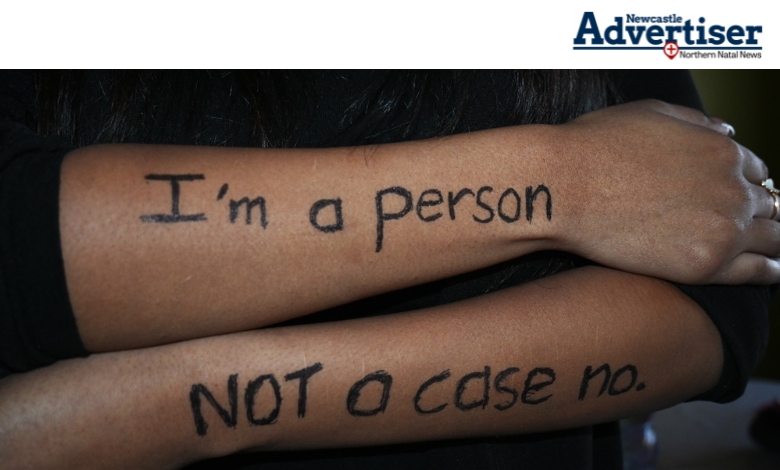
A young complainant in a rape case is tired of delay-after-delay in the court proceedings and won’t stay silent about it any longer.
Laamiya Khan was a child of 14 years old when she reported a rape case to the SAPS.
Now, as a young woman of 19, turning 20, Laamiya is still waiting for the opportunity to give evidence in court.
She demands of the Department of Justice, to, “Do better!”
In an unexpected departure from the norm and the law, Laamiya has requested the Northern Natal News to name her…
And there is a powerful reason why.
Laamiya has a message for the Department of Justice
“I am a real person. I am not just ‘the 14-year-old complainant’. I am an actual human being, not just a case number,” she says.
She feels that the secondary traumatisation she is experiencing from the lengthy delays in court is far worse than the stigma she would have to live with from being identified as a complainant in a rape case.
Laamiya finds it upsetting and unacceptable that the reason for some of the postponements in the case was basic technological glitches that could have, and should have, been avoided.
“It’s been four and a half years since I reported the case. The court is supposed to be prompt in dealing with these matters. I want to use my name to show that I am a real person and I deserve a voice. Enough is enough. The Department of Justice needs to do better.”
This journalist was present in court when Laamiya was first called to give evidence in 2024.
Because Laamiya was still a minor at the time, arrangements were made at the court for Laamiya to testify with the assistance of a court intermediary from a private room, separate from the court, with the use of audio visual equipment.
This is common practice when complainants in criminal proceedings are minors and is done in order to reduce the trauma they may experience from testifying in the courtroom, where they would have to come face-to-face with the accused person.
Court officials scrambled unsuccessfully for three of the four days the trial was set down for to set up the audio visual equipment required for Laamiya to testify, with Laamiya’s father eventually purchasing the required cables himself to try and facilitate the process.
On another occasion that Laamiya was expected to testify, the court’s recording equipment had malfunctioned, requiring the expertise of an IT specialist to resolve the issue.
Every time the trial is postponed, Laamiya has to repeatedly prepare herself to testify.
This requires reviewing evidence, and consultations with the state prosecutor and her attorney, which forces her to mentally and emotionally relive a time in her life she would rather forget.
‘It’s like you put a plaster on an open wound’
Laamiya describes how she has to put her life on hold, clearing her schedule and bracing herself mentally for months at a time, only to face the crushing disappointment of a last-minute postponement, time and time again.
“It’s like you put a plaster on an open wound to prevent further damage, to prevent it from getting worse, to stop the bleeding …and every time there’s a new court date, you have to rip off the plaster again only for them to tell me, ‘No, you will have to come back and testify next time.’ Then I put the plaster back on and spend the next six months trying to heal, only to have it ripped off again,” she explained.
Laamiya describes living a life that is in limbo and feeling frozen in time, saying the endless delays are preventing her from moving past the incident and beginning her healing journey.
Even her schooling is on hold until the matter is finalised.
“Each time a new court date approaches or is postponed, I have nightmares and experience severe anxiety,” she said, adding how her feelings of profound helplessness are eroding her faith in the justice system.
“It’s a constant cycle of them telling me to come back again and come back again and come back again. They might see it as another case, but for me, it’s literally my life and it’s affecting my family as well. My mother, who isn’t well, opted to be discharged from hospital so she could be with me when the trial was scheduled to proceed, only for it to be delayed again. It’s also taking a toll on my dad, who is my protector. He takes it very hard.”
She continued that, “Just after I reported the case, I can vividly remember people telling me that the worst was over. Nobody told me it’s not that black and white; that you report the case and then you get your day in court. Nobody warned me that it would be four and half years later and I still wouldn’t have had my day in court.
“The reason I wanted to speak out is because I don’t want the next 14-year-old to be in the same position as me, waiting more than four and a half years for a trial date. I am hoping that my message reaches the right people in the Department of Justice and that they invest in working equipment, maintain the equipment so it remains in working order, don’t allow these constant delays, and that they set a date and stick to it. You shouldn’t have to delay a matter because the court recorder is broken or because a speaker is not working. Nobody should be waiting so long to have their case heard.”
Department of Justice responds
Responding to a media enquiry from the Northern Natal News, KZN Director of Court Operations Zakhele Zungu said there were no known unresolved technological or equipment-related challenges currently affecting the functioning of the court where the trial is to proceed.
“As with any court facility, occasional technical issues may arise from time to time and are attended to through established maintenance and support processes,” said Zungu. He pointed out, however, that the most recent delay in Laamiya’s case was not a result of technological or equipment failures within the court.
“The court has already dealt with the issues before it, through a judicial process, and issued case-management directives aimed at regulating the future conduct of the matter and preventing unnecessary delays. The case remains before the court and is proceeding through the normal judicial processes.”
Zungu continued that, “The Department of Justice and Constitutional Development recognises that prolonged criminal proceedings can be emotionally taxing for complainants, witnesses, accused persons and their families. The department remains committed to ensuring that all matters are processed as efficiently as possible while safeguarding the constitutional rights of all parties involved and ensuring that justice is administered fairly.
“A range of measures exists within the justice system to address delays and improve case finalisation, including judicial case-management processes, oversight mechanisms provided for in legislation, regular monitoring of court rolls, collaboration between justice sector stakeholders and ongoing efforts to address backlogs where they arise. In appropriate matters, courts may invoke the provisions of the Criminal Procedure Act to actively manage and address delays in criminal proceedings.
“While the department appreciates the frustration that can accompany lengthy litigation, each criminal matter presents unique circumstances and legal considerations that may affect its progress. The department remains committed to supporting victims of crime and ensuring that cases receive the necessary attention within the framework of the law, while also protecting the rights of accused persons to fair trial.”
In conclusion, Zungu reiterated that, in this case, ‘the current status of the matter is not attributable to any unresolved technological or equipment-related shortcomings’.
The news provided to you in this link has been investigated and compiled by the editorial staff of the Newcastle Advertiser, a sold newspaper distributed in the Newcastle area. Please follow us on Youtube and feel free to like, comment, and subscribe. For more local news, visit our webpage, follow us on Facebook and Twitter, and follow us on our WhatsApp Channel