
On Man’s Best Friend
THE slaying of two dogs at Vryheid cemetery the weekend before last, and the outpouring of anger and sadness by people on facebook, where the Vryheid Herald posted a photograph of the carcasses, got me thinking of the extraordinary relationship we humans normally have with these creatures. My feeling is that we have had this …
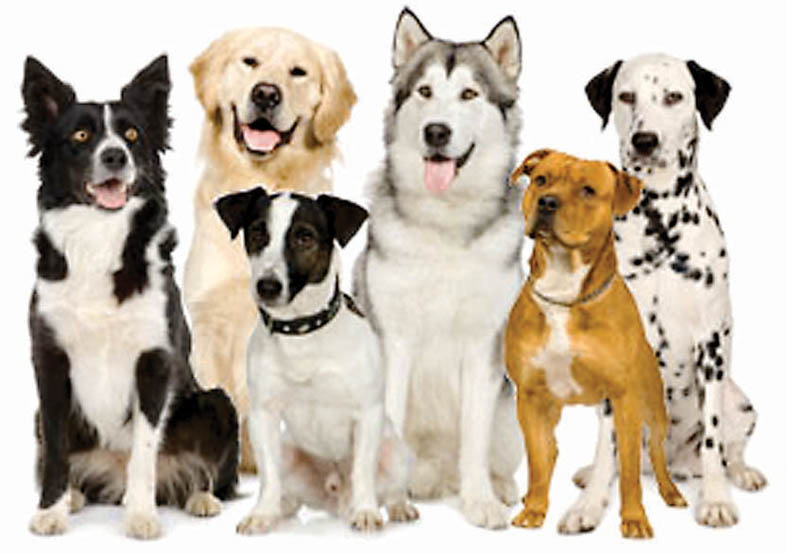

My feeling is that we have had this mutually beneficial relationship with dogs since before we crawled out of our caves, knuckles scraping on the ground, and attempted to stand completely upright. I think that the day that we ceased to think of these animals as something other than food, that day we became human.
How long ago this happened does not seem to be clear to anyone.
It was certainly not just a couple of thousand years ago, and, as I understand it, and depending upon your reference, it may have been as long ago as 33,000 or even 40,000 years ago. What seems to be agreed is that it was the Grey Wolf, ol’ Canis lupis, who was originally befriended by our hairy cave-dwelling ancestor.
How this happened no one seems to know. I don’t know anything about the development of speech in humans, but it seems unlikely that our ancestor, on encountering a wolf more docile than usual, said, “Come here, Fido, who’s a good boy, mmm? Sit!” I may be completely wrong, but I imagine that at that stage of our development, we had a struggle just to string together more than a few coherent grunts.
This liaison between us and ol’ Canis lupis, apparently happened in East-Central Asia, a remote part of the world where Russia, China, Mongolia and Kazakhstan come together and not much else, except in this case, man and wolf. And the evidence indicates that it was only this animal, the Grey Wolf, that our dogs are distantly related to, and not some other wolf/dog-like animal, such as a now-extinct wild dog or a primitive jackal-like mutt.
I accept this (I mean, who am I to argue with modern DNA analysis), but my mind boggles at the idea that from a common ancestor we have dogs as diverse as from a Great Dane to a Chihuahua, and from a Afghan to a Bulldog, and a multitude of shapes and sizes in between.
The way I see it, and I might be totally wrong, is that one day our hunter-gathering ancestors, who until then had been wary of wolves (granny having been eaten by a pack last winter, when out gathering firewood), came across a litter of orphaned or temporarily abandoned wolf pups (or is it cubs?), and gathered them up partly in revenge for granny, but also because they constituted a source of protein.
Back at the cave, the pups were confined in a rough pen, the thinking being that they could be fattened up, and that was anything but a fatal mistake. The pups instinctively recognised the hierarchy of a human pack, and were subservient, a behaviour that was interpreted as “friendly”. In addition, they rid the cave of rats and also, that night when that leopard was prowling around, they woke granddad with their yelping, thus saving him from being dragged from the cave by his left foot.
Apparently this is possible.
If you get wolf pups at a fairly early age it is possible to tame, or socialise or domesticate them. It is even possible, I’ve read, to tame adult wolves if you have the patience of Kevin Costner in the film “Dancing with Wolves”. I don’t think our ancestors would have attempted to tame an adult. The concept of “tame” had yet to arise within the sloping foreheads of our great, great, great, great, great……. grandfathers.
I think the growing pups must have demonstrated a usefulness or they would have been on the braai before you could spit and say voetsak. Being natural pack hunters, I think they would have been useful to the tribe not only during the hunt, but as guard “dogs” when the women were fetching water or the men were on a hunting expedition.
Dogs undoubtedly have characters, and after a while they would be family members, would be valued, would be encouraged to breed.
The other scenario goes like this:
“Early wolves would, as scavengers, be attracted to the refuse left at human campsites. Dr. Raymond Coppinger of Hampshire College, Massachusetts, argues that those wolves that were more successful at interacting with humans would pass these traits on to their offspring, eventually creating wolves with a greater propensity to be domesticated.
“The ‘most social and least fearful’ wolves were the ones who were kept around the human living areas, helping to breed those traits that are still recognized in dogs today.” That’s according to Wikipedia, and I think it makes sense.
One thing I think we should be pleased about is that over the years, dogs have abandoned the wolf behaviour that sees them regurgitating partially digested food to feed their pups. They have abandoned that trait but have taken on characteristics that have quite literally made them man’s best friend.
They are extraordinary creatures, are dogs. They exhibit some of the characteristics that we most admire in humans, like loyalty and devotion, but not cruelty. No, cruelty we reserve for ourselves; the evidence of this was found at Vryheid cemetery.